 lop News
$56.31 billion in revenue. 33% year-over-year growth. Earnings that crushed Wall Street’s estimates. Meta’s first-quarter results, released after Wednesday’s closing bell, were everything a shareholder could ask for — right up until the company explained what it planned to spend next.
The stock dropped as much as 9% over the following session, wiping out a substantial chunk of market capitalization. The culprit was not the quarter that just ended. It was the one yet to come.
Meta raised its full-year capital expenditure guidance to between $125 billion and $145 billion, up from a prior range of $115 billion to $135 billion. The revision confirmed what investors had been dreading: the AI infrastructure arms race is accelerating, and nobody can yet say with precision what the returns will look like.
The Quarter That Should Have Been Enough
By almost any conventional measure, Meta had a standout three months. Revenue topped analyst estimates of $55.45 billion. Adjusted earnings per share hit $7.31, well above the $6.79 consensus. Net income surged 61% to $26.8 billion — though that figure includes an $8.03 billion tax benefit tied to the Trump administration’s One Big Beautiful Bill Act, which partially offset a $15.9 billion non-cash charge taken in the third quarter of 2025.
Ad impressions grew 19% year-over-year. Average price per ad climbed 12%. Operating margin held at 41%. The core advertising engine, fortified by AI-driven targeting improvements, is running at capacity.
None of it was enough.
The $145 Billion Question
Meta spent $72.2 billion on capital expenditures in 2025. The new guidance for 2026 nearly doubles that figure — and exceeds what the company spent in 2024 and 2025 combined. Meta attributed the increase to higher component pricing and additional data center costs to support future-year capacity.
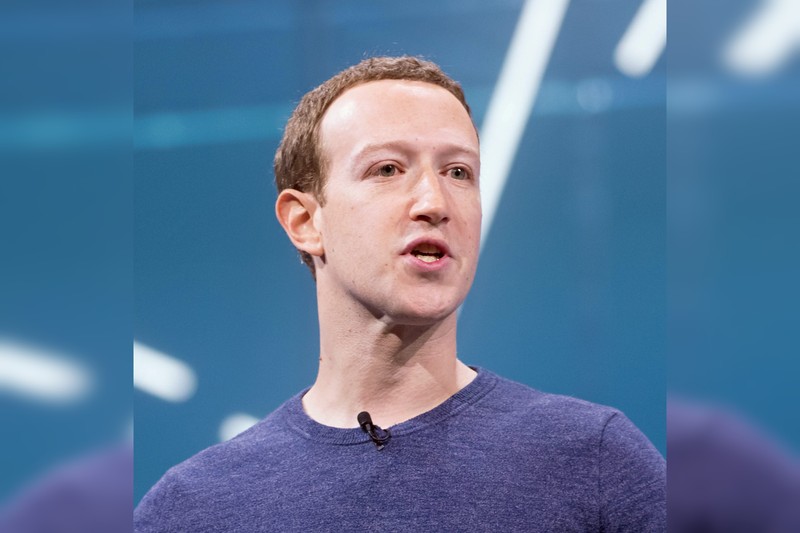
Asked on the earnings call what signposts would demonstrate a healthy return on this investment over the next 12 to 24 months, Mark Zuckerberg offered a notably qualified answer.
“That’s a very technical question,” he said. “The things that we’re watching are to make sure that we’re on track to building leading models and leading products.” He added that he doesn’t think Meta has “a very precise plan for exactly how each product is going to scale month over month, or anything like that.”
Investors heard the hedge. Melissa Otto, head of Visible Alpha Research at S&P Global, called the capex increase the clear catalyst for the sell-off. “It raises this question about what is the real ROI on all this capex that they’re spending,” she said. “I think the investment community is getting a little frustrated at the amount of cash they’re burning.”
JPMorgan downgraded Meta from overweight to neutral on Thursday, cutting its price target to $725 from $825. Analyst Doug Anmuth wrote that Meta faces a “challenging path” to returns on heavy AI spending beyond its core advertising business, noting that Alphabet and Amazon benefit from deep enterprise tech stack integrations, silicon supply, and model diversity. Both of those companies saw their shares rise after reporting earnings the same evening, partly because they could point to actual AI-driven growth in their cloud businesses.
War, Blackouts, and Missing Users
The spending shock overshadowed a softer signal in the results. Meta reported 3.56 billion daily active people for March, below the 3.62 billion Wall Street expected and a decline of more than 5% from the fourth quarter. The company blamed internet disruptions in Iran — where US combat operations began in late February — and a restriction on WhatsApp access in Russia.
The war’s ripple effects extend beyond user counts. Rising oil prices and supply chain disruptions from the conflict threaten to inflate infrastructure costs across the sector — precisely the dynamic Meta’s revised capex guidance appeared to confirm.
Layoffs That Feed the Machine
Meta announced last week that it would cut roughly 10% of its workforce, approximately 8,000 employees, while eliminating 6,000 open roles. The reductions follow earlier layoffs in January targeting the Reality Labs unit and another round in March hitting Facebook, global operations, and sales teams.
Zuckerberg framed the cuts as a capital reallocation: the company needs to redirect resources toward infrastructure spending. The framing deserves scrutiny. Meta’s headcount as of March 31 stood at 77,986, up 1% year-over-year, driven by aggressive hiring of AI talent — including the $14.3 billion Scale AI deal and the recruitment of CEO Alexandr Wang last June. The layoffs, by contrast, are concentrated in sales, recruiting, and hardware. The people building AI infrastructure are expensive. The people who are not building it are expendable.
CFO Susan Li told analysts that cost growth was driven by infrastructure depreciation, data center operating expenses, third-party cloud spend, and compensation for the new technical hires.
What the Consensus Still Believes
Meta projected second-quarter revenue between $58 billion and $61 billion, roughly in line with the $59.5 billion analysts expected. The company released Muse Spark, its first proprietary foundation model, in early April. Zuckerberg said the model drove double-digit percentage increases in Meta AI sessions per user.
Of 67 analysts covering Meta, 60 still rate the stock a buy or strong buy, according to LSEG data. The consensus bet remains that the spending will pay off — that the advertising moat holds, the models improve, and new revenue streams materialize before the cash pile runs thin.
Wall Street just wants to see the receipts.
Sources
- Meta Reports First Quarter 2026 Results — Meta Investor Relations
- Meta stock drops on quarterly results as ‘internet disruptions’ in Iran drag down user numbers — CNBC
- Meta just bumped its 2026 capex forecast up to as much as $145 billion. Zuckerberg says it’s a ‘very technical question’ when asked about ROI — Fortune
- Meta Platforms gets a downgrade from JPMorgan on massive AI spending forecast — CNBC
Discussion (9)