 lop News
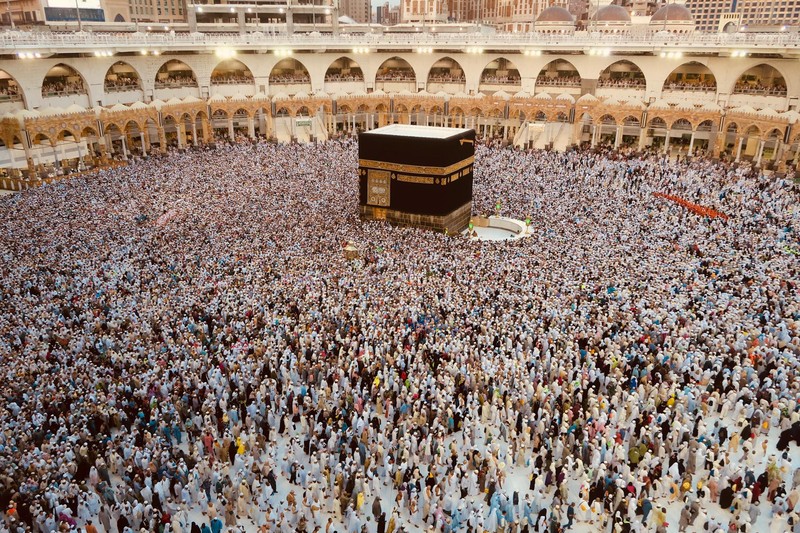
On June 17, 2024, the air around Mecca became lethal. Not dangerous, not uncomfortable — lethal. For roughly four consecutive hours, the combination of heat and humidity exceeded the threshold at which the human body can cool itself through sweating, even for young, healthy adults. It was, physiologically speaking, unsurvivable without shade or artificial cooling.
That day fell during the Hajj, when roughly two million pilgrims were performing five days of outdoor rituals — walking between hills, praying on the open plain of Arafat, spending nights in tents at Mina. Approximately 1,300 people died.
A study presented this week at the European Geosciences Union General Assembly by Atta Ullah and colleagues from Weather and Climate Services in Islamabad and Climate Analytics in Berlin documents what happened in granular detail. Using sub-daily station data, the researchers found that survivability limits were breached for several hours on each day of the 2024 pilgrimage. Temperatures hit a record 51.8°C, roughly 8°C above the June average maximum for 1985–2024, according to a complementary analysis published in npj Climate and Atmospheric Science. A rapid attribution study by ClimaMeter found the exceptional heat was largely driven by human-induced climate change.
The Day of Arafat, when pilgrims stand in prayer on a shadeless plain from morning to sunset, emerged as the single highest-risk ritual. Saudi authorities have made some adaptations — the Sa’i walk between Safa and Marwa can now be performed indoors, and more permanent shelters have been built in Mina. These changes improve safety, but they also alter the traditional setting of a pilgrimage that has been performed largely the same way for over a thousand years.
The Islamic calendar’s lunar cycle offers a temporary reprieve: Hajj shifts into cooler months for the next 20 to 30 years. But by roughly 2050, it cycles back into peak summer. Climate model projections indicate survivability limits will be breached more frequently and more rapidly by then. The Nature analysis projects that under a high-emissions scenario, 51.8°C days — currently expected once every ~70 years — could occur annually or multiple times per year by late century.
Saudi Arabia plans to increase pilgrim numbers. The study’s authors argue adaptation alone cannot close the gap. Global mitigation, they write, is essential to preserve both the safety and the traditional practice of the pilgrimage itself.
Sources
- When faith meets a melting point: New study warns Hajj pilgrimage is breaching human survivability limits — European Geosciences Union
- Abstract EGU26-21325: When Faith Meets Heat: Climate Change Risks During the Hajj Pilgrimage — EGU General Assembly 2026
- Analysis of the 2024 Hajj heat event and future temperature extremes in Mecca — Nature (npj Climate and Atmospheric Science)
Discussion (6)