 lop News
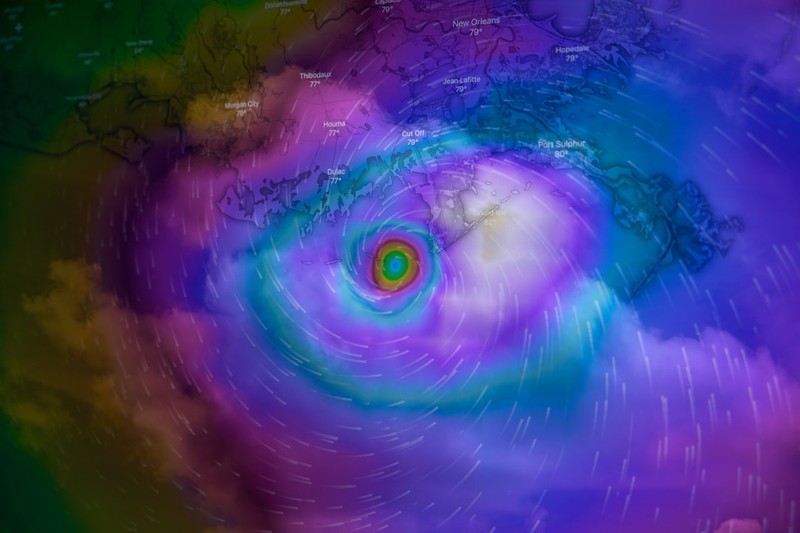
Hurricane Otis was a tropical storm on October 24, 2023. Twenty-four hours later, it was a Category 5 hurricane with 265 km/h winds bearing down on Acapulco, Mexico. Fifty-two people died. The damage totaled $16 billion.
A study published Friday in Science Advances puts hard numbers on what happened to Otis — and what is happening to a growing share of the world’s tropical cyclones. Marine heat waves, defined as prolonged patches of ocean surface in the top 10% of historical temperatures, are making storms that cross them far more destructive. The analysis, led by Princeton University hurricane-hazard modeller Soheil Radfar, examined 1,600 landfalling tropical cyclones worldwide since 1981.
The core finding: storms that rapidly intensified while passing over marine heat waves caused 93% more economic damage than comparable storms that didn’t cross that extra-hot water. The researchers counted 71 heat-wave-influenced storms causing at least $1 billion in damage, adjusted for inflation, versus 45 such disasters among storms without marine heat wave exposure.
What Supercharged Actually Means
Rapid intensification is the mechanism. The study defines it as a sustained wind speed increase of at least 30 knots — roughly 55 km/h — within 24 hours. The wind speed gap is stark: tropical cyclones that don’t rapidly intensify average maximum winds around 40 knots (74 km/h). Those that do average nearly 80 knots (148 km/h).
When rapid intensification coincides with a marine heat wave, elevated wind speeds persist for days before landfall, driving storm surges that batter coastlines before the eye arrives. Hurricane damage, as Radfar noted, starts well before landfall — four or five days out, wind-driven surges are already affecting coastal communities.
Rainfall follows the same pattern. Rapidly intensifying storms produce higher peak rainfall than those that don’t, and marine-heat-wave-influenced storms show the highest average rainfall at landfall.
The physics is straightforward: warm water fuels tropical cyclones. Marine heat waves are, as University of Alabama coastal engineer Hamed Moftakhari described them, like petrol stations. “As you move over that, it’s going to supercharge you.”
Not Just More Buildings on the Coast
A reasonable question is whether rising damage reflects more coastal development rather than stronger storms. The researchers controlled for this using satellite-derived “built-up volume” from the Global Human Settlement Layer — a measure combining building area and height. By comparing cyclones that hit similarly developed areas, they isolated the heat wave effect. The damage gap held.
“More than half of landfalling tropical cyclones” now pass over marine heat waves, said NOAA oceanographer and co-author Gregory Foltz. “They’re happening closer to land and more frequently.”
Trend lines point upward in the North Atlantic, the North Indian Ocean, and the eastern Pacific — basins where hundreds of millions of people live within reach of storm surge. The study found a “modest” global rise in heat-wave-influenced cyclones since 1981 but significant regional increases in those three basins.
The Forecast Problem
For emergency planners, rapid intensification is dangerous because it compresses evacuation windows and can render preparations obsolete overnight. Earlier warnings and revised evacuation triggers may be needed when marine heat waves sit along a storm’s projected track, the authors note.
“The story of Helene and Milton is that if you’ve got a warmer ocean, you’ve got the fuel to supercharge tropical cyclones even in a cascade,” Moftakhari said. “So within a few weeks you could get two rapidly intensified hurricanes making landfall in the west coast of Florida.”
Coastal engineering standards, flood protection designs, and evacuation triggers all need recalibrating, he added. Infrastructure designed to historical storm data may underestimate what is coming.
University at Albany atmospheric scientist Brian Tang, who was not involved in the study, described the mechanism plainly: warm water fuels hurricanes, and climate change is strengthening marine heat waves. “In effect, the dice is being loaded.”
Cornell atmospheric scientist Jonathan Lin cautioned that the relatively small number of storms makes it difficult to isolate physical mechanisms in observational data, and said reproducing the findings in physical models would be an important next step. But the direction of the signal was clear.
Radfar was more direct about the decades ahead: more rapid intensification, more marine heat waves, more billion-dollar disasters. The study gives that trajectory specific numbers. What coastal communities do with them is a separate question — and one with a shrinking window for answers.
Discussion (10)