 lop News
Five cities. One Saturday morning. And Mali’s defence minister is dead.
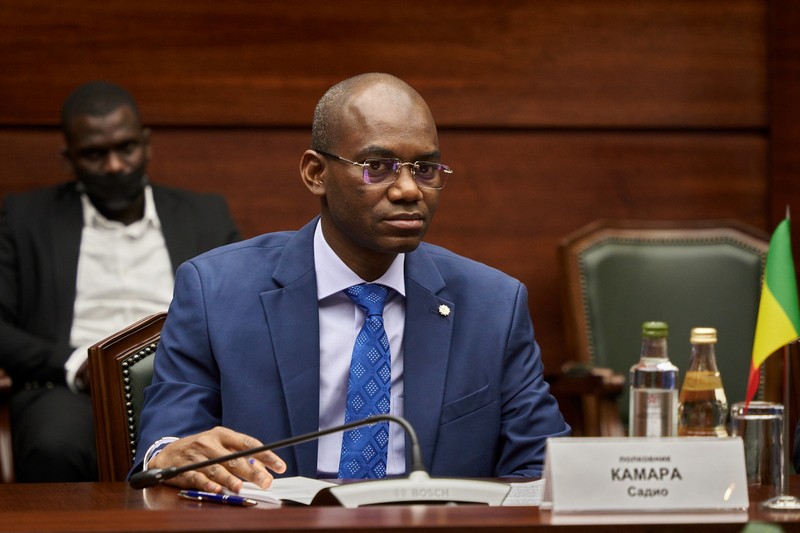
General Sadio Camara was killed when a suicide car bomb devastated his residence in Kati, the heavily fortified garrison town 15km northwest of Bamako where the junta’s leadership lives, according to family members and military sources confirmed by Al Jazeera and France 24. At least three members of his family also died in the blast. A central figure in the military government that seized power in back-to-back coups in 2020 and 2021, Camara had been viewed by some analysts as a possible future leader of Mali.
His killing was not an isolated strike. It was one component of the largest coordinated assault Mali has seen in years, carried out simultaneously across Bamako, Kati, Gao, Kidal, and Sévaré — a span of roughly 1,500km.
The al-Qaeda-linked group Jama’at Nusrat al-Islam wal-Muslimin (JNIM) claimed responsibility on its website, Az-Zallaqa, saying the operation was conducted jointly with the Azawad Liberation Front (FLA), a Tuareg-led separatist coalition. In Bamako, sustained heavy weapons fire and automatic rifle shots erupted near Modibo Keïta international airport, adjacent to an air force base. An Associated Press journalist at the scene reported a helicopter circling overhead. The US embassy issued a security alert citing explosions and gunfire near Kati and the airport.
An alliance of convenience
The partnership between JNIM and the FLA is new in execution but not in concept. Analyst Bulama Bukarti told Al Jazeera that the two groups, despite pursuing different objectives, announced a cooperation agreement last year. “What we have seen over the last few days is the actual implementation of this agreement.”
The precedent is troubling. In 2012, jihadists and Tuareg separatists similarly joined forces to overrun northern Mali, igniting the Sahel security crisis that has consumed the region ever since. Ulf Laessing, head of the Sahel programme at the Konrad Adenauer Foundation, described Saturday’s assault as the largest coordinated attack in years and flagged the JNIM-FLA coordination as particularly concerning.
In Kidal — the symbolic prize recaptured by Malian forces and Russian mercenaries in 2023 — the FLA announced on Sunday that Russian Africa Corps forces had agreed to withdraw. A Kidal resident told AFP that fighters from armed movements had taken over the streets. A security source told AFP the attackers’ primary aim was to seize Kidal, calling it “a rather powerful symbol.”
A government losing ground it claimed to hold
The Malian government issued a statement Saturday evening saying the situation was “totally under control in all the localities” that were attacked and reporting 16 civilians and soldiers wounded with “limited material damage.” That assessment collided with the facts on the ground: by Sunday, more than 24 hours after the assault began, residents in Kidal reported heavy gunfire and loud explosions still ringing out. In Kati, residents said fighting had resumed “everywhere,” with one reporting jihadists positioned on a hill above the town.
Videos posted on social media showed militant convoys of trucks and motorcycles moving through Kati’s deserted streets.
The junta, led by General Assimi Goita, came to power promising to restore security after the civilian government’s failures against jihadist insurgents. Goita survived the attacks and was moved to a secure location, Al Jazeera reported. But the loss of his defence minister — killed by a car bomb in what is supposed to be the country’s safest military installation — is a devastating blow to that narrative.
The post-Western security vacuum
Mali’s military rulers, like their counterparts in neighbouring Niger and Burkina Faso, severed ties with former colonial ruler France and pivoted toward Russia after their coups. Russian forces from the Africa Corps — the state-controlled successor to the Wagner Group — have been fighting alongside Mali’s army. The results have not matched the rhetoric. Analysts say the security situation has deteriorated, with a record number of militant attacks.
In 2024, an al-Qaeda-linked group attacked Bamako’s airport and a military training camp, killing scores of people. This weekend’s operation was bolder in scope, sharper in its targeting, and more devastating in its results.
UN Secretary-General Antonio Guterres called for “coordinated international support to address the evolving threat of violent extremism and terrorism in the Sahel.” The African Union and the US Bureau of African Affairs also condemned the attacks.
Condemnations will not retake Kidal. Statements of solidarity will not replace a defence minister who understood the junta’s power structure from the inside. The organisations striking Mali this weekend demonstrated reach, coordination, and intelligence capacity that no government statement can wish away.
Discussion (9)