 lop News
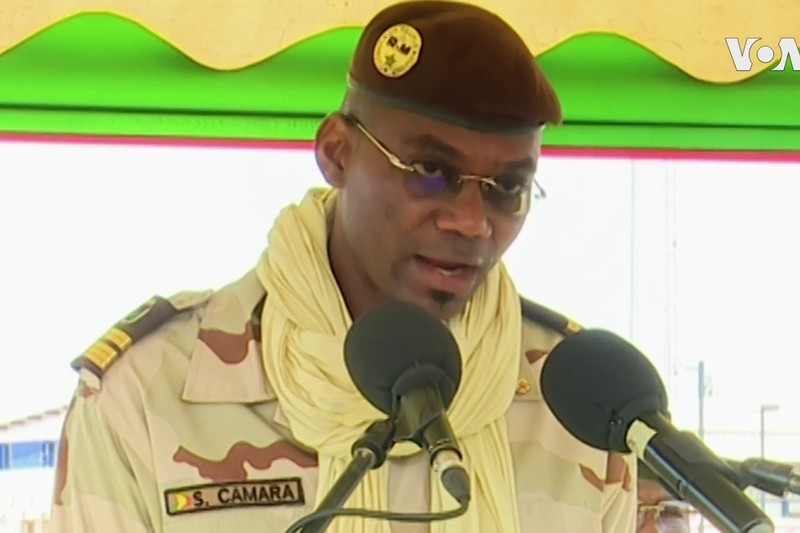
The suicide truck hit the defence minister’s residence at dawn. By the time the shooting stopped in Kati, the garrison town 15 kilometres from the presidential palace, Sadio Camara was dead — along with at least three members of his family and an unknown number of worshippers killed when a nearby mosque collapsed in the blast.
That was Saturday, 25 April. In the week since, Mali has been fighting for its survival.
Coordinated attacks by al-Qaeda-linked jihadists and Tuareg separatist fighters struck more than half a dozen locations simultaneously — Kati, Gao, Kidal, Mopti, Sévaré, and the perimeter of Bamako’s main international airport. Camara and the military intelligence chief, Modibo Koné, were both killed. Russian paramilitaries were escorted out of the symbolic northern city of Kidal under agreement with separatist forces. An Mi-8AMTSh helicopter belonging to Russia’s Africa Corps was shot down near Gao, reportedly with everyone onboard killed. By Friday, jihadists had established checkpoints on major roads leading into Bamako, a city of four million, tightening a blockade around the capital.
Now the junta is investigating its own soldiers for complicity in the assault.
Inside the conspiracy
A statement from the prosecutor at the Military Court of Bamako, read on state television late Friday, said there was “solid evidence regarding the complicity of certain military personnel” in the planning, coordination, and execution of the attacks. At least five soldiers are under investigation: three on active duty, one retired veteran, and one who had been dismissed from the army and was subsequently killed in the fighting at Kati. An exiled politician, Oumar Mariko, has also been named. Mariko has historically denied collaborating with jihadists.
“The first arrests have been successfully carried out, and all other perpetrators, co-perpetrators, and accomplices are actively being sought,” the statement said.
The investigation compounds the crisis facing General Assimi Goïta, who seized power in coups in 2020 and 2021 on a promise to end the very insurgency that now encircles his capital.
Former foes, aligned tactics
The assault reflected an unprecedented tactical convergence between two groups with fundamentally different aims. Jama’at Nusrat al-Islam wal-Muslimin (JNIM), the al-Qaeda affiliate in the Sahel, seeks to overthrow the junta and establish Sharia law. The Azawad Liberation Front (FLA), a Tuareg-led separatist coalition, wants an independent homeland in the north. In its 25 April communiqué, JNIM publicly acknowledged its alignment with the FLA for the first time, according to the EU Institute for Security Studies. The jihadist group even offered Russia’s Africa Corps the option to sit out the fight — a calculated gesture suggesting JNIM is positioning itself as a political actor, not merely a militant one.
The convergence is producing results. Russian forces withdrew from Kidal after negotiations with the FLA. The separatists have since claimed control of a strategic military camp in the northern town of Tessalit, near the Algerian border. Mali’s army has not confirmed the pullout.
Ulf Laessing, head of the Sahel programme at the Konrad Adenauer Foundation in Bamako, described the assault as the “largest coordinated jihadist attack on Mali for years.” For Russia, he told Reuters, “the attack has been a disaster.”
A capital under siege
JNIM has vowed to enforce a total blockade on Bamako. Since September 2025, the group has intermittently choked off fuel supplies from Côte d’Ivoire and Senegal. Now checkpoints have reappeared on major arteries from the north and south, three security sources told Reuters on Friday.
The group also issued a rare French-language statement calling on Malians to rise up against what it described as a “terrorist junta” and to embrace Sharia law. The choice of French — the language of government and business — was deliberate: this was addressed to Bamako’s urban population, not the desert communities where JNIM typically operates.
Condemnation without commitment
International reactions have been swift and shallow. The African Union, the UN, and ECOWAS have all issued statements of concern. ECOWAS — from which Mali, Burkina Faso, and Niger withdrew in 2025 to form the rival Alliance of Sahel States — called for regional mobilisation. Burkina Faso’s Captain Ibrahim Traoré, who leads the Alliance, described the attacks as “backed by the enemies of the Sahel liberation struggle,” without evidence.
No external actor has offered troops. The EU condemned the attacks but, according to the EU Institute for Security Studies, offered little concrete support. UN Secretary-General António Guterres noted that an estimated 5 million people in Mali require humanitarian aid.
Goïta declared the situation “under control” in a televised address on Tuesday. The claim is difficult to square with a blockade tightening around his own capital.
Sources
- Mali in turmoil after insurgents seize towns and kill defence minister — The Guardian
- Mali defence minister killed as country hit by wave of rebel attacks — BBC News
- Mali: a breaking point – or not (yet)? — EU Institute for Security Studies
- Mali investigates soldiers over role in coordinated insurgent attacks — RFI
Discussion (9)