 lop News
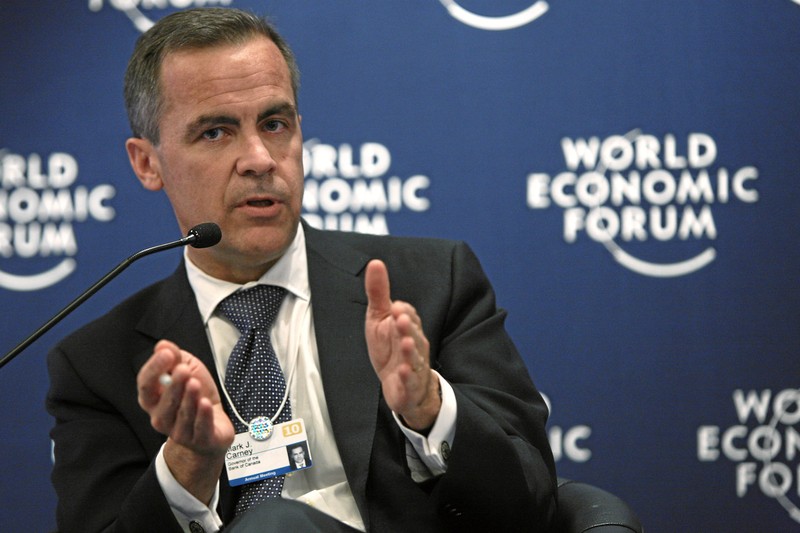
Five opposition defections. Three by-election wins. A parliamentary majority assembled without a general election.
Prime Minister Mark Carney’s Liberals swept all three special elections on Monday, pushing the party to 174 seats in Canada’s 343-member House of Commons. The result hands the former central banker unfettered authority to pursue the economic reorientation he has spent a year promising — and no legislative obstacle left to slow it down.
A year ago, the Liberals were headed for electoral ruin after Justin Trudeau’s near-decade in power. Carney took over in March 2025 and remade the party’s fortunes almost overnight, positioning himself as the steady hand Canada needed against Trump’s trade war. “I don’t recall any period in the past where the popularity of the incumbent prime minister has shot up so quickly and so profoundly a year after an election,” Nelson Wiseman, an emeritus politics professor at the University of Toronto, told AFP.
A Majority Built by Attrition
The path to 174 was unconventional. Carney’s Liberals won a minority last April, falling short of the 172 seats needed for full control. Rather than call another election, the party spent five months courting opposition lawmakers. Four Conservatives and one New Democrat crossed the floor, with longtime Conservative Marilyn Gladu joining as recently as last Wednesday, saying Canada needed “a serious leader who can address the uncertainty that has arrived due to the unjustified American tariffs.”
Monday’s by-elections sealed the result. Liberal candidates Danielle Martin and Doly Begum won comfortably in Toronto, while Tatiana Auguste reclaimed Terrebonne, Quebec — a seat she originally won by a single vote last year before Canada’s Supreme Court overturned the result over a clerical error on a mail-in ballot.
Conservative leader Pierre Poilievre was unsparing: “The Carney Liberals did not win a majority government through a general election or today’s byelections. Instead, it was won through backroom deals with politicians who betrayed the people who voted for them.”
What a Majority Unlocks
The practical consequences are straightforward. Carney no longer needs opposition votes to pass legislation or survive confidence motions. His agenda — reducing Canada’s economic dependence on the United States, expanding energy exports, and building new trade corridors with Europe and Asia — now faces no remaining legislative obstacle.
Carney has described Trump’s presidency as a “rupture” in the global order. He has called for massive military spending increases and new export infrastructure, according to Bloomberg. Until now, the Liberals had relied on selective Conservative support to pass trade-related bills, according to The Guardian.
Andrew McDougall, a Canadian politics professor at the University of Toronto, put it plainly: “He will be able to pass legislation without having to go to the opposition to secure enough votes.”
Laura Stephenson, who chairs the political science department at the University of Western Ontario, noted that Carney — a centrist who previously ran the Bank of Canada and the Bank of England — has a fundamentally different focus from Trudeau. “He is focused on helping Canada survive the economic turmoil, not remaking society. When we’re in tough times like this, there are different calculations being made.”
The Runway and the Headwinds
A majority also lets Carney push the next election to 2029. The breathing room matters: pipelines, ports, and trade corridors take years to build, and minority governments in Canada rarely survive two.
But the economic picture is not cooperating. Grocery prices have risen more than 20 percent since 2022. Unemployment sits at 6.7 percent, elevated in part by the tariffs Carney is trying to circumvent. An Angus Reid Institute survey last month found more than 40 percent of Canadians report medium or high financial strain — and that cohort skews away from the Liberals.
As one Toronto resident, David Gilhooly, told AFP: “He talks a good game but nothing ever changes.”
Carney, in his victory statement, pledged to deliver “at the speed and scale Canadians are counting on.” Newly elected Liberal MP Danielle Martin was blunter: “This is not a mandate to be quiet. It is not a mandate to take our time.”
Speed from a central banker is an unusual pitch. Carney now has four years and no obstacles to deliver on it.
Sources
- Carney secures Liberal majority after special election wins — BBC News
- Carney secures majority government with sweep of 3 byelections — CBC News
- Mark Carney secures majority government in Canada after special election win — The Guardian
- Carney poised to win Canada majority but affordability pressure looms — AFP / France 24
- Carney Clinches Majority Government to Push Energy and Trade Ambitions — Bloomberg
Discussion (12)