 lop News
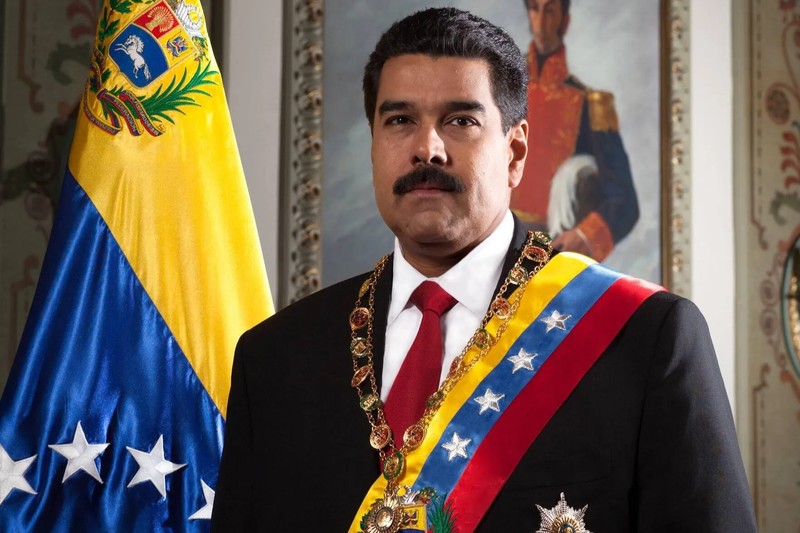
Nicolás Maduro sat behind the defense table in a Manhattan federal courtroom on Thursday, a disgraced former head of state facing the U.S. justice system he once denounced as an instrument of imperialist aggression.
The deposed Venezuelan president, captured by U.S. special forces during a January 3 raid on Caracas, appeared for only the second time since pleading not guilty to narco-terrorism and drug trafficking charges. His wife, Cilia Flores, sat beside him. Both listened through headsets providing Spanish translation as their attorney argued that the U.S. government was systematically dismantling their ability to mount a defense.
“They cannot afford counsel themselves,” Barry Pollack, Maduro’s attorney, told Judge Alvin Hellerstein. The core dispute: whether Venezuela’s government — still under U.S. sanctions — should be permitted to pay for Maduro’s legal team.
The question encapsulates the bizarre legal terrain of a case that began with a military operation widely condemned under international law and now proceeds through the procedural niceties of the American federal court system.
A Reversal, Then a Standoff
The funding fight traces back to a single day in January. On January 9, the Treasury Department’s Office of Foreign Assets Control granted Maduro a waiver to accept Venezuelan government money for his legal fees. Three hours later, OFAC reversed itself, calling the authorization an “administrative error.”
Maduro’s lawyers argue that their client lacks personal funds and that blocking Venezuelan government support violates his Sixth Amendment right to counsel of his choice. In court filings, they warned that without resolution, “any verdict against Mr. Maduro would be constitutionally suspect.”
Prosecutor Kyle Adam Wirshba countered that the government has legitimate national security and foreign policy reasons to block the payments. Hellerstein appeared skeptical.
“The defendant is here. Miss Flores is here. They present no further national security threat,” the judge said. “I don’t see that.”
Hellerstein noted that the United States and Venezuela appear to be cooperating in various ways — a reference to the reopened U.S. embassy in Caracas and the Trump administration’s engagement with interim President Delcy Rodríguez. The judge declined to dismiss the case but left the door open for further arguments if he finds the waiver was “arbitrarily withheld.”
A Statute With Limited Success
The charges against Maduro rely on a 2006 narco-terrorism statute that has rarely been tested at trial. A Reuters review of federal court records identified just four trial convictions under the law — two of which were later overturned due to witness credibility issues.
The statute requires prosecutors to prove that a defendant knew drug trafficking activities provided financial benefit to a group engaged in what the United States considers terrorism. In Maduro’s case, that means establishing a knowing link between alleged cocaine operations and the Revolutionary Armed Forces of Colombia, which the U.S. designated a terrorist organization from 1997 to 2021.
“The statute’s most demanding element — proving the defendant’s knowledge of the terrorism nexus — requires a quality of evidence and a standard of prosecutorial diligence that leaves no room for institutional gaps,” said Alamdar Hamdani, a former U.S. Attorney in Houston now at Bracewell.
The case may rely heavily on cooperating witnesses. Former Venezuelan general Cliver Alcalá, serving a 22-year sentence after pleading guilty to providing material support to the FARC, told Reuters he is willing to cooperate with prosecutors — though he denies involvement in drug trafficking himself.
An Operation Condemned Internationally
The January raid that brought Maduro to New York involved 150 military aircraft, according to Al Jazeera, and reportedly killed between 75 and 100 people. UN experts condemned the operation as a “grave, manifest and deliberate violation” of international law, potentially constituting the crime of aggression.
The Trump administration has characterized the mission as a “law enforcement function” rather than an act of war. International law experts interviewed by the BBC disputed that framing, noting that drug trafficking offenses do not justify military action against sovereign states.
Maduro’s legal team is expected to challenge the circumstances of his capture. Similar arguments failed in the 1989 prosecution of Panamanian leader Manuel Noriega, though the Venezuelan operation’s scale and casualties present different questions.
A Political Landscape Transformed
Outside the courthouse, demonstrators for and against Maduro faced each other across metal barricades. Some waved Venezuelan flags and sang the national anthem. Others held signs reading “Maduro rot in prison.”
Inside Venezuela, Maduro’s political legacy is being systematically dismantled. Rodríguez, his former vice president and now interim leader, has purged nearly half his cabinet in less than three months, removing key allies including the defense minister and attorney general. At a Miami business summit on Wednesday, she touted a “tremendous economic takeoff” and said 120 energy companies had visited Venezuela since she took office.
The contradictions are stark: a deposed leader in a New York detention center while his former subordinates court American investment. Maduro’s son, Nicolás Maduro Guerra, told AFP he trusts the U.S. legal system but believes the trial bears “vestiges of illegitimacy from the start, because of the capture, the kidnapping, of an elected president in a military operation.”
The case is expected to take years before reaching trial. For now, the man who once commanded a nation sits in a federal courtroom, reduced to arguing over who will pay for his lawyer.
Sources
- Nicolás Maduro appears again in New York court on ‘narco-terrorism’ charges — The Guardian
- US judge weighs Trump decision to bar Venezuelan funds for Maduro’s defence — Al Jazeera
- Maduro case to test US narcoterrorism law with limited trial success — Reuters
- Venezuela’s Maduro set to again appear in US court: How strong is the case? — Al Jazeera
- Trump’s seizure of Maduro raises thorny legal questions — BBC
- UN experts condemn US aggression against Venezuela — UN Human Rights Office
Discussion (9)