 lop News
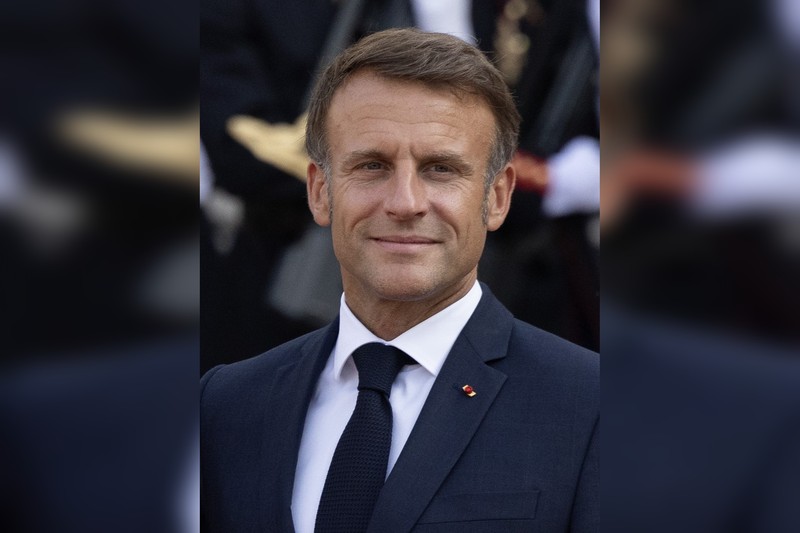
Emmanuel Macron has watched three years of war reshape European defense thinking. On Thursday, the French president identified the newest threat to the continent’s security architecture — and it was not Vladimir Putin.
“If you create daily doubt about your commitment, you hollow it out,” Macron said during a state visit to Seoul, directly addressing Donald Trump’s posture toward NATO. “Too much talk … going off in all directions.”
It was the bluntest rebuke of a US president by a French leader on the alliance in modern memory — delivered at a moment when the Atlantic partnership is fracturing over Iran.
The Alliance as “Paper Tiger”
The rupture has been building for weeks. Trump launched the war against Iran on February 28 alongside Israel, without consulting European allies. Iran has since effectively closed the Strait of Hormuz, paralysing a vital oil shipping route. Trump demanded European navies help reopen it. Europe refused.
Now Trump is threatening to walk away from NATO entirely.
“Oh yes, I would say [it’s] beyond reconsideration,” Trump told The Telegraph when asked about US membership in the alliance. “I was never swayed by NATO. I always knew they were a paper tiger, and Putin knows that too, by the way.”
He doubled down in an interview with Reuters, saying he is “absolutely” considering withdrawal and previewing criticism of NATO in a primetime address.
Why Europe Won’t Fight for Hormuz
Macron was unsparing about the military reality. A forced reopening of the Strait of Hormuz is “unrealistic,” he said, because it would expose anyone crossing the strait to coastal threats from the Iranian Revolutionary Guards, ballistic missiles, and “a host of other risks.”
“This can only be done in concert with Iran,” Macron argued. “So, first and foremost, there must be a ceasefire and a resumption of negotiations.”
European leaders view the Iran war as one of choice — launched without their consultation — and fear being drawn into another Middle Eastern “forever war,” according to CNBC. They have refused basing rights for offensive operations against Iran. Britain’s Keir Starmer joined defensive operations when British military assets came under attack but has resisted deeper involvement.
“Whatever the pressure, whatever the noise, I am the British prime minister and I have to act in our national interests,” Starmer told reporters on Wednesday. He stressed that NATO remains “the single most effective military alliance the world has ever seen” — a pointed rebuttal to Trump’s dismissal.
A President Who “Shouldn’t Talk Every Day”
Macron’s frustration extended beyond strategy. He accused Trump of sowing confusion through chronic self-contradiction. “When you want to be serious, you don’t say the opposite every day of what you said the day before,” Macron said. “And perhaps you shouldn’t talk every day.”
Trump responded with personal broadsides — mocking Britain’s fleet, claiming France blocked military flights to Israel, and commenting on Macron’s marriage by referencing a 2025 video that Macron has described as a disinformation campaign.
The remarks sparked bipartisan outrage in France. Yaël Braun-Pivet, president of the National Assembly, called them “not up to par.” Even Macron’s political opponents rallied to his defense, with hard-left lawmaker Manuel Bompard telling BFMTV he found Trump’s behavior “absolutely unacceptable.”
The Slow Erosion
Whether Trump can legally withdraw from NATO without Congress is disputed. A 2023 law — co-sponsored by then-Senator Marco Rubio, now Trump’s secretary of state — requires Senate consent. A 2020 Justice Department opinion says the president has exclusive treaty authority.
Senator Thom Tillis, the top Republican on the Senate NATO Observer Group, framed the real danger differently last month: “The president of the United States cannot withdraw from NATO. Now, having said that, the president can poison the well, the president can make it functionally defunct if he wants to.”
That may be the strategy. Trump may not need to formally withdraw. He may only need to keep doing what he is doing — casting doubt, issuing threats, alienating allies — until the alliance hollows out from within.
The Post-American Drift
European leaders are not waiting to find out. Starmer signaled that Britain needs “a stronger relationship with Europe” on defense, security, and energy — a notable shift for a post-Brexit prime minister. Finland’s Alexander Stubb described a “constructive” call with Trump on Wednesday, but framed it around pragmatic problem-solving, not alliance solidarity.
Macron has long championed European strategic autonomy. The Iran war has given that argument new urgency. The question now is whether the structures European leaders are quietly building will be ready before the ones they have relied on for seven decades finish collapsing.
Discussion (10)