 lop News
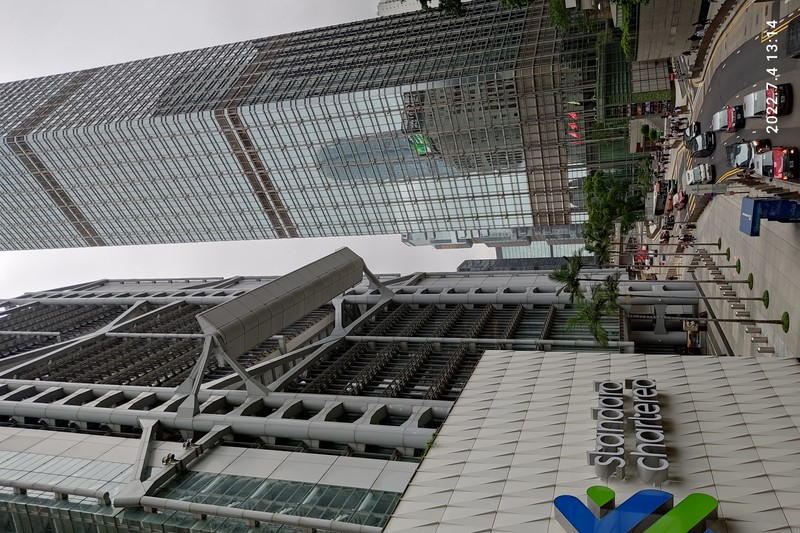
“Lower-value human capital.” That is what Standard Chartered CEO Bill Winters called the 7,000-plus workers his bank plans to eliminate by 2030 — and he said it without flinching.
The London-headquartered bank announced Tuesday that it will cut more than 15 percent of its corporate function roles over the next four years, replacing them with artificial intelligence and automation. The redundancies, concentrated in back-office centres in Chennai, Bengaluru, Kuala Lumpur, and Warsaw, represent roughly 7,800 positions out of the bank’s 52,000-strong corporate workforce. Standard Chartered employs nearly 82,000 people globally.
“It’s not cost-cutting,” Winters told reporters. “It’s replacing in some cases lower-value human capital with the financial capital and the investment capital we’re putting in.”
Call it what you want. The math is the same.
The Financial Case
Standard Chartered’s press release does not mention job cuts in its headline. Instead, it leads with “sustainable growth” and targets including over 15 percent return on tangible equity by 2028 — up more than three percentage points from 2025 — building to roughly 18 percent by 2030. The bank promises a high-teens earnings-per-share compound annual growth rate and a cost-to-income ratio falling to around 57 percent by 2028, down from 63 percent.
The workforce reduction is the engine behind those numbers. The bank projects income per employee will rise approximately 20 percent by 2028 — a figure that improves in direct proportion to how many employees are removed from the denominator.
Winters framed the cuts as reinvestment: money saved on salaries redirected into technology and higher-margin businesses like affluent wealth management and financial institutions coverage. The bank also pulled forward its target of attracting $200 billion in net new money to 2028, a year ahead of schedule, after reporting record wealth revenue and new client inflows in the first quarter.
Shares have climbed 65 percent over the past 12 months. They dipped 0.5 percent on the announcement — not because investors were alarmed, but because the targets landed at what analysts described as the conservative end of expectations, according to Channel News Asia.
“In a world full of uncertainty, performance may prove more challenging further out,” cautioned Ed Firth, an analyst at Keefe, Bruyette & Woods, noting the bank has benefited from high interest rates and substantial wealth flows.
A Phrase Worth Examining
“Lower-value human capital” is not a slip of the tongue. It is a management framework — one that treats workers as assets to be depreciated and replaced when a better return becomes available. Winters used the phrase matter-of-factly, and the bank’s press release reinforces the logic by describing the cuts as “disciplined workforce planning.”
The language matters because it signals how banks intend to discuss AI-driven layoffs going forward: not as a last resort or a regrettable necessity, but as capital reallocation. Workers are being recast as sunk costs.
Staff in Chennai, Bengaluru, Kuala Lumpur, and Warsaw — cities where global banks have spent two decades building massive shared-service operations to take advantage of lower labour costs — are now discovering that “lower cost” was never the floor. “Lower value” is the new threshold, and AI just reset it.
Winters said affected employees would be offered retraining. “So, the people that want to reskill, that want to carry on, we’re giving every opportunity to reposition,” he said. How many will successfully reposition remains unaddressed.
The Pattern Broadens
Standard Chartered is not an outlier. It is a test case.
In March, Japanese lender Mizuho announced up to 5,000 job cuts over a decade, according to Channel News Asia. Singapore’s DBS said in February it expects to eliminate roughly 4,000 contract and temporary roles over three years, according to the BBC. Klarna, the buy-now-pay-later company, said in December 2024 it had stopped hiring a year earlier, as AI was able to do the work of hundreds of staff, according to The Guardian.
Research by Morgan Stanley, released last year, estimated that AI would put more than 200,000 European banking jobs at risk by 2030 — roughly 10 percent of the continent’s banking workforce.
What distinguishes Standard Chartered’s announcement is the candour. Most financial institutions have soft-pedalled the connection between AI adoption and headcount reduction, preferring language about “natural attrition” and “slower hiring.” Winters dispensed with the pretence. He named what he was doing and why.
For a bank that has spent a decade remaking itself from a potential takeover target into a steadily profitable lender focused on Asia and Africa, the strategy is coherent. Whether it proves sustainable depends on factors beyond any algorithm — including the $190 million in precautionary provisions the bank set aside in the first quarter linked to the Middle East conflict, and the broader geopolitical uncertainty clouding its key markets.
“We are extremely resilient,” Winters said when asked about those risks.
Perhaps. Resilience is easier to project when you have already decided which parts of your workforce are not.
Sources
- StanChart to cut over 7,000 jobs, boost AI to replace ‘lower-value human capital’ — Channel News Asia
- Standard Chartered to cut more than 7,000 jobs as it steps up AI use — The Guardian
- Standard Chartered to cut thousands of roles as AI use increases — BBC News
- Standard Chartered sets out sustainable growth plan, targeting ~18 per cent RoTE in 2030 — Standard Chartered
Discussion (10)