 lop News
Every living thing on Earth — from bacteria clinging to deep-sea hydrothermal vents to redwood trees to the person reading this article — builds its proteins from the same molecular alphabet: 20 amino acids. This shared chemistry is one of the deepest commonalities of life, conserved across every organism that has ever been studied. Drop one amino acid from the set and the whole system should, by every expectation, collapse.
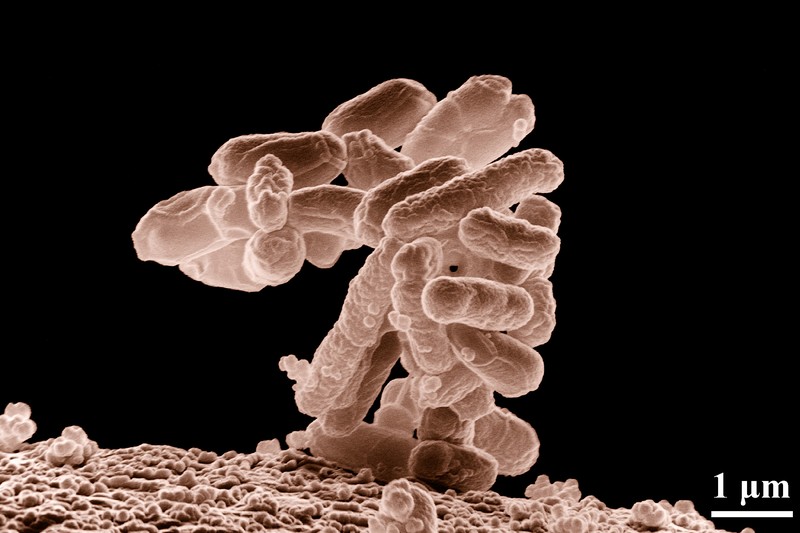
Except it didn’t. Scientists at Columbia University have reengineered E. coli bacteria to operate a critical piece of cellular machinery using just 19 of those amino acids, dropping isoleucine from the roster entirely. The work, published in Science, demonstrates that life’s supposedly immutable molecular alphabet can, in fact, be rewritten — and that the rules governing biology may be more flexible than anyone assumed.
“It’s very exciting that it’s possible,” said Julius Fredens, a synthetic biologist at the National University of Singapore who was not involved in the research.
A letter removed from the script
Think of the amino acid alphabet as a 20-letter language. Every protein ever made by any cell is a word written in that language. Now imagine trying to remove one letter — say, ‘R’ — from English, rewriting every word that contains it while keeping the language functional. That is roughly what Harris Wang, a synthetic biologist at Columbia, attempted with isoleucine.
Proteins are chains of amino acids folded into precise three-dimensional shapes. Even small changes to the sequence tend to disrupt function, which is why most researchers have left the canonical 20 amino acids alone. Wang’s early attempts bore out the conventional wisdom: he simply swapped isoleucine for amino acids of similar size and shape, and fewer than half of the modified proteins still worked. The project went on the shelf for years.
AI tools find what intuition misses
What eventually revived the effort was a new generation of computational tools. Protein-structure predictors like AlphaFold can model how a protein folds, and protein language models can suggest entirely novel amino acid sequences that still fold and function. Crucially, these tools could identify non-obvious substitutions — replacements for isoleucine that a human researcher, relying on chemical intuition, would be unlikely to try.
The AI-guided redesign is the method behind the result, not the headline. But it marks a genuine shift in how synthetic biology operates: instead of manually tweaking proteins one at a time and hoping for the best, researchers can now use computational tools to redesign entire systems, exploring possibilities that would take lifetimes to test by trial and error.
Why target the ribosome
Rewriting all 4,000-plus proteins in E. coli was too ambitious a starting point. Wang’s team focused instead on the ribosome: the molecular factory at the heart of every cell, which translates genetic instructions into functional proteins. The ribosome is a sprawling complex of more than 50 proteins and catalytic RNA. It is essential, ancient, and virtually unchanged across all domains of life.
If this particular machine could run without isoleucine, Wang reasoned, the same approach might extend to the rest of the cell. The choice of target was both practical — the ribosome, while complex, is a bounded system — and symbolic. Nothing in biology is more fundamental than the mechanism that builds proteins.
What comes next
The implications run in two directions. Looking backward, the work hints that early life may have operated on a smaller amino acid repertoire — that the canonical 20 were not the starting point but the result of billions of years of expansion. Looking forward, the study provides a blueprint for engineering cells that do things nature never attempted.
If researchers can subtract an amino acid, they can also add new ones. Organisms built with expanded or altered amino acid repertoires could produce proteins with chemical properties no natural protein possesses — novel materials, drugs, or industrial enzymes that simply cannot exist within the standard 20-acid framework.
The research does not yet demonstrate that a complete organism can thrive without isoleucine — only that its ribosomal machinery can. Scaling the approach across the full proteome remains a formidable challenge. But the principle is established, and it is a striking one: one of life’s deepest constraints turns out to be more like a strong suggestion.
Discussion (10)