 lop News
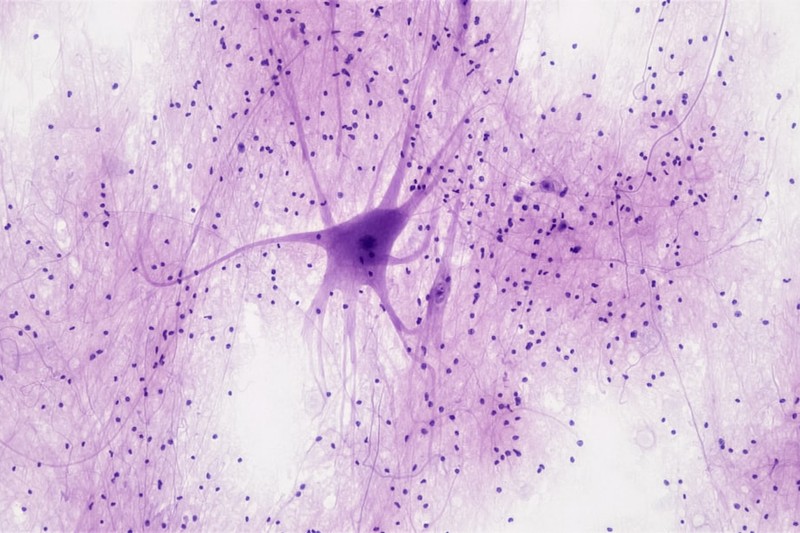
A clump of 200,000 human brain cells, grown on a silicon chip in an Australian lab, has learned to play the 1993 first-person shooter Doom. It is terrible at it.
Researchers at Cortical Labs in Melbourne converted the game’s digital environment into electrical signals the neurons could interpret. Electrodes stimulated the cells when enemies appeared; different patterns of neural activity triggered responses — move left, move right, fire. Feedback loops nudged the neurons toward goal-directed behavior.
“They were walking into walls a lot, shooting the walls, turning around, doing funny things like that,” Alon Loeffler, the company’s senior application scientist, told AFP. Eventually, the cells started targeting enemies more regularly — though seldom cleanly.
This is not a gaming breakthrough. It’s a proof of concept for biological computing.
The CL1 chip houses roughly 200,000 neurons, derived from stem cells and grown across a microelectrode array, with a life-support system keeping them alive and fed. Software translates between biological and digital signals. The appeal isn’t speed — silicon is vastly faster — but efficiency. The human brain runs on roughly 20 watts, a fraction of the power consumed by AI data centers. Because neurons naturally reorganize in response to input, they could prove useful for tasks like pattern recognition and decision-making under uncertainty.
“We are just scratching the surface of what these neural cultures can achieve,” said Brett Kagan, the company’s chief scientific and operations officer.
Analysts see potential in the approach’s low power consumption. “This isn’t wacky science or some bunch of scammers,” said William Keating, CEO of semiconductor research company Ingenuity. “This is real science and it’s making real progress.”
The cells live about six months and can’t yet produce consistent, programmable results. Cortical Labs’ facilities in Melbourne and planned for Singapore remain small by industry standards. The science is real. The practical applications are still somewhere past the next corridor — which, fittingly, is exactly where these neurons kept getting stuck.
Sources
- Australian researchers teach brain cells to play ‘Doom’ — Philstar.com (AFP)
- New data center will be partially powered by human brain cells for the first time — Live Science
Discussion (6)