 lop News
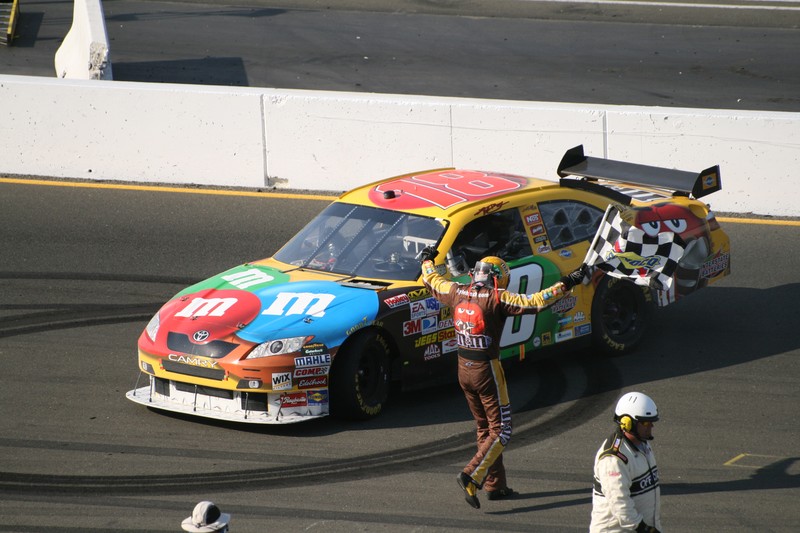
234 wins across NASCAR’s three national series. Two Cup Series championships. More than two decades rewriting stock car racing’s record books. On Thursday, Kyle Busch died at 41, three days before he was scheduled to compete in the Coca-Cola 600 at Charlotte Motor Speedway.
The Busch family, Richard Childress Racing, and NASCAR confirmed the death in a joint statement. No cause has been officially disclosed. Mathrubhumi, citing people familiar with the situation, reported that Busch became unresponsive while testing in Chevrolet’s racing simulator in Concord, North Carolina, on Wednesday, though this has not been independently confirmed.
Busch had been dealing with a sinus cold earlier this month during a race at Watkins Glen, New York, where he radioed his crew asking a doctor to give him a “shot” after the event, according to NPR. Television broadcasters noted that the illness was worsened by intense G-forces at the road course. It remains unclear whether the earlier illness was connected to his death.
A Record That Defies Comparison
For readers outside the American motorsport orbit, stock car racing is a uniquely US phenomenon — high-speed oval-track competition with heavy sedans that bears little resemblance to Formula One. Within that world, Busch was the defining talent of his generation.
His 234 combined victories across NASCAR’s Cup, O’Reilly Auto Parts, and Craftsman Truck series are the most by any driver in history. He won 63 Cup races (ninth all-time), 102 O’Reilly Auto Parts races (a record), and 69 Truck races (also a record). He claimed Cup Series championships in 2015 and 2019.
The 2015 title ranks among NASCAR’s great comeback stories. Busch returned from injury midway through the season and stormed back to claim the championship, according to Mathrubhumi.
‘Rowdy’ and Proud of It
Busch was never universally beloved, and he seemed to prefer it that way. Nicknamed “Rowdy” — a nod to the hot-headed character in the racing film “Days of Thunder” — and “Wild Thing,” he was known for post-race confrontations, feuds with fellow drivers, and an edge that made him the sport’s most polarizing figure.
He was fired early in his career by Hendrick Motorsports to make room for Dale Earnhardt Jr. Busch responded by joining Joe Gibbs Racing in 2008, where he won 56 of his 63 Cup races and became the face of Toyota’s NASCAR program for 15 years.
Even rivals with tangled histories acknowledged his gift. “Kyle and I had a really challenging existence for many years,” Earnhardt said in a statement. “But we luckily took the time to figure out our differences […] it was he who made the effort for that to be possible.”
Busch’s competitive fire burned to the end. Last month at Kansas Speedway, while several laps down, he raced hard against former teammate Denny Hamlin — with whom he had been publicly feuding — and held up the race leader long enough to alter the finish.
A Final Win, a Haunting Final Quote
The previous weekend at Dover, Busch won the Truck Series race for Spire Motorsports. Afterward, he was asked how many more races he hoped to win.
“You take whatever you can get, man,” Busch said. “You never know when the last one is going to be, so cherish them all — trust me.”
Those words now carry a weight he could not have anticipated. He finished 17th in the NASCAR All-Star race — the final start of his career.
A Sport in Mourning
News of Busch’s death spread quickly through the motorsport world. At Indianapolis, where IndyCar teams had already wrapped up media day for the Indianapolis 500, the mood shifted as word spread through the nearby streets of Speedway, Indiana.
“Absolute shock. Very hard to process,” veteran driver Brad Keselowski wrote on social media.
“Absolutely cannot comprehend this news,” Hamlin posted. “We just need to think of his family during this time. We love you KB.”
NASCAR confirmed that Sunday’s Coca-Cola 600 will proceed as scheduled. Austin Hill will replace Busch in the No. 8 Chevrolet for Richard Childress Racing. Details of tributes during the race weekend are still being finalized.
Busch is survived by his wife, Samantha, their son Brexton, 11, and daughter Lennix, 4.
His death comes five months after former driver Greg Biffle, his wife, their two children, and three others died in a plane crash in Statesville, North Carolina. For a sport built on speed and risk, Busch’s death arrived not on the track but in a hospital bed — sudden, quiet, and incomprehensible to the community he defined.
Discussion (10)