 lop News
Different name. Different route. Same fight.
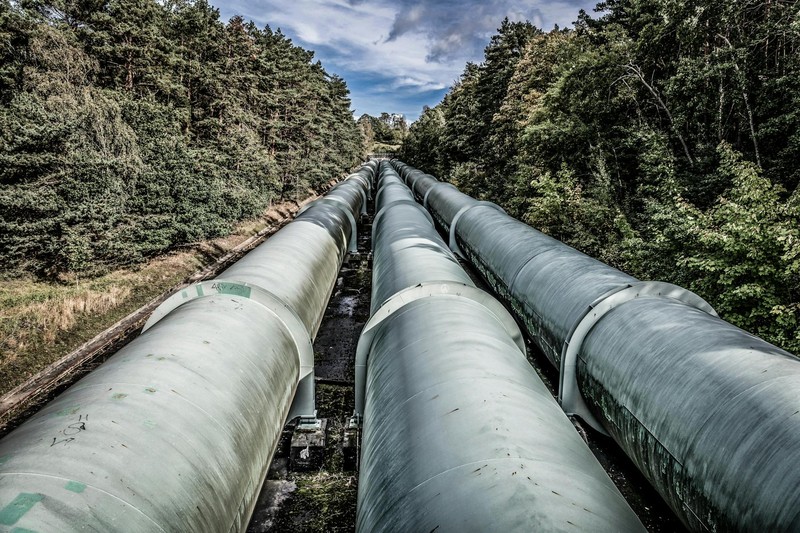
President Donald Trump signed a presidential permit Thursday authorizing the Bridger Pipeline Expansion, a 650-mile crude oil pipeline from Saskatchewan through Montana to Guernsey, Wyoming. The project has already acquired a nickname: “Keystone Light.”
The numbers tell the story of the echo. The pipeline would carry up to 550,000 barrels of Canadian crude per day — roughly two-thirds the capacity of the Keystone XL project that Joe Biden cancelled on his first day in office in 2021. The design allows for potential doubling to approximately 1.1 million barrels daily, according to Oil and Gas Watch.
The timing is not incidental. James Coleman, an energy law professor at the University of Minnesota, told CBC News the project responds to rising Canadian oil production and what he called “the biggest threats to waterborne traffic of oil that we’ve ever seen in the world.” He added that North America is uniquely well positioned to weather the energy crisis caused by the US war in Iran, thanks to the continent’s mix of heavy oil, light oil, refining capacity, and natural gas — provided the infrastructure exists.
A Bilateral Calculation
The project is a US-Canadian venture. Bridger Pipeline, a Casper, Wyoming-based subsidiary of True Company, would build the US segment. South Bow — created when TC Energy spun off its oil pipeline business in 2024 — is separately evaluating a “Prairie Connector” that would revive parts of the already-permitted Keystone XL corridor on the Canadian side.
The pipeline could increase Canadian crude exports to the US by more than 12 percent, according to CBC News. That figure lands amid a trade war between the two countries and ahead of negotiations on a new North American trade agreement. Prime Minister Mark Carney floated reviving Keystone XL to Trump during an October White House meeting.
Canada’s natural resources ministry said the government remains focused on “strengthening Canada’s position as an energy superpower” and diversifying trade partnerships — notably not mentioning the US as the sole destination.
Wyoming’s Hub
For Wyoming, the pipeline is a significant prize. Guernsey, population roughly 1,200, already serves as a pipeline junction. Bridger would feed Canadian crude into existing networks connecting to Gulf Coast refineries. Company spokesperson Bill Salvin said more than 70 percent of the route would follow existing pipeline corridors and 80 percent would run on private land. The line would carry crude from Canada’s oil sands region, among other grades.
The Parent Company’s Record
Bridger’s parent company brings a troubled safety history. Subsidiaries of True Company have been responsible for several major spills: more than 50,000 gallons of crude into Montana’s Yellowstone River in 2015, contaminating a city’s drinking water; 45,000 gallons of diesel in Wyoming in 2022; and more than 600,000 gallons of crude in North Dakota in 2016. True subsidiaries paid a $12.5 million civil penalty to settle a federal lawsuit over the North Dakota and Montana spills.
Salvin said Bridger has since developed an AI-based leak detection system and plans to bore 30 to 40 feet beneath major rivers rather than laying pipe in shallow trenches — the method that failed in the 2015 Yellowstone spill.
Racing the Clock
Bridger hopes to begin construction in fall 2027 and finish by late 2028 or early 2029, months before Trump’s term ends January 20, 2029. The company appears to be racing to make the pipeline a fait accompli before a potential administration change could reverse the permit — precisely as Biden did with Keystone XL.
The Trump administration has moved to clear the path. Executive orders on Trump’s first day — “Unleashing American Energy” and “Declaring a National Energy Emergency” — direct agencies to expedite large infrastructure projects. The Department of Interior has narrowed the environmental effects agencies must consider under the National Environmental Policy Act, potentially shortening Bridger’s review.
Opponents are organizing. Jane Kleeb, executive director of Bold Alliance, which fought Keystone XL for 13 years, said: “You can rename it, rebrand it, repackage it — Keystone XL will never be built.” Krystal Two Bulls, executive director of Honor the Earth, called it “just the Keystone XL pipeline renamed and rebranded.”
Coleman, the University of Minnesota professor, warned that legal challenges similar to those that bogged down Keystone XL are likely. The new route avoids Native American reservations and uses existing corridors — lessons from the original fight — but the underlying tension between energy security and climate commitments remains unresolved. If anything, it has sharpened.
Sources
- Trump gives go-ahead to major new Canada-US oil pipeline — Associated Press
- Presidential Permit: Authorizing Bridger Pipeline Expansion LLC to Construct, Connect, Operate, and Maintain Pipeline Facilities at the International Boundary at Phillips County, Montana — The White House
- Trump signs order authorizing Bridger’s Canada-Wyoming crude pipeline — CBC News
- The Keystone XL pipeline returns as ‘Keystone Light,’ but still faces heavy opposition — Oil and Gas Watch
Discussion (9)