 lop News
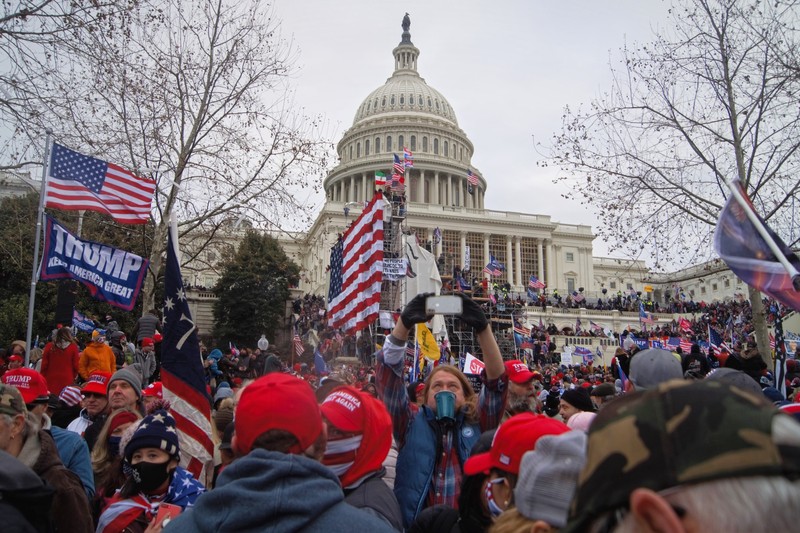
The same Justice Department whose prosecutors called the January 6 attack “a violent attack on democracy” has asked a federal appeals court to erase the seditious conspiracy convictions it won against the leaders who organized it.
In filings submitted Tuesday to the US Court of Appeals for the District of Columbia Circuit, prosecutors asked the court to vacate the convictions of 12 members of the Proud Boys and Oath Keepers — the last significant legal consequences from the Capitol attack more than five years ago. If approved, the move would wipe away guilty verdicts the Biden administration celebrated as a landmark in accountability.
This is not a pardon or a commutation. It is something legally stranger: a politically appointed Justice Department asking the judiciary to retroactively nullify verdicts its own career prosecutors secured, on the grounds that continued prosecution is “in the interests of justice.”
The Reversal
President Donald Trump pardoned roughly 1,500 January 6 defendants on his first day back in office last year. But he commuted — rather than pardoned — the sentences of 14 defendants, including the highest-ranking Proud Boys and Oath Keepers leaders. Commutation freed them from prison but left their convictions on the books.
Those convictions had been winding through the appeals process with filing deadlines approaching. Rather than defend the verdicts, the Justice Department under US Attorney Jeanine Pirro asked the court to scrap them.
Defending the convictions would have required Trump administration officials to stand behind trial arguments — specifically, that the Proud Boys functioned as “Donald Trump’s army” and that Oath Keepers founder Stewart Rhodes sought “to stop the lawful transfer of power.” Making that case would have meant affirming that far-right extremist groups acted on the president’s behalf to overturn an election he lost.
The filing cited Trump’s commutation as a basis for the decision and referenced a similar move earlier this year to vacate the conviction of Trump ally Steve Bannon, according to Politico.
What Erasure Means
The practical stakes are real even though all 12 defendants are already free. Alexis Loeb, a former deputy in the Justice Department’s now-shuttered Capitol Siege Section, told NBC News that vacating the convictions would remove collateral consequences of felony records, including prohibitions on firearm ownership.
Rhodes had been sentenced to 18 years. Proud Boys members Ethan Nordean, Joseph Biggs, and Zachary Rehl received 18, 17, and 15 years respectively. Former Proud Boys chairman Enrique Tarrio, sentenced to 22 years, received a full pardon and was not included in Tuesday’s filing.
Defense attorneys welcomed the move. Nicholas Smith, representing Nordean, told CNN he was “grateful” to the DOJ and said it was “good for everyone of all political persuasions that sedition charges are not used for protests that turn into riots.” Rehl — captured on video spraying officers with chemical spray during the riot — wrote on social media: “Persistently fighting for truth and justice pays off.”
Former Metropolitan Police Officer Michael Fanone, who suffered a heart attack after a rioter shocked him with a stun gun, responded differently. “I would remind Americans that these were traitors to this country,” Fanone said. “They planned, incited and carried out an insurrection.”
Xochitl Hinojosa, who served as the DOJ’s director of public affairs under Biden, called the move “a slap in the face to the American people and American democracy.”
The Broader Pattern
Governments retroactively redefining attacks on state institutions is a pattern familiar to observers of democratic erosion worldwide. The mechanics here are what stand out. Trump did not simply pardon the sedition convicts — a power the Constitution grants the executive in full. His Justice Department is asking the judiciary to concur, inviting a federal court to participate in its own institutional diminishment.
The DC Circuit will now decide. Courts traditionally defer to prosecutors on discretionary decisions, but the circumstances — a department reversing its most consequential convictions at the behest of a president whose actions prompted them — test the limits of that deference.
Sources
- Justice Department moves to toss conspiracy convictions for Jan. 6 rioters — NPR
- Justice Dept. Moves to Vacate Jan. 6 Convictions for Far-Right Extremists — New York Times
- Justice Department moves to dismiss Proud Boys and Oath Keepers’ seditious conspiracy convictions — CNN
- DOJ moves to erase convictions of Proud Boys, Oath Keepers leaders who led Jan. 6 attack — Politico
- Trump administration moves to toss remaining Jan. 6 convictions, clearing Proud Boys, Oath Keepers leaders — NBC News
Discussion (10)