 lop News
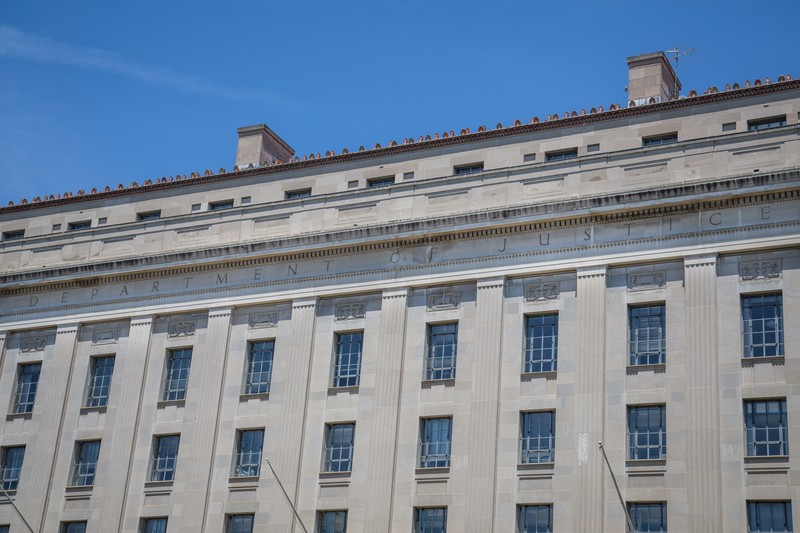
For months, Justice Department attorneys told federal judges they had no plans to share state voter roll data with immigration authorities. On Thursday, a senior official conceded in a Rhode Island courtroom that the department intends to do exactly that.
The disclosure — first reported by CBS News and confirmed to NPR by the Rhode Island secretary of state’s office — pulled into the open an arrangement that had been taking shape behind closed doors for weeks. The plan: feed sensitive voter registration data collected by the Justice Department into a Department of Homeland Security citizenship verification system known as SAVE, and use the results to identify non-citizens on state voter rolls.
The admission came the same day CBS News contacted the Justice Department seeking comment on the data-sharing plan, according to sources with direct knowledge of the arrangement. DOJ attorneys had not previously disclosed the plans to the more than two dozen federal courts currently hearing cases about the voter data requests.
What the Data Includes
The Justice Department’s Civil Rights Division has filed 30 lawsuits against states — primarily ones that voted Democratic in recent elections — and the District of Columbia after they refused to hand over unredacted voter rolls. The data sought includes partial Social Security numbers, driver’s license numbers, and voting history, according to CBS News.
States have resisted, citing privacy concerns. Twenty-eight states and D.C. remain locked in litigation, according to a DOJ press release from late February. Oklahoma settled its case this week, with the state’s attorney general saying the agreement includes privacy protections.
The tentative DHS arrangement would allow Immigration and Customs Enforcement and Homeland Security Investigations to query voter data against DHS immigration databases, sources told CBS News. The formal request for access is expected to come from Todd Lyons, the senior official performing the duties of ICE’s acting director. The White House has also been involved in discussions about the arrangement, though its specific role is unclear.
Denials in Open Court
The Rhode Island admission contradicts statements DOJ attorneys made in other courtrooms just weeks earlier.
In a Minnesota hearing on March 3, a federal judge asked Civil Rights Division attorney James Tucker whether the department had any “intention to use this data to conduct immigration enforcement.”
“Not to my knowledge, your honor,” Tucker responded, according to a transcript.
In Connecticut on March 19, pressed by a different judge on whether there was a plan to share data with DHS, Tucker said: “I don’t believe that’s a decision that’s been made.” He conceded he could not speak to Attorney General Pam Bondi’s future plans.
The department had also denied building a federal voter database. In a March 13 sworn declaration in Connecticut, acting voting section chief Eric Neff wrote that the records being sought “are not intended to create ‘a federal voter database.’” Neff is among the officials who sources say was involved in internal discussions about DHS data sharing.
Legal experts say the gap between courtroom statements and the actual plans could expose DOJ attorneys to sanctions. “If the lawyers know they are lying or know they are withholding information, […] they are 100 in jeopardy of substantial sanctions either by the bar or by the court,” said Deborah Pearlstein, director of the Princeton program in law and public policy at Princeton University.
The SAVE System’s Track Record
The SAVE system — short for Systematic Alien Verification for Entitlements — was originally built to help state agencies verify whether non-citizen residents qualified for government benefits like SNAP and WIC. In 2025, DOGE and DHS expanded the tool to allow bulk screening of voter rolls by combining its immigration database with Social Security numbers.
The system’s accuracy is a persistent concern. In 2016, roughly 18.7 percent of SAVE queries — about 3.8 million — returned inconclusive results, according to the watchdog group Protect Democracy. The tool was not designed to confirm citizenship, and it can falsely flag naturalized citizens or confuse individuals who share a name and date of birth.
States that have already run their rolls through SAVE illustrate both how rare non-citizen voting is and how unreliable the system can be. Texas cancelled 6,500 registrations and referred 2,000 voters to the attorney general — but subsequent reporting revealed only 581 non-citizens had been identified over three years, according to Protect Democracy. Alabama inactivated 3,251 voters and later acknowledged that at least 2,074 of them were eligible citizens.
Courts Have Already Pushed Back
Three federal courts — in California, Oregon, and Michigan — have dismissed the DOJ’s lawsuits. U.S. District Judge David Carter in California’s Central District wrote that he did “not take lightly DOJ’s obfuscation of its true motives.” In Oregon, Judge Mustafa Kasubhai called the requests “pretextual,” citing a letter from Bondi to Minnesota’s governor that linked voter data access directly to immigration enforcement.
Dan Lenz, senior legal counsel at the Campaign Legal Center, said the Rhode Island disclosure confirms what voting-rights groups have argued in courts across the country: “that the federal government’s efforts to obtain voter rolls is part of a larger project to supplant the states’ constitutional authority to administer elections and maintain voter rolls.”
The Justice Department has not filed any public notice in the Federal Register about the data-sharing plan, which the Privacy Act generally requires before the government collects or shares personal records on individuals. No public comment period has been opened. A DOJ spokesperson said the department is “devoting significant resources to ensure that elections are free, fair, and transparent,” adding that its work reflects “a clear focus on ensuring that American elections are decided solely by American citizens.”
Discussion (9)