 lop News
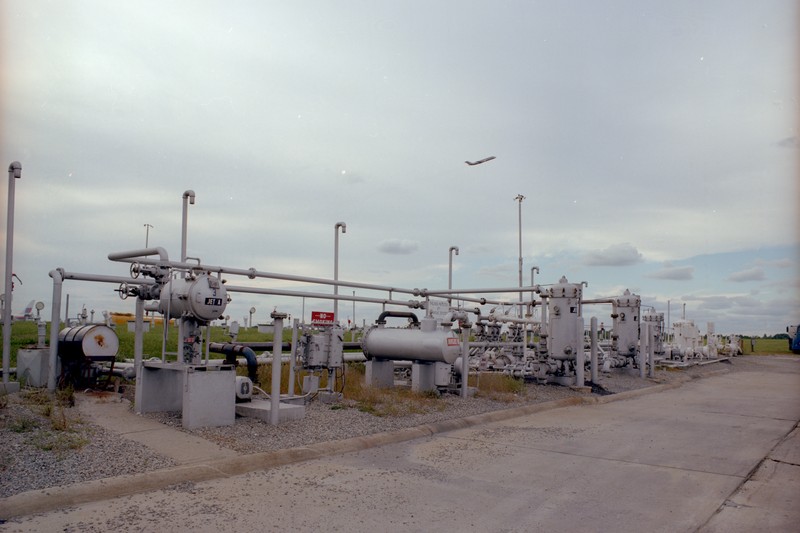
Jet fuel averaged $195 a barrel last week. Physical crude for prompt delivery in Europe touched $149. China’s export growth slowed to a fraction of what economists predicted. Six weeks after Iran closed the Strait of Hormuz in retaliation for US and Israeli strikes, the blockade has moved from military briefing rooms to household budgets — and the March trade data released Tuesday confirms the damage is only accelerating.
China’s Numbers Miss Badly
March was the first full month to capture the economic shock. China’s exports rose just 2.5 percent year on year to $321 billion, according to customs data — a five-month low, well below the 4 percent growth economists polled by Wind had forecast, and a shadow of the 8.3 percent consensus in a separate Reuters poll.
The contrast with January and February was stark. Exports had surged nearly 22 percent across those two months, powered by global demand for AI chips and servers, raising the possibility that China could surpass last year’s record $1.2 trillion trade surplus. Economists at Mizuho Securities projected a 24 percent March rise; Macquarie expected 17 percent. Citigroup, the most bearish, forecast 3 percent. The actual number landed near the pessimists.
Imports told the opposite story, surging 27.8 percent to $270 billion — the fastest pace since November 2021 — driven almost entirely by price spikes rather than volume. Copper ore import values jumped 67 percent year on year while volumes rose just 11.5 percent. Fertiliser values climbed almost 59 percent against a 27 percent increase in volumes. Integrated circuit imports rose 54 percent in value against a 14 percent gain in volume. China was paying far more for roughly the same goods.
The monthly trade surplus narrowed to $51 billion, down from $214 billion across January and February combined.
Aviation Takes the First Hit
The pain spread fastest through aviation. Global jet fuel prices had more than doubled compared with a year ago, reaching $1,650 a tonne, according to the International Air Transport Association (IATA). Asia was the hardest hit — prices up 163 percent year on year — with Europe close behind at 138 percent.
Airlines were already cutting flights. Ryanair, Europe’s largest carrier, said it was considering cancelling 10 percent of its schedule. Skybus shut its Newquay-to-Gatwick route entirely. Guernsey-based Aurigny cut services to London, Paris, and southwest England. Air New Zealand, AirAsia X, Vietnam Airlines, and SAS all trimmed capacity. United Airlines CEO Scott Kirby told staff the carrier would be “tactically pruning flying that’s temporarily unprofitable.”
In Italy, four airports — Bologna, Milan, Treviso, and Venice — imposed restrictions on refuelling due to limited supplies from Air BP Italia.
Airports Council International Europe warned the EU it was three weeks from systemic jet fuel shortage. Europe sourced more than 60 percent of its jet fuel from Gulf refineries, with over 40 percent shipped through Hormuz. Unlike crude oil, jet fuel has no pipeline alternatives. The last cargo of European-bound jet fuel to transit Hormuz before the war began was due to arrive in Copenhagen on Saturday, according to Vortexa shipping data.
IATA director general Willie Walsh said that even if the strait of Hormuz were to remain open, “it will still take a period of months to get back to where supply needs to be, given the disruption to the refining capacity in the Middle East.”
A Darker Signal in the Physical Market
While Brent crude futures traded above $100 a barrel — still short of the 2008 all-time high of $147 — the physical market told a starker story. North Sea Forties crude, the benchmark for prompt European delivery, reached $148.87 a barrel on Monday, exceeding its own 2008 peak, according to LSEG data. US WTI Midland crude delivered to Europe traded at a record $21.85 premium above dated Brent.
“Physical transactions are under a lot of strain,” said Josu Jon Imaz, CEO of Spanish oil company Repsol. The growing gap between physical prices and futures reflected a market bracing for months of disruption, not weeks.
From Commodities to Panic
The cascade reached well beyond energy traders. In Bangladesh, a nation of 175 million that imports 95 percent of its energy, fuel shortages triggered panic buying and a spike in robberies at petrol stations. The Bangladesh Petrol Pump Owners Association reported attacks daily; some station managers had been beaten or killed. The government cut office hours and ordered markets to close by 6 pm to conserve electricity.
Australia’s prime minister, Anthony Albanese, went on national television to urge citizens to take public transport. New Zealand announced weekly cash payments for 150,000 families to help cover fuel costs. The Philippines declared a national energy emergency and moved government workers to a four-day week. Thailand, Vietnam, and Indonesia encouraged civil servants to work from home.
South Korean president Lee Jae Myung told parliament the crisis was “not a passing shower that quickly subsides, but rather a massive storm whose duration is uncertain.” Seoul imposed fuel price caps and cut fuel taxes, and is exploring options including delaying coal plant closures.
Diplomatic Deadlock, Economic Momentum
The economic damage intensified as diplomacy faltered. US vice president JD Vance left weekend negotiations with Iran empty-handed. Washington reportedly demanded a 20-year suspension of Iran’s uranium enrichment programme; Tehran countered with five years. On Monday, Trump announced the US military had begun blockading Iranian ports. Iran responded by threatening all ports in the Persian Gulf and Gulf of Oman.
HSBC chair Brendan Nelson, speaking at a Hong Kong investment summit, said a peace deal was essential to restore energy flows and warned that current growth projections should be “approached with considerable caution.” Singapore’s central bank tightened monetary policy on Tuesday, explicitly citing the conflict’s inflationary pressure.
The UN Food and Agriculture Organisation warned that prolonged disruption could trigger a global food crisis by choking off fertiliser and energy exports. Before the crisis, IATA had predicted 4.9 percent passenger traffic growth for 2026. Nobody is making projections like that anymore.
Sources
- China’s imports surge in March as exports soften amid Hormuz blockade — South China Morning Post
- China’s March exports slow as Iran war wipes out AI-driven gains — Economic Times / Reuters
- Fears of UK and EU flight cancellations as airports warn of jet fuel shortages — The Guardian
- The Strait of Hormuz crisis is driving a wave of global energy rationing — MSN
- Physical oil hits fresh record high near US$150 a barrel as Strait of Hormuz crisis worsens — BNN Bloomberg / Reuters
- Middle East war live: Trump says US military has blockaded Iranian ports to pressure Tehran — France 24
Discussion (9)