 lop News
In April 2013, a free-agent NBA center sat down and wrote a sentence that had never appeared in print before. “I’m a 34-year-old NBA center,” Jason Collins wrote in Sports Illustrated. “I’m black. And I’m gay.”
No active male athlete in any of America’s four major professional sports leagues had come out publicly. Collins knew the risk — he was a free agent at the time, unsigned, and there was no guarantee a team would sign an openly gay player. “If I had my way, someone else would have already done this,” he wrote. “Nobody has, which is why I’m raising my hand.”
The Nets signed him. He played 22 more games. And the world kept turning — which was, in its own quiet way, the most remarkable part.
Collins died Tuesday after an eight-month battle with glioblastoma, an aggressive brain cancer. He was 47. He had married his husband, Brunson Greene, in Austin, Texas, just three months before symptoms appeared last August. He described the tumor to ESPN as “a monster with tentacles spreading across the underside of my brain the width of a baseball.” Just last week, he received the inaugural Bill Walton Global Champion Award at the Green Sports Alliance Summit. He was too ill to attend. His twin brother, Jarron, accepted on his behalf.
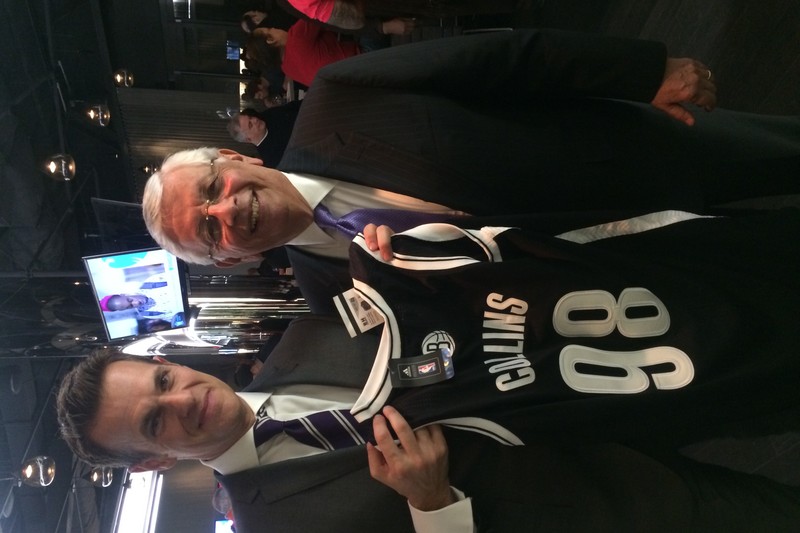
The statistics from Collins’ 13-year NBA career — 3.6 points and 3.7 rebounds per game across six franchises — barely hint at why he mattered. He wore number 98 for his final three stints, a quiet nod to Matthew Shepard, the gay college student killed in Wyoming in 1998. The gesture went unnoticed for years.
NBA Commissioner Adam Silver called Collins someone who “helped make the NBA, WNBA and larger sports community more inclusive and welcoming for future generations.” The Human Rights Campaign said he “boldly changed the conversation.”
Collins himself put it more simply. Looking back on the years after his announcement, he said they were “the best of my life.”
Discussion (6)