 lop News
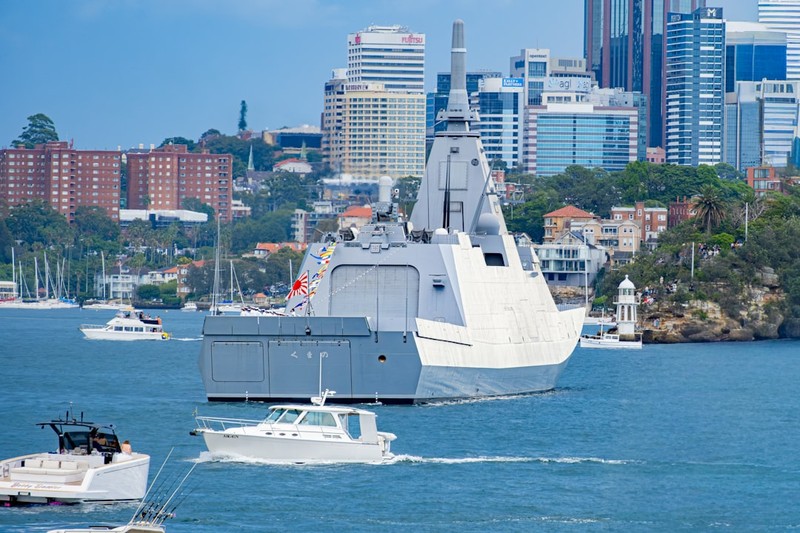
Shinjiro Koizumi had a simple question for the room. A country with nuclear weapons and strategic bombers was labelling Japan — which has neither — as a practitioner of “new militarism.” “Isn’t it strange?” he asked.
Japan’s defence minister didn’t name China during his remarks at the Shangri-La Dialogue in Singapore on Sunday. He didn’t have to. The audience at Asia’s premier defence summit, drawing security officials from roughly 45 countries, understood exactly who he meant.
The exchange was the latest verbal salvo in an accelerating rivalry between East Asia’s two largest powers — each accusing the other of the very behaviour it is indulging in. Beijing says Tokyo is abandoning pacifism. Tokyo says Beijing is arming in secret. Both charges are grounded in truth, which is precisely what makes the standoff so volatile.
A Pacifist State, Rearming Fast
Under Prime Minister Sanae Takaichi, Japan has accelerated a defence buildup that would have been politically unthinkable a decade ago. With explicit US encouragement, Tokyo has been stripping away layers of the pacifist framework that governed Japanese security policy since the end of the second world war.
The pace is striking. In November, Takaichi suggested Japan might intervene militarily if China attempted to seize Taiwan — the self-ruled island Beijing claims as its territory. That remark alone represented a dramatic departure from decades of strategic ambiguity. The broader policy shift has drawn frequent rebukes from Beijing, which has accused Tokyo of following a reckless policy of “new militarism” that could destabilise the region.
Koizumi, speaking in Singapore, called that label false. “Nothing could be further from the truth,” he said.
The Transparency Charge
Instead, Koizumi turned the accusation on its head. China, he said, was expanding its military capabilities “without sufficient transparency,” and its activities were “a matter of serious concern for Japan.” Tokyo, by contrast, would “steadily build up its defence capabilities and make continuous updates with a high degree of transparency,” including in artificial intelligence, uncrewed systems, cyber, and space defence.
According to The Guardian, China is thought to possess hundreds of nuclear warheads and has been rapidly developing its military capabilities in recent years. Japan, still constitutionally constrained from offensive warfare, maintains no nuclear arsenal and no strategic bomber fleet — the very weapons Koizumi held up as proof of the absurdity of Beijing’s charge.
“Japan’s past as a peace-loving nation has been valued by the region and by the international community,” Koizumi said. “This fact will not be shaken by false claims, because it is a fact.”
The Empty Chair
The diplomatic theatre extended beyond the speeches. For the second consecutive year, China declined to send its defence minister, Dong Jun, to the Shangri-La Dialogue, dispatching a lower-ranking delegation instead. The absence is deliberate — and it limits opportunities for direct military-to-military engagement between Beijing and Tokyo at a moment when both governments are expanding their arsenals and hardening their rhetoric.
Koizumi acknowledged the gap. “I’m feeling sad that we were unable to have the opportunity to have a meeting this time,” he said.
Two Powers, Converging on the Same Destination
The Singapore exchange encapsulates a structural dilemma in East Asian security. Japan is genuinely rearming — expanding budgets, acquiring strike capabilities, and revising doctrines that once confined its military to narrow self-defence. China is genuinely building at a pace that alarms its neighbours, from the East China Sea to the Taiwan Strait and beyond.
Both governments frame their actions as defensive. Both describe the other as the provocateur. The result is a textbook security dilemma, where each nation’s efforts to increase its own safety degrade the other’s sense of security, prompting further buildup in return.
The difference lies in starting positions. Japan’s constitution still contains Article 9, renouncing war as a sovereign right. Every step away from that clause marks a breakpoint — and draws scrutiny from neighbours who remember what came before it. China, by contrast, has been modernising a military already designed for power projection, and doing so with a level of secrecy that nearby states find alarming.
Neither side shows any sign of slowing down. The verbal sparring in Singapore was less a debate than a preview of a region where two major military powers, separated by deep historical mistrust, are converging on the same destination from opposite directions.
Discussion (9)