 lop News
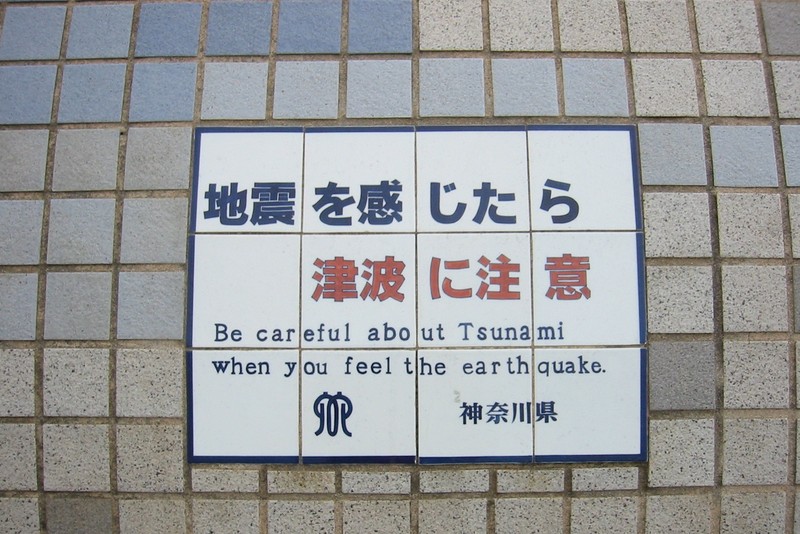
One percent. That is the probability Japanese seismologists have assigned to the chance of a magnitude 8.0 or greater earthquake striking the country’s northeastern coast in the coming days — ten times the normal baseline risk, elevated after a powerful 7.7-magnitude tremor shook the nation on Monday afternoon.
The number is small in absolute terms. The stakes are not.
Japan’s Cabinet Office and Japan Meteorological Agency (JMA) issued a formal “megaquake advisory” on Monday evening, warning that the likelihood of a catastrophic seismic event along the Japan and Chishima trenches is now “relatively higher than during normal times.” Residents in 182 coastal towns were urged to confirm evacuation routes, check emergency supplies, and be ready to move. Prime Minister Sanae Takaichi told those in affected areas to evacuate to “higher, safer places” and confirmed the government had established a crisis management team.
The advisory is not a prediction. It is, in the precise language of disaster risk management, a recalibration. And for a country where the memory of March 2011 remains seared into public consciousness, every recalibration carries weight.
A Tremor That Passed. A Warning That Remains.
The earthquake struck at 4:53 PM local time, its epicenter beneath the Pacific off Iwate prefecture, roughly 530 kilometers north of Tokyo. The US Geological Survey initially recorded it at magnitude 7.4; the JMA later revised the figure upward to 7.7. At a depth of roughly 10 to 19 kilometers, the shaking traveled far. Buildings swayed in the capital. In Aomori, footage broadcast on NHK showed hanging objects swinging and shoppers squatting for stability. Bullet trains connecting Tokyo to the north were suspended, leaving passengers stranded in carriages and on platforms.
More than 180,000 people across five northern prefectures — from Hokkaido to Fukushima — were advised to take shelter. “As soon as we heard the earthquake alert, everyone ran downstairs,” Chaw Su Thwe, a Myanmar national living in Hokkaido, told the BBC. “Right now, local authorities are using loudspeakers in the neighbourhood to warn people about a possible tsunami and to stay alert. Office workers have been allowed to leave work early.”
Tsunami waves reached the coast within the hour. An 80-centimeter wave struck Kuji port in Iwate; a second, measuring 40 centimeters, was recorded nearby. The US-based Pacific Tsunami Warning Center declared the tsunami threat passed within hours. Japan lifted all advisories by midnight.
Two people were injured — one in Aomori, one in Iwate, both in falls. No deaths, no major structural damage, no abnormalities at the region’s nuclear facilities, according to the Nuclear Regulation Authority. Roughly 100 homes briefly lost power. By the metrics that matter most, the country caught a break.
The government’s concern is what might follow.
The Science of Cascading Stress
Large earthquakes do not occur in isolation. When a fault ruptures, it redistributes accumulated stress across the surrounding crust, increasing the probability that nearby faults will slip in turn. As earthquake geologist Wendy Bohon put it to Scientific American: “Earthquakes make other earthquakes more likely.”
In most cases, that cascade produces aftershocks — tremors smaller than the initial event. Several have already struck northeastern Japan since Monday, including a handful above magnitude 5.0. But the JMA has calculated that stress changes around the Japan Trench have created a one-in-100 chance that the 7.7 was not the main shock but a foreshock — a prelude to something considerably more destructive.
“This 1 percent probability is still low in absolute terms, but it’s 10 times higher than normal, which is significant from a risk management perspective,” said Amilcar Carrera-Cevallos, an independent earthquake scientist.
Scientists are careful to stress that the most probable outcome is a return to normal seismic activity. “There are many, many other times when there have been big earthquakes in Japan that were not followed by larger events,” Bohon said. But probability is not certainty, and in a nation perched at the convergence of four tectonic plates along the Pacific’s Ring of Fire, the margin between routine and catastrophe is thin.
The Shadow of the Nankai Trough
Monday’s advisory concerns the Japan and Chishima trenches in the northeast — the same region devastated in 2011. But the event inevitably refocuses attention on the seismic threat that looms largest in Japanese disaster planning: the Nankai Trough, an 800-kilometer undersea trench running along the country’s southern coast where the Philippine Sea plate is slowly diving beneath the continental plate.
Government projections for a full Nankai Trough rupture are staggering: as many as 298,000 deaths and up to $2 trillion in damage — a figure that would rank among the costliest natural disasters in recorded history. The JMA issued its first-ever Nankai Trough megaquake advisory in August 2024 after a magnitude 7.1 quake in southern Japan. That alert was lifted after a week, but not before triggering panic-buying of rice and mass hotel cancellations. A second advisory followed in December 2025 after a 7.5-magnitude tremor off the northern coast. Neither was followed by the catastrophic event it anticipated.
The megaquake advisory protocol is deliberately calibrated to inform without paralyzing. Advisories are not forecasts; they are notices designed to ensure people know where their shelters are and have their emergency go-bags packed.
Living on the Ring of Fire
Japan sits on the western edge of the Ring of Fire and accounts for roughly 10 percent of the world’s earthquakes of magnitude 6.0 or higher, experiencing around 1,500 tremors each year. The vast majority cause little or no damage. The exceptions have shaped an entire society.
The magnitude 9.0 Tohoku earthquake of March 11, 2011 — still the most powerful ever recorded in Japan — killed more than 22,000 people, forced nearly half a million from their homes, and triggered the Fukushima nuclear meltdown, one of the worst atomic disasters in history. Fifteen years on, the northeastern coast is a landscape of memorial and reinforcement: seawalls that did not exist in 2011 now stretch for hundreds of kilometers, tsunami evacuation towers dot flat coastal towns, and every child in Japan drills for earthquakes from elementary school onward.
On Monday, that infrastructure performed as designed. Early-warning systems bought seconds of notice. Evacuation orders moved through communities by loudspeaker and mobile alert. Nuclear facilities in the region reported no irregularities.
The system worked. The question that hangs over the advisory — and will hang over the next several days — is whether it will be tested again, at a magnitude that pushes even Japan’s formidable preparations to their limit.
“It is important for people who may be at risk to understand that another large earthquake is possible, even if it is unlikely,” Bohon said.
For now, millions along Japan’s northeastern coast are going about their lives with emergency bags by the door and one eye on the nearest high ground.
Sources
- Japan warns of slightly increased risk of mega-quake after a 7.7-magnitude one — AP News
- Japan on high alert for ‘huge’ second quake after issuing tsunami warning — BBC News
- Risk of ‘Megaquake’ in Japan Higher after Powerful Earthquake Strikes — Scientific American
- Japan issues ‘huge earthquake’ warning after 7.5 magnitude tremor — Le Monde
Discussion (13)