 lop News
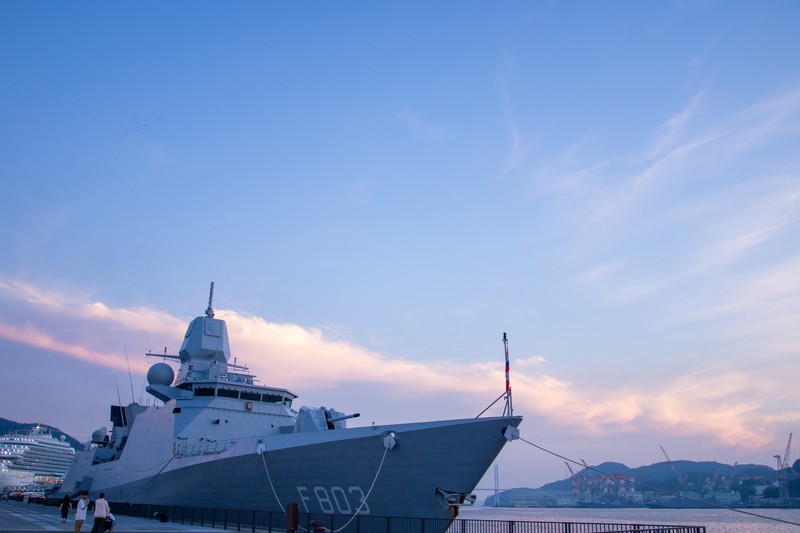
Japan’s constitution still renounces war. Next week, its cabinet will vote to let Japanese defense firms sell destroyers and missiles to foreign militaries — and the reason can be summarized in a single word: Washington.
Revisions to the Three Principles on Transfer of Defence Equipment and Technology, expected at a cabinet meeting as early as this month, will scrap a framework that limits arms exports to five noncombat categories: rescue, transport, warning, surveillance, and minesweeping. In its place comes a new system dividing equipment into “weapons” and “non-weapons,” with lethal arms restricted to countries that have signed classified-information agreements with Tokyo, according to a draft plan obtained by Kyodo News.
The shift represents the most significant rupture in Japanese arms export policy since the principles were established in 1967 and broadened in 1976 to cover all nations — a framework crafted, as the government put it then, “in conformity with Japan’s position as a peace-loving nation.” That identity is now being deliberately, publicly, set aside.
The Strategic Calculation
Prime Minister Sanae Takaichi’s ruling party approved the changes this week. The timing is not accidental.
President Donald Trump has threatened to abandon NATO and invade Greenland, and has repeatedly signaled that American security commitments are conditional on political favor. Three European diplomats in Tokyo told Reuters that Japan’s policy shift offered a chance to reduce their own heavy dependence on American weapons production.
The message rippling through allied capitals is consistent: if Washington cannot be relied upon, arms supply chains must be diversified. Japan — with its advanced manufacturing base and tightening security partnerships — is positioning itself as an alternative supplier.
“Reputational risk is not what it used to be,” said Kenji Kobayashi, vice president of Toshiba’s defense division. Toshiba plans to hire roughly 500 people over three years and is constructing new testing and manufacturing facilities. A Mitsubishi Electric defense executive told Reuters he expects his unit’s sales to increase by 50 percent to 600 billion yen ($3.8 billion) by 2031.
What the Rules Actually Allow
Under the planned revision, exports to countries in active armed conflict remain prohibited in principle — but exceptions are permitted “in special circumstances” that take into account Japan’s security needs. That language is broad enough to cover a Taiwan contingency, a scenario Takaichi has previously acknowledged could justify deploying Japanese Self-Defense Forces.
Export decisions will rest with the National Security Council, with the exception of a next-generation fighter jet jointly developed with Britain and Italy, which requires cabinet approval. Parliament will be notified only after exports are completed — a provision that has drawn sharp criticism from opposition parties, including the Constitutional Democratic Party and Komeito, which are calling for mandatory advance notification to the Diet for sales above a certain monetary threshold.
From Warsaw to Manila
The interest is already tangible.
One of the first deals expected under the new framework is the transfer of used Japanese frigates to the Philippine navy, according to two Japanese officials — a move with direct implications for the South China Sea, where Manila and Beijing remain locked in maritime confrontation.
Poland, which has signed more than $22 billion in defense contracts with South Korea since 2022, sees complementary opportunities with Tokyo. Mariusz Boguszewski, deputy chief of mission at Poland’s embassy in Japan, said the two countries could plug gaps in each other’s arsenals, particularly in anti-drone and electronic warfare systems. “There are some bottlenecks that we can overcome having Japan on board.”
Australia signed a $6.5 billion agreement in August 2025 for 11 improved Mitsubishi-built Mogami-class frigates — a deal that preceded the current rule changes but demonstrated the scale of Japanese shipbuilding capacity. And in Tokyo, Kyiv’s chamber of commerce is preparing to launch an industry group linking Ukrainian and Japanese drone firms, timed to coincide with the new regulations.
Signals to Beijing — and Seoul
China’s foreign ministry said it was “concerned” and urged Tokyo to “act prudently.” William Yang, a Taiwan-based analyst for the International Crisis Group, warned that relaxing the rules would have “far-reaching consequences.”
The move also places Japan in direct competition with South Korea, which has rapidly built a major arms export industry. The Foundation for Defense of Democracies noted that Tokyo’s shift may allow it to match Seoul’s expanding order book across the NATO alliance — turning two American allies into rivals for the same defense contracts.
For Washington, the irony is sharp. Successive administrations have pressured Japan to shoulder more of its own defense burden. Now Japan is doing precisely that — not merely building its military but exporting the means for others to build theirs. The United States is losing its monopoly as the arsenal of the democratic world. Allies with alternatives are allies with options. And options, in the language of deterrence, mean leverage that no longer runs only one way.
Sources
- Japan ditches decades of arm export curbs as US reliability wavers — South China Morning Post
- Rattled by Trump, US allies eye Japan’s biggest arms opening since WW2 — Reuters
- Japan aims to ease arms export rules, allow lethal weapons sales — Japan Today
- Opposition Calls for Prior Notification to Diet over Arms Exports — Nippon.com
- Japan Is Poised To Become Part of America’s Arsenal of Democracy — Foundation for Defense of Democracies
Discussion (8)