 lop News
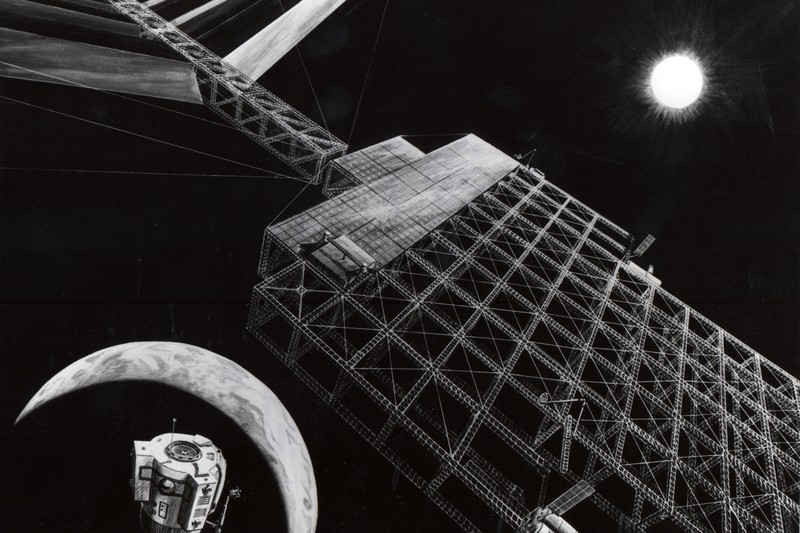
A satellite the size of a washing machine is about to try something no one has done before: beam solar power from orbit down to Earth.
Japan’s OHISAMA mission, launching later in 2026, will carry a two-square-meter solar panel into orbit roughly 400 kilometers up. It will convert sunlight into microwave energy and transmit it wirelessly to a receiving station in Suwa, central Japan. Expected output: one kilowatt — enough to power a coffee maker.
Modest by design. This is a proof-of-concept, and the engineering is ferocious. The microwave beam must hit its target with an angular error of less than 0.001 degrees while the satellite hurtles past at more than 17,000 miles per hour. Miss by a sliver and the energy scatters.
The payoff, if it works, is solar power without clouds, nightfall, or atmospheric interference — continuous clean energy, 24 hours a day. The ability to beam electricity to any point on Earth also carries obvious military and disaster-relief implications. Japan’s long-term vision: a 2.5-square-kilometer orbital collector generating one gigawatt by 2050.
Why Japan goes hardest is no mystery. The country imports over 90% of its energy, according to reporting by Nikkei Asia. Fukushima shattered confidence in nuclear. Flat land for terrestrial solar farms is scarce. Orbital collectors dodge all three problems. JAXA, Japan’s space agency, has pursued wireless power transmission since the 1980s, and the government has listed space solar as a formal policy goal since 2009.
Others are chasing too. The US demonstrated orbital power transmission with Caltech’s MAPLE experiment in 2023. China wants kilometer-scale arrays by the 2030s. But the economics remain harsh — a 2021 NASA study put space solar at up to ten times the cost of land-based renewables.
One kilowatt from above Suwa won’t light up Tokyo. But if that signal arrives, it proves the physics work. Everything else is scaling.
Discussion (6)