 lop News
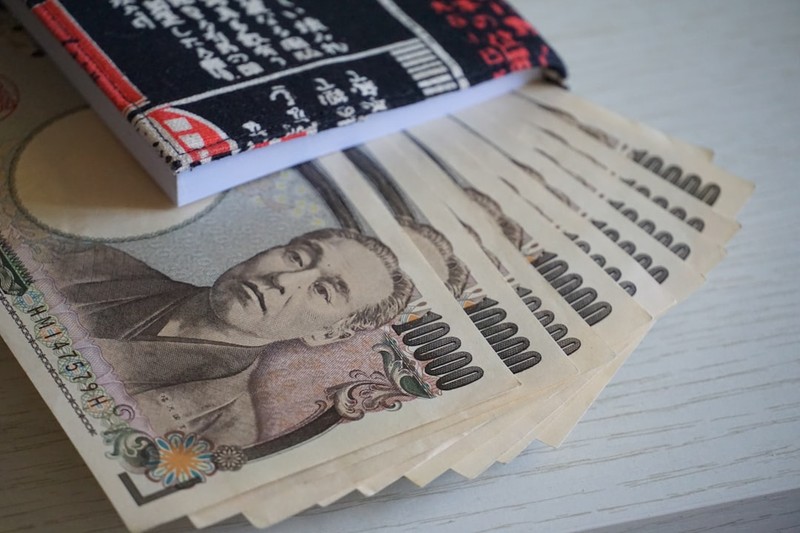
Japan spent 11.7 trillion yen — about $73 billion — intervening in foreign exchange markets over the past month. The currency is trading near 160 to the dollar again, roughly where it was before Tokyo started.
Ministry of Finance data released Friday confirmed what traders had suspected for weeks: Japanese authorities entered the market in force during the Golden Week holidays, when thin liquidity would amplify the impact of their purchases. The yen surged from a low of 160.725 on April 30 to around 155 by May 6 — a sharp move that briefly looked like a turning point.
It wasn’t. By Thursday, the yen had slid back to about 159.65 per dollar, erasing most of the intervention’s gains. The 11.7349 trillion yen total is a record for a single intervention campaign, surpassing the previous mark set in 2024.
The Structural Squeeze
The question isn’t whether the intervention was large. It’s whether any amount of dollar-selling can fix a currency being driven down by forces that intervention cannot touch — and what it means when the world’s fourth-largest economy has to spend this much just to slow the bleeding.
The yen faces pressure on two fronts. The first is the interest rate gap: the Bank of Japan’s policy rate sits at 0.75%, while the US Federal Funds rate ranges from 3.50% to 3.75%. That difference of up to 300 basis points fuels the carry trade, where investors borrow in yen and reinvest in higher-yielding dollar assets. Japan has also seen relentless capital outflows from both retail and institutional investors seeking better returns abroad, according to Jesper Koll, expert director at Monex Group.
The second front is energy. The Middle East crisis has driven up oil prices, delivering a terms-of-trade shock to a country that imports almost all its petroleum. Higher energy costs push more yen out of the country, deepening the currency’s weakness.
Koll was blunt about the futility of Tokyo’s approach. “Intervention without changing domestic monetary policy is like tapping the brake while keeping your right foot firmly on the accelerator — at best, your passengers have a little fun, at worst, you’re burning through your brake pads.”
Ammunition and Permission
Japan held $1.16 trillion in foreign exchange reserves at the end of March. At roughly $35 billion per intervention, that suggests capacity for about 32 more operations, according to Francis Tan, Indosuez Wealth Management’s chief Asia strategist.
But capacity isn’t the same as political room to act. The International Monetary Fund classifies Japan as operating a freely floating exchange rate, and repeated interventions could jeopardize that status. Japan can conduct only about two more interventions by November before the IMF would need to reassess, according to CNBC reporting. Japan’s top currency official, Atsushi Mimura, told reporters Thursday that the classification does not limit how often authorities can intervene.
The politics cut both ways. US Treasury Secretary Scott Bessent is expected to meet his Japanese counterpart, Satsuki Katayama, and Prime Minister Sanae Takaichi next week, with currency issues on the agenda. Bessent has previously favored the BOJ hiking rates faster — a position that aligns with yen strength but clashes with Japan’s fragile domestic economy.
The Central Bank’s Impossible Math
The BOJ’s dilemma is stark. Raising rates would narrow the gap with the Fed and support the yen, but it would also push bond yields even higher — the 10-year Japanese government bond already hit 2.537% on April 30, the highest level in nearly 30 years — while crimping an economy that narrowly avoided recession in the final quarter of 2025, posting just 0.3% quarter-on-quarter growth.
Keeping rates low protects borrowers and growth but leaves the yen exposed. A Bank of Japan survey released in April showed that more than 83% of respondents expect prices to be higher in a year, giving the central bank some theoretical cover for tightening — but inflation driven by imported energy costs is not the kind of inflation that rate hikes easily solve.
The intervention data tells the story of a policy toolbox running low on options that actually work. Tokyo can sell dollars, and it has the reserves to keep doing it. But unless something changes on interest rates, energy prices, or the global rate landscape, each billion spent buys less time than the last.
The $73 billion question is whether Tokyo has a plan beyond spending. The market, so far, does not think so.
Sources
- Japan spent $73 billion in yen-buying intervention, ministry data shows — Channel News Asia / Reuters
- Japan may have fired its yen bazooka twice, but markets are testing Tokyo’s resolve — CNBC
- Japan Spent Record 11.735 Trillion Yen On Currency Intervention — Dow Jones Newswires / Morningstar
- FX Daily: Japan’s 2026 FX intervention campaign begins — ING
Discussion (10)