 lop News
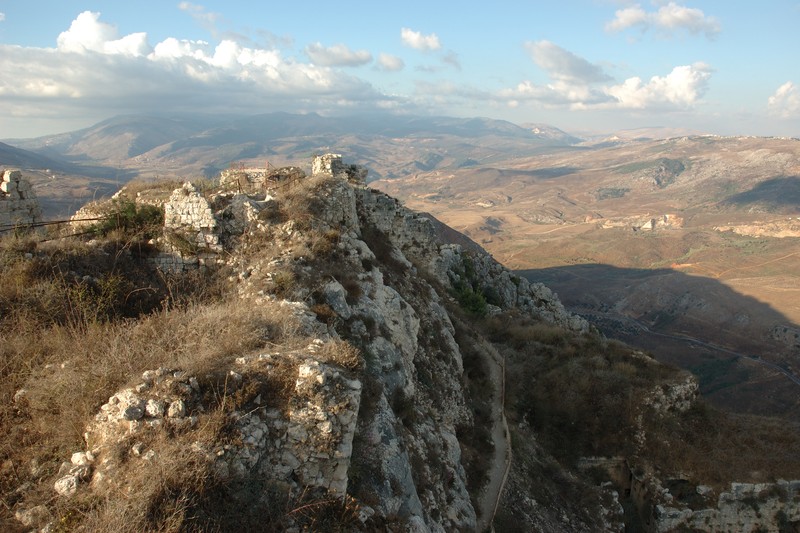
The Beaufort Castle has watched empires come and go. Crusaders built it. Mamluks seized it. Palestinian fighters held it. Israeli troops occupied it for 18 years before withdrawing in 2000. Now the Israeli flag flies above its ruins once more.
On Sunday, Israel’s military announced it had captured the strategic mountain fortress near the city of Nabatiyeh — its deepest incursion into Lebanon in more than a quarter century. Defense Minister Israel Katz said soldiers had “returned to the summit of Beaufort and once again raised the Israeli flag there,” in a statement timed to coincide with Israel’s commemorations for soldiers killed in the 1982 First Lebanon War.
The capture is more than symbolic. The castle overlooks wide swaths of southern Lebanon, and its seizure followed days of intense fighting in nearby villages where Israeli troops clashed with Hezbollah fighters. Israeli forces have pushed roughly five kilometers from Nabatiyeh, a major population center, and have ordered the city’s residents to evacuate. Warnings also cover the coastal city of Tyre — Lebanon’s fourth-largest — and its surroundings. The military has designated the area from the Litani River south to the Zahrani River a combat zone.
Beyond the Border
Israel’s stated war aims have expanded steadily since the latest conflict began on March 2, when Hezbollah fired rockets into northern Israel two days after US and Israeli strikes on Iran. What started as a border operation has become something far more ambitious. Israeli troops have crossed the Litani River — long treated as a de facto boundary — and the military said Sunday that a “significant number of ground soldiers” were “expanding to additional areas” to push what it called the “Forward Defense Line” deeper into Lebanese territory.
The army said it is ready “to expand the operation if needed.”
That language marks a shift. This is no longer a limited incursion to push Hezbollah back from the border. Israel is establishing a deeper buffer zone and fortifying positions that would be difficult to relinquish in negotiations.
The Erasure of Memory
The capture of a Crusader-era heritage site has sharpened concerns about cultural destruction. Lebanese Prime Minister Nawaf Salam accused Israel on Saturday of trying to “uproot Lebanon’s memory and erase the people’s history” through what he called a “scorched earth policy.”
Those words carry particular weight when a medieval fortress becomes a military outpost. The Beaufort is not just a tactical high point — it is a registered heritage site that has survived centuries of conquest. Lebanon’s president and prime minister met Saturday and pledged to intensify diplomatic contacts to halt what they described as the demolition of homes and historical sites.
The human toll has been staggering. According to the Associated Press, the conflict has left 3,350 people dead in Lebanon and displaced more than 1 million. On Friday, an Israeli airstrike on the coastal village of Adloun killed a Syrian refugee family of eight — Qais al-Bakir, his pregnant wife, and their six children — who had fled to Lebanon after the fall of Bashar Assad in December 2024. A relative said the family received no advance warning.
On the Israeli side, 25 soldiers and one civilian contractor have been killed in or near southern Lebanon since March, along with two civilians in northern Israel, according to the Israeli government. Hezbollah has frustrated Israeli forces with hard-to-detect fiber optic drones in recent weeks.
A Ceasefire in Name Only
The territorial expansion comes despite a nominal US-brokered ceasefire that has been in place since April 17. It also comes days before the next round of direct talks between Israel and Lebanon, scheduled for June 2 and 3 at the State Department.
Those talks face an awkward reality: one party’s military is actively seizing territory while negotiations are underway. Salam acknowledged the difficulty on Saturday, calling the talks “not guaranteed to produce results” but “currently the least costly option” for Lebanon.
Lebanon’s ability to change facts on the ground is limited. The Lebanese army is widely reported to be stretched thin and in no position to confront the Israeli advance. Hezbollah continues to mount attacks — claiming strikes on Israeli troops and a Merkava tank near the border — but has not stopped the steady push northward.
The broader regional picture remains fluid. US President Donald Trump said he had secured guarantees from Iran that it would not develop nuclear weapons, according to France 24, as reports emerged of a tougher American proposal to formally end the wider Middle East war. A finalized deal has remained elusive.
For now, the Israeli flag on the Beaufort is a statement of intent. Israel held this fortress once before — for 18 years — before withdrawing. How long it plans to stay this time is a question the Washington talks may, or may not, answer.
Discussion (10)