 lop News
For twenty-seven days, the United States led the assault on Iran’s military and nuclear infrastructure. On day twenty-eight, Israel took the controls.
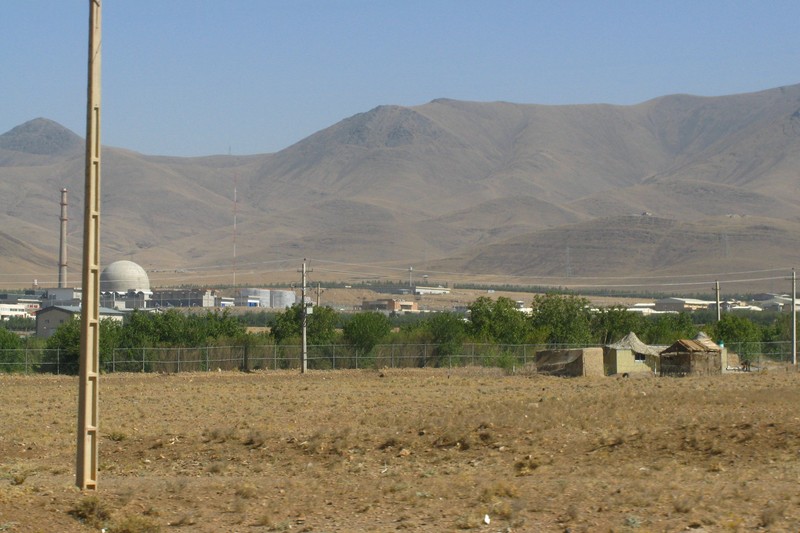
Israeli warplanes struck the Khondab Heavy Water Complex near Arak and a yellowcake production facility in Ardakan on Friday, marking the first time Israel has directly attacked Iranian nuclear sites in the current conflict. The Israeli Defense Forces confirmed both strikes, saying they targeted key components of Iran’s nuclear supply chain. Iran’s Atomic Energy Organization reported no casualties and no radiation leaks. The significance extends well beyond physical damage.
What Was Hit — and Why It Matters
The Arak facility, roughly 240 kilometers southwest of Tehran, houses a heavy water reactor capable of producing plutonium suitable for nuclear weapons — an alternative pathway to a bomb that doesn’t require uranium enrichment. Similar reactors in Syria and Iraq were attacked by Israel in previous decades.
Under the 2015 nuclear agreement, Iran committed to redesigning the reactor and filling its core with concrete. According to the IDF, Tehran worked to preserve the option of restoring its original design. Israel first bombed the facility during a brief war in June 2025. Iran had been rebuilding it since.
The IDF said heavy water “can also be used as a neutron source for nuclear weapons” and that the facility generated tens of millions of dollars for Iran’s Atomic Energy Organization.
The second target, the Ardakan yellowcake plant in Yazd Province, processes uranium ore from the nearby Saghand mine into concentrated uranium powder — the feedstock for enrichment centrifuges. The International Atomic Energy Agency has assessed the plant’s capacity at roughly 50 tons of uranium per year. The IDF called it the only facility of its kind in Iran. Unlike Arak, it was not struck in June 2025.
A Broader Barrage
The nuclear strikes were part of a sweeping wave of Israeli attacks across Iran on Friday. Two of the country’s largest steel plants — Mobarakeh Steel in Isfahan and Khuzestan Steel in Ahvaz — were hit, with Iranian media reporting damage to electrical substations, production lines, and warehouses. Mobarakeh, described by the U.S. Treasury Department as the largest steel producer in the Middle East and North Africa, accounts for roughly one percent of Iran’s GDP. A cement plant quarry in Firuzabad was also struck, killing two workers and wounding two more, per local officials.
Eighteen people were killed in Qom. Since the war began on February 28, more than 1,900 people have been killed in Iran. The U.N.’s International Organization for Migration estimates 82,000 civilian buildings, including hospitals and the homes of 180,000 people, have been damaged.
The Escalation Arc
For nearly four weeks, the campaign against Iran was a joint U.S.-Israeli operation with Washington in the lead on nuclear and military targets. Israel’s role was largely limited to intercepting incoming missiles and conducting operations along its northern border with Lebanon.
That division of labor is gone. Israeli Defense Minister Israel Katz said attacks “will escalate and expand to additional targets and areas that assist the regime in building and operating weapons against Israeli citizens.” Iranian Foreign Minister Abbas Araghchi said Israel claimed the attacks were coordinated with Washington — undercutting the parallel diplomatic track.
Iran’s Retaliation Warnings
The IRGC’s response has been unequivocal. Aerospace Force Commander Seyed Majid Moosavi warned that “the equation will no longer be an eye for an eye” and urged employees of U.S.- and Israel-linked industrial companies across the region to evacuate immediately.
The IRGC published a list of prospective retaliation targets: steel plants in Israel, Saudi Arabia, the United Arab Emirates, Qatar, Bahrain, and Kuwait, according to Iran’s Tasnim News Agency. Al Jazeera reported from Tehran that the nuclear strikes could prompt Iran to target Israel’s Dimona nuclear site again, as it did last week.
Saudi Arabia’s Defense Ministry said it shot down missiles and drones targeting Riyadh. Kuwait reported material damage to two ports, including the Mubarak Al Kabeer Port — part of China’s Belt and Road initiative, and among the first Chinese-affiliated projects in the Gulf to be struck in the war.
The Diplomatic Paradox
The strikes landed as U.S. President Donald Trump claimed negotiations were “going very well” and that he had delayed planned attacks on Iran’s energy infrastructure by ten days, to April 6. An Iranian official called continued strikes during talks “intolerable.”
Pakistan is relaying messages between the sides, with Turkey and Egypt supporting mediation. Trump envoy Steve Witkoff delivered a 15-point proposal through Islamabad calling for nuclear restrictions and reopening the Strait of Hormuz. Iran countered with its own five-point plan demanding reparations and recognition of its sovereignty over the waterway.
Iran’s Revolutionary Guard said it turned back three ships Friday, declaring the strait closed to vessels heading to or from ports linked to its enemies. Brent crude rose 2.9 percent to $104.81 per barrel — up from roughly $70 before the war. G7 foreign ministers called for the permanent restoration of toll-free navigation through the waterway.
Stakes Beyond the Battlefield
The World Food Programme warned the conflict could push the global number of food-insecure people to 363 million, up from 318 million before the war, with low-income nations bearing the heaviest burden. Jan Egeland of the Norwegian Refugee Council warned that “millions could be forced to flee across borders, placing immense pressure on an already overstretched region.”
Eighteen people have died in Israel. At least 13 American troops have been killed. More than 1,100 have died in Lebanon, where Israel deployed its 162nd Division to counter Hezbollah. Eighty Iraqi security forces have died since Iranian-backed militias entered the conflict. Twenty people have been killed in Gulf Arab states.
The war that began as a U.S.-led campaign to dismantle Iran’s nuclear program and force open the Strait of Hormuz is now something larger and harder to contain. Israel’s direct strikes on Iranian nuclear infrastructure crossed a threshold — and the IRGC’s promise that the old equation no longer applies suggests the next phase will be defined by retaliation, not restraint.
Sources
- Israel launches strikes on nuclear sites as Iran warns of retaliation — Al Jazeera
- Israel strikes Iranian nuclear development facilities, Tehran vows retaliation — Jerusalem Post
- Israel strikes nuclear facilities as Iran vows retaliation ‘will no longer be an eye for an eye’ — Fortune (Associated Press)
- Iran FM says Israel strikes on nuclear sites contradict Trump’s extended deadline for diplomacy — YnetNews
- Why Iran’s struck nuclear sites matter — Israel Hayom
Discussion (12)