 lop News
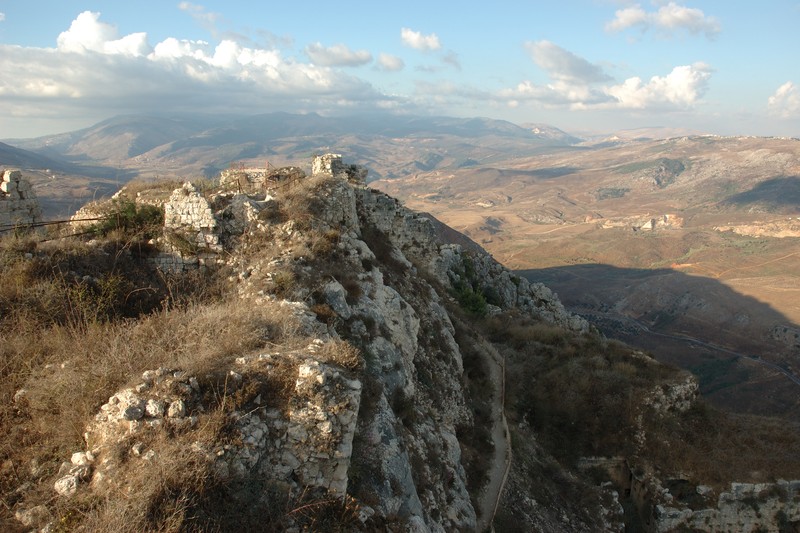
An Israeli flag fluttered over the 900-year-old Beaufort Castle on Sunday — a Crusader-era fortress perched on a strategic ridge in southern Lebanon — as Israeli forces made their deepest incursion into the country in more than a quarter century. Hours later, Prime Minister Benjamin Netanyahu ordered strikes on the southern suburbs of Beirut itself.
The twin escalations, coming in rapid succession over the weekend, amount to Israel’s most overt pressure campaign in Lebanon since the US-brokered ceasefire was announced in April. That ceasefire now exists mostly on paper.
A fortress seized, a capital threatened
Israeli troops crossed the Litani River to capture Beaufort Castle after days of airstrikes and clashes with Hezbollah fighters in nearby villages, according to BBC News and Euronews. The fortress overlooks large stretches of southern Lebanon and has served as a military observation post for centuries — most recently during Israel’s previous occupation of the south, which ended in 2000.
Video verified by Euronews showed the Israeli flag above the castle with smoke rising from the nearby village of Arnoun. Defence Minister Israel Katz said the military had taken control during “expanded operations” against Hezbollah and declared that the campaign was “not over,” vowing to “crush Hezbollah’s power.”
Netanyahu then ordered attacks on what he called “terrorist targets” in Dahieh, the densely populated southern suburbs of Beirut that serve as Hezbollah’s political and operational heartland. He cited Hezbollah attacks on Israeli civilians and violations of the April ceasefire as justification.
Lebanese Prime Minister Nawaf Salam accused Israel on Saturday of pursuing a “scorched-earth policy and collective punishment” against his country.
The ceasefire that wasn’t
The April ceasefire, brokered by Washington, was supposed to halt hostilities between Israel and Hezbollah. It did not. Clashes have continued along the border, and both sides accuse the other of violations.
On Sunday, US Secretary of State Marco Rubio spoke separately with Netanyahu and Lebanese President Joseph Aoun. According to a US official, Rubio proposed a sequenced de-escalation: Lebanese officials would pressure Hezbollah to stop its attacks, and in return Israel would refrain from escalating strikes on Beirut. The official said this would create space for a gradual end to hostilities.
A senior Lebanese government official told the BBC that Lebanon was relying on US mediation to pressure Israel into ending its own violations and preventing further civilian casualties.
The gap between those two positions — Lebanon asking Washington to restrain Israel, Israel demanding Washington restrain Hezbollah — is where ceasefires go to die.
A war within a war
Lebanon was drawn into the broader conflict between the US, Israel, and Iran on 2 March, when Hezbollah launched rockets into Israel in retaliation for an Israeli strike that killed Iran’s supreme leader. Israel responded with an air campaign across Lebanon and a ground invasion of the south.
The interconnected nature of the fighting presents a fundamental problem for any mediator. Hezbollah is Iran’s most powerful proxy in the region. Any US-Iran ceasefire negotiation must account for the Lebanese front, but Israel’s operations in Lebanon answer to Jerusalem’s own strategic calculus, not Washington’s diplomatic timeline.
The question hanging over the Rubio phone calls and the UN statements is whether Israel is deliberately leveraging the wider conflict — in which it enjoys American support against Iran — to pursue a more ambitious campaign against Hezbollah than the April ceasefire ever contemplated. Katz’s language about crushing Hezbollah’s power, combined with the capture of a fortress north of the Litani River, suggests the Israeli government sees little reason to stop now.
The human cost
At least 3,371 people have been killed in Lebanon since the war began, according to the Lebanese health ministry, which does not distinguish between combatants and civilians. Israel says 24 of its soldiers and four Israeli civilians have been killed over the same period on both sides of the border.
Those numbers are likely to grow. Strikes on Dahieh — a densely packed urban area — carry a high risk of civilian casualties. And Katz has made clear that Israel’s military objectives extend well beyond the border zone the April ceasefire was designed to quiet.
For mediators in Washington and at the United Nations, the math is unenviable: a ceasefire that neither side is observing, a Lebanese front that is tethered to an Iranian negotiation with its own complexities, and an Israeli government that appears to calculate that the current moment — with American support, a weakened Hezbollah, and an Iran under pressure — is the moment to press hard.
The flag over Beaufort Castle is the most visible symbol of that calculation. It is unlikely to be the last.
Discussion (9)