 lop News
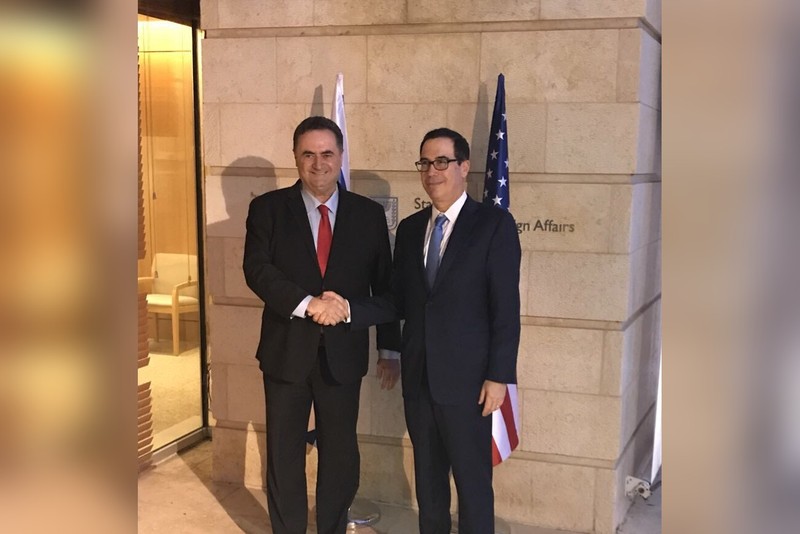
A ceasefire is technically in effect. Israel’s defense minister is already naming the targets he plans to hit when it ends.
In a video statement Thursday, Israel Katz said Israel’s military was “prepared to resume the war against Iran” and was “awaiting a green light from the United States” — with a stated ambition to “return Iran to the Dark Age and the Stone Age” by destroying key energy and electricity facilities and dismantling Iran’s national economic infrastructure. He also spoke of the aim to “complete the elimination of the Khamenei dynasty.”
“The [Israeli military] is ready both defensively and offensively, and the targets have been marked,” Katz said.
The language is blunt even by the standards of a conflict that has already killed several thousand people, primarily in Iran and Lebanon. More significantly, it reframes the current pause in fighting as a deliberate interlude — with the choice to resume belonging not to Jerusalem or Tehran, but to the White House.
A ceasefire in name only
President Donald Trump extended the US-Iran ceasefire indefinitely on Tuesday, keeping the diplomatic door open without committing to a deadline. The original 14-day truce, which began April 8, facilitated the first direct Washington-Tehran talks in nearly a decade. They produced no agreement. Plans for subsequent rounds in Islamabad, mediated by Pakistan, have been repeatedly postponed.
Neither side has treated the ceasefire as a full stop to hostilities. The US Navy continues its blockade of Iranian ports. Iran’s Revolutionary Guards attacked three freighters in the Strait of Hormuz as recently as Wednesday. Trump declared Thursday that American forces would “shoot and kill” Iranians laying mines in the strait.
This double blockade — Iran closing Hormuz, the US sealing Iran’s ports — has become the conflict’s most destabilizing feature. Oil prices are rising again. The economic fallout is being felt across the global economy, with shortages of fuel and other commodities reported in the US and worldwide.
What Israel’s escalation would look like
Israel’s objectives in this war have never fully overlapped with Washington’s. The United States wants Iran’s nuclear program dismantled and Hormuz reopened. Israel, within range of Iranian missiles and still engaged with Iran-backed Hezbollah in Lebanon, describes its interests in existential terms.
Katz’s target list signals a campaign that goes well beyond disabling military capacity. Energy facilities, power generation, national infrastructure — taken together, the stated aims amount to rendering Iran functionally unlivable as a modern state. Israel’s willingness to defer to Washington on timing reflects strategic reality: the initial February 28 strikes were a joint operation, and resuming without American support would carry significant diplomatic and military risk.
Trump’s narrow path
The president is squeezed between contradictory imperatives. The war has fractured his political base; elements of the MAGA movement have distanced themselves from a leader who promised to avoid protracted foreign entanglements. Rising fuel costs and disrupted supply chains compound the damage at home. Mid-term elections loom in six months, and Republican congressional majorities are not assured.
At the same time, Trump has invested heavily in military pressure as a negotiating tool. His public statements catalog Iran’s losses — “Iran’s Navy is lying at the bottom of the Sea, their Air Force is demolished […] the Blockade is airtight and strong” — with evident satisfaction. His administration’s 15-point plan demands at least 20 years without Iranian uranium enrichment, well beyond the five-year halt Tehran reportedly offered during talks. That gap has not closed.
Tehran’s opaque leadership
Iran has moved aggressively to suppress the narrative of internal fracture. President Masoud Pezeshkian, Foreign Minister Abbas Araghchi, and Parliament Speaker Mohammad Bagher Ghalibaf issued coordinated statements rejecting Trump’s claims of a rift between “moderates” and “hardliners.”
“In Iran, there are no radicals or moderates,” Pezeshkian and Ghalibaf posted on X. “We are all ‘Iranian’ and ‘revolutionary,’ and with the iron unity of the nation and government, with complete obedience to the Supreme Leader of the Revolution, we will make the aggressor criminal regret his actions.”
Supreme Leader Mojtaba Khamenei, who succeeded his father Ali after the February 28 strikes, has not appeared in public. The New York Times reported Thursday, citing unidentified Iranian officials, that he is gravely wounded but “mentally sharp.” The Revolutionary Guards — described by analysts as a “state within a state” — have grown more powerful throughout the war and are widely seen as being more interested in governance than de-escalation.
The waiting game
Katz’s statement was less a threat than a signal: Israel’s military is positioned, its targets selected, and it will move when Washington gives the word. Whether that word comes depends on calculations that have little to do with military readiness and much to do with political timing — in the Oval Office, in Tehran’s opaque corridors, and along the Strait of Hormuz, where ships are still burning.
Sources
- Israel says awaiting US green light to ‘return Iran to Stone Age’ — Al Arabiya English (AFP)
- Ceasefire extended: What’s next in the Iran war? — Deutsche Welle
Discussion (9)