 lop News
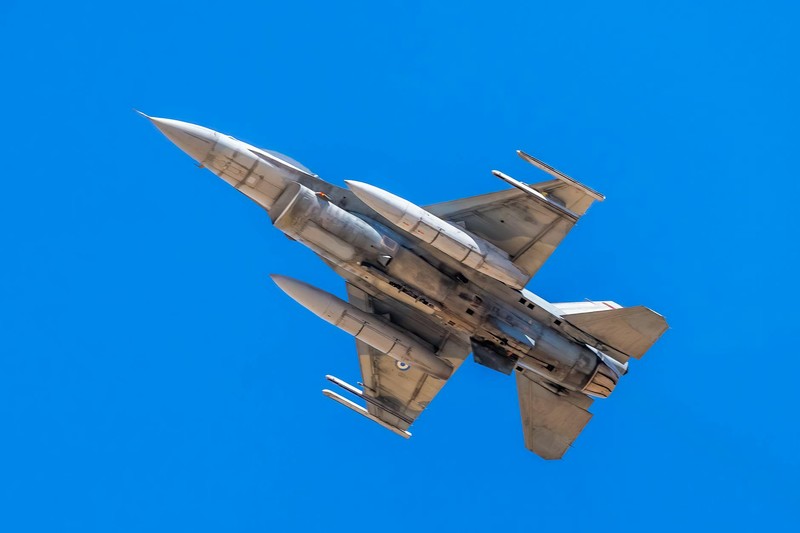
A shepherd in the Iraqi desert spotted helicopters where helicopters should not have been. Within hours, Israeli warplanes were firing on Iraqi soldiers to protect a secret base Baghdad never knew existed.
The Wall Street Journal reported Saturday that Israel built and operated a clandestine military outpost in Iraq during the recent air war against Iran, a revelation that exposes an unreported dimension of a nearly six-week conflict that reshaped the Middle East.
The base, established with U.S. knowledge shortly before the war began on February 28, housed Israeli special forces and search-and-rescue teams positioned to recover downed pilots deep over Iran — roughly 1,000 miles from home. The outpost shortened the operational distance for strike aircraft and gave rescue teams a forward staging ground on territory Iraq never agreed to host.
According to the Journal, citing U.S. officials and others familiar with the matter, the base nearly came undone in early March when a shepherd reported unusual helicopter activity to Iraqi authorities. An Iraqi army unit drove toward the site at dawn. Israeli aircraft opened fire, killing one soldier and wounding two others to prevent Iraqi troops from reaching the outpost, the report said.
Iraqi deputy commander Lt. Gen. Qais Al-Muhammadawi told state media the strike was a “reckless operation” that “was carried out without coordination or approval.” A second wave of Counter Terrorism Service troops later found evidence that a foreign force had operated in the area.
A Sovereignty Violated in Silence
Baghdad condemned the attack and filed a UN complaint in March — blaming the United States. A person familiar with the matter told the Journal the U.S. was not involved, and a U.S. source confirmed American forces played no role. Iraqi officials had publicly attributed the strike to U.S. forces, with some accounts describing helicopters arriving from Syrian airspace.
When foreign aircraft kill a country’s soldiers on its own soil and the government cannot correctly identify which foreign power did it, the sovereignty in question has already been hollowed out.
An Iraqi government spokesman declined to say whether Baghdad knew of the base. The Israeli military declined to comment. Then-air force chief Maj. Gen. Tomer Bar, who handed off command on May 5, alluded in a March letter that special-unit fighters were carrying out missions that “could ignite the imagination.”
The Regional Architecture of Deniability
The war against Iran, conducted alongside a U.S.-led operation that began with strikes killing Iran’s supreme leader and senior commanders, was presented as a bilateral confrontation. An Israeli base in Iraq — with U.S. knowledge but apparently without Iraqi consent — complicates that framing considerably.
For Iran, the revelation confirms that the conflict was never simply a bilateral confrontation but a coordinated campaign spanning multiple states and at least one third country’s territory. The Pakistan-mediated, two-week conditional ceasefire that took hold on April 8 paused the shooting. It did not pause the reckoning.
No Israeli pilots were lost during the campaign. When a U.S. F-15E was shot down near Isfahan in early April, Israel offered help, but U.S. forces conducted the rescue themselves. Israeli aircraft did provide covering strikes during the operation, according to the Journal.
A Pattern, Not an Anomaly
Iraq is hardly the first Middle Eastern state to discover foreign powers operating on its territory without permission. From U.S. bases in eastern Syria to Turkish incursions in the north, Iranian-backed militias on Iraqi soil to Emirati outposts in the Horn of Africa, the region is a patchwork of extraterritorial military arrangements that bypass nominal sovereigns.
What distinguishes the Israeli outpost is its intimacy: a combat base, manned by special forces, actively defended against the host country’s own military during a regional war. The shepherd who tipped off the army thought he was doing his duty. He was. The soldiers who drove toward the site at dawn thought they were defending their territory. They were. One of them died for it.
The Journal’s report has not been independently confirmed by other outlets. The Jerusalem Post noted it could not verify the account. But if the reporting holds, the implications are clear: a state that cannot detect a foreign military installation in its own desert, whose soldiers are killed by an occupying force it cannot identify, has a sovereignty problem no UN complaint will solve.
Sources
- WSJ: Israel ran covert Iraq outpost during Iran war — Wall Street Journal via MSN
- Israel built secret base in Iraqi desert during war with Iran - report — Jerusalem Post
Discussion (8)