 lop News
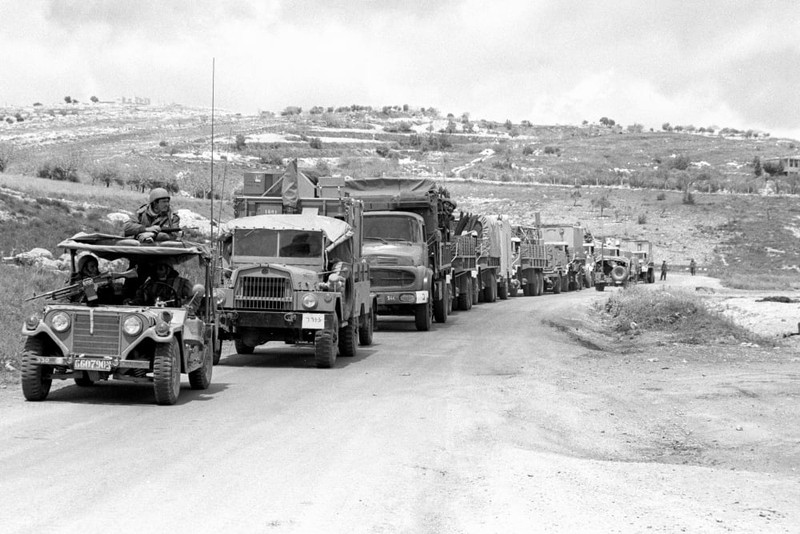
Israeli troops are closing on the Litani River, roughly 30 kilometers inside Lebanese territory. Prime Minister Benjamin Netanyahu announced the expansion of what he called the country’s “existing security zone” on Sunday — the second such widening in a week — as his government builds what appears to be an open-ended military occupation of southern Lebanon.
“I have now instructed to further expand the existing security zone in order to finally thwart the threat of invasion and to push the anti-tank missile fire away from our border,” Netanyahu said in a video statement from Israeli Northern Command.
His office declined to provide further details, and the matter has not yet been discussed by Israel’s security cabinet, according to Reuters. What is clear is the direction: more territory, more Israeli soldiers on Lebanese soil, and no timeline for withdrawal.
A buffer zone with no return date
Defense Minister Israel Katz said last week that Israeli forces would “control the remaining bridges and the security zone up to the Litani.” Five bridges on the river — which meets the Mediterranean about 30 kilometers north of the Israeli border — have been destroyed. Katz described them as routes used by Hezbollah for moving fighters and weapons.
Displaced Lebanese civilians will not be permitted to return south of the Litani “until security is guaranteed for the residents of the north” of Israel, Katz said. More than 1.2 million people have been displaced by the conflict, according to the United Nations.
At least 1,238 people have been killed in Lebanon since the country was drawn into the war on March 2, according to Lebanon’s Health Ministry, including 124 children. On Saturday and Sunday alone, 49 people were killed, among them 10 rescue workers and three journalists killed in an air strike on their vehicle near the town of Jezzine. The Israeli military has confirmed five soldiers killed in the Lebanon operation since late February.
The northern front of a regional war
While global attention has focused on the direct US-Israeli air campaign against Iran, Israel has been steadily deepening its hold on southern Lebanon — building what looks increasingly like a permanent military presence on its northern neighbor’s soil.
Hezbollah began firing rockets into northern Israel on March 2, in retaliation for the killing of Iran’s Supreme Leader Ayatollah Ali Khamenei and near-daily Israeli strikes on Hezbollah positions despite a November 2024 ceasefire. The US and Israel had already launched air strikes on Iran.
More than 400 Hezbollah fighters have been killed since the group opened this front, according to sources familiar with Hezbollah’s casualty count who spoke to Reuters. Netanyahu claimed Israel had “eliminated thousands of Hezbollah terrorists” and destroyed the threat of “150,000 missiles and rockets” aimed at Israeli cities. He acknowledged that Hezbollah still retains “residual capability to launch rockets.”
“Iran is no longer the same Iran, Hezbollah is no longer the same Hezbollah, and Hamas is no longer the same Hamas,” Netanyahu said. “These are no longer terrorist armies threatening our existence — they are defeated enemies, fighting for their own survival.”
Echoes of a previous occupation
The creation of a “defensive buffer” in southern Lebanon inevitably echoes Israel’s previous occupation of a strip of territory from 1985 to 2000. Israel withdrew after years of attrition by Hezbollah, which turned Israeli public opinion against maintaining the zone.
Now Hezbollah says it is prepared to fight again. A senior Hezbollah official, Hassan Fadlallah, called the Israeli push an “existential threat,” adding: “We have no choice but to confront this aggression and cling to this land.”
Lebanon’s President Joseph Aoun has described Israeli plans as “collective punishment against civilians.” France’s Foreign Minister Jean-Noel Barrot said that if the journalists killed in Saturday’s strike were “deliberately targeted” by the Israeli military, “then this is extremely serious and a blatant violation of international law.”
Netanyahu framed the Lebanon buffer as one element of a fundamentally new security doctrine. Israel has established or is establishing three security zones — in Lebanon, in Gaza across more than half the territory, and in Syria from the Hermon ridge to the Yarmouk. “Instead of them surprising us, we are surprising them,” he said. “We are the ones taking action, we are the ones attacking, we are the ones taking the initiative, and we are deep within their territory.”
The message from Jerusalem is unmistakable: Israel’s buffer zones are not temporary measures. They are the new architecture of the country’s borders — and the cost, measured in displaced populations and destroyed towns, is being borne entirely by its neighbors.
Sources
- Israel’s Netanyahu orders expansion of southern Lebanon operations to halt Hezbollah rockets — Reuters
- Netanyahu orders military to expand invasion of southern Lebanon — Al Jazeera
- Israel says it will take control of large buffer zone in southern Lebanon — BBC
- Israeli PM says ordered military to ‘further expand’ security zone in Lebanon — Channel News Asia
- Netanyahu Announces Lebanon Buffer Zone Expansion, Declares Broader Campaign Against Iran — The Media Line
- Netanyahu announces expansion to Lebanon buffer zone — The Jerusalem Post
Discussion (9)