 lop News
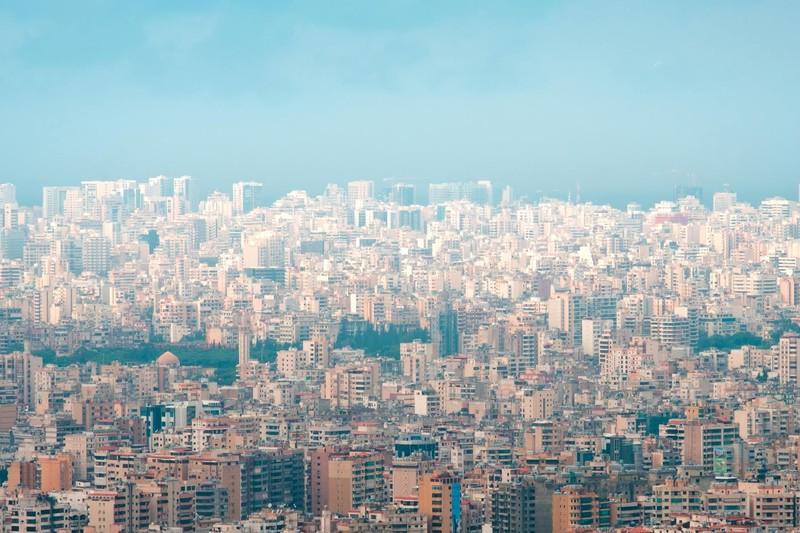
Hours after US President Donald Trump announced a ceasefire with Iran, Israel launched the broadest strike on Beirut since its military campaign in Lebanon began — killing more than 300 people, according to Israel Hayom, and eliminating a senior aide to Hezbollah Secretary-General Naim Qassem. Whatever truce had been reached in Tehran did not, by Israel’s own actions, extend to Beirut.
The Israeli Defense Forces confirmed Thursday that Ali Yusuf Harshi — Qassem’s nephew and personal secretary — was killed in the overnight barrage. Harshi was described by the IDF as a “close associate and personal adviser” to Qassem who “played a central role in managing and securing” the Hezbollah leader’s office. His death has not yet been confirmed by Hezbollah.
While not a decapitation strike on the scale of the assassination of Hassan Nasrallah in September 2024, the killing of a figure embedded so deeply in Qassem’s inner circle represents a significant intelligence achievement for Israel — and a breach of whatever security perimeter Hezbollah’s leader has left.
The Scale of the Barrage
This was not a targeted assassination conducted in isolation. According to the IDF, the overnight operation hit targets across Beirut, the Beqaa Valley, and southern Lebanon in what Israel Hayom described as the broadest single barrage in Beirut since the start of what the Israeli military calls Operation Roaring Lion.
The IDF said the strikes targeted intelligence headquarters, central command posts, and infrastructure belonging to Hezbollah’s missile and naval arrays. Assets of the Radwan Force and Unit 127 — the organization’s elite units — were also hit. The military said the operation had been planned over many weeks by the Operations Directorate, the Intelligence Directorate, the Israeli Air Force, and Northern Command.
Additionally, the IDF struck two key crossings used by Hezbollah operatives to move between areas north and south of the Litani River and to transfer weapons, along with approximately 10 weapons storage sites, launchers, and command centers in southern Lebanon.
The IDF acknowledged that “most of the infrastructure that was struck was located in the heart of the civilian population,” accusing Hezbollah of using “Lebanese civilians as human shields.” It said steps were taken “to minimize harm to uninvolved civilians as much as possible” but did not elaborate on what those steps were.
The Ceasefire Gap
The timing was the message. Israel Hayom reported that the strikes came “against the backdrop” of Trump’s ceasefire announcement and “reports that Lebanon and Hezbollah were also included in it.” Israel’s response was to demonstrate, with considerable force, that they were not.
The IDF said that “in accordance with instructions from the political echelon, the forces held their fire overnight” — a brief tactical pause — before adding that “the fighting in Lebanon is continuing and has not stopped against Hezbollah.” Air defense systems remain on alert, and the military said there was no change in instructions to the Israeli public.
This is consistent with Israel’s posture since a US-backed ceasefire between Israel and Lebanon was established in 2024 after more than a year of fighting. Israel has conducted regular strikes against what it identifies as Hezbollah targets throughout that period, accusing the group of rearming. Hezbollah refused to disarm under a US proposal aimed at extending the ceasefire. Qassem had warned that missiles would fall on Israel if it resumed a broad war on Lebanon.
Israel has now resumed that war.
Hezbollah’s March Gamble
Hezbollah’s current crisis traces directly to a decision made five weeks ago. On March 2, the group attacked Israel, entering the expanding regional war on Iran’s side — two days after the United States and Israel began airstrikes against Iran. Those strikes killed Iranian Supreme Leader Ali Khamenei on the first day of the campaign, according to the Straits Times.
It was a decision that tied Hezbollah’s fate to the trajectory of a conflict it could not control and to a patron under devastating assault. Israel had already severely degraded Hezbollah’s military capabilities through sustained bombardment and targeted assassinations since the Gaza war began on October 7, 2023. The killing of Nasrallah — who led Hezbollah for more than three decades — was the most consequential of those strikes.
Qassem, a veteran of the group for more than 30 years, was named secretary-general a month later. He inherited a depleted organization under enormous pressure. Now his personal secretary is dead, his command infrastructure has been struck again, and the ceasefire that might have offered his patron relief does not cover Lebanon.
Ground Operations in the South
Israel’s campaign is not limited to air strikes. The IDF published footage Thursday showing Paratroopers Brigade troops operating under the 98th Division during ground operations in southern Lebanon over the past week. The military said the brigade has established “operational control over key sectors in southern Lebanon” — language suggesting Israel is consolidating territorial control in the border zone.
That represents a significant escalation beyond the terms of the 2024 ceasefire, which envisioned Israeli withdrawal and the deployment of Lebanese military and UN peacekeepers in the south.
Silence From Key Capitals
As of Thursday morning, there had been no public statement from Hezbollah, from the Iranian government, or from Lebanese authorities regarding the overnight strikes. The silence from Beirut is characteristic of a state with little capacity to influence events on its own territory. The silence from Tehran reflects a regime still reeling from the loss of its supreme leader and the destruction of its military infrastructure.
For Iran’s Revolutionary Guard Corps — which created Hezbollah in 1982 to fight Israel’s then-occupation of southern Lebanon — the systematic dismantling of its most powerful regional ally represents a generational setback. The ceasefire with the United States may halt direct strikes on Iranian soil, but it does nothing to protect the proxy network that decades of Iranian investment built.
For Israel, the calculation is straightforward. The ceasefire with Iran removed the threat of a direct confrontation with a state adversary, freeing military resources for a focused campaign against Hezbollah. The overnight strike on Beirut is what that calculation produces in practice.
The immediate question is what Hezbollah does next. The group has absorbed staggering losses since October 2023 — its longtime leader, much of its command structure, and now a significant portion of its Beirut-based infrastructure. Yet it has continued to fight, and its refusal to disarm suggests it sees survival in resistance rather than concession. Israel, for its part, has signaled that it will not stop.
Discussion (13)