 lop News
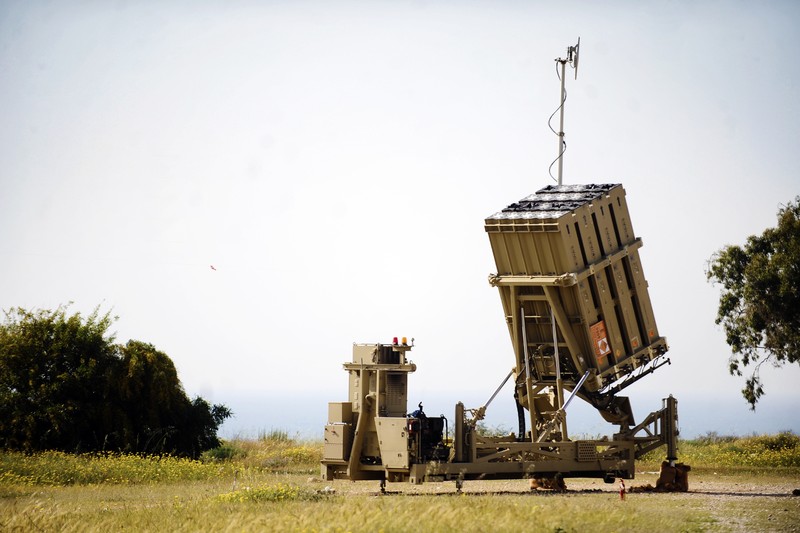
Israeli air defenses engaged two Iranian ballistic missiles streaking toward the Negev desert on Saturday evening. The interceptors launched. They tracked their targets. And they failed.
The result: direct hits on the towns of Dimona and Arad, at least 160 people wounded, apartment buildings ripped open, and a crater gouged into the ground near one of the most sensitive nuclear sites on earth.
Two Missiles, Two Failures
The strikes came hours after Iran’s Natanz uranium enrichment facility was hit — an attack Tehran blamed on the United States and Israel, though Israel’s military denied involvement. Iranian state television framed the Negev strikes as retaliation.
What made Saturday’s attack different was not the missiles themselves. IDF spokesman Effie Defrin said on X that the projectiles were “not a special or unfamiliar type of munition.” The warheads carried hundreds of kilograms of conventional explosives, according to military assessments reported by the Times of Israel. Israel’s Air Force confirmed that interceptors were launched against both missiles but failed to knock them down.
It was the first time Iranian missiles had penetrated Israeli air defenses in the area around the Shimon Peres Negev Nuclear Research Center, according to Al Jazeera.
The Israeli Air Force says it has intercepted 92% of the roughly 400 missiles Iran has fired at Israel since the war began on 28 February, according to the BBC. That leaves about 32 that got through — and two of them hit population centers near a nuclear weapons site.
The Human Cost
Israel’s Health Ministry reported at least 180 people wounded across both towns, according to Al Jazeera. The BBC cited emergency officials putting the figure at more than 160, with 84 hurt in Arad and 78 in Dimona. Nearly 200 people were injured overall, 11 of them seriously, according to the Times of Israel. Separately, Soroka Medical Center in Beersheba said it treated 175 casualties, with 36 remaining hospitalized by Sunday morning.
Among the seriously injured: a 12-year-old boy in Dimona with shrapnel wounds who had not reached a bomb shelter in time, and a five-year-old girl in Arad. Naram Zaid, a paramedic in Arad, told the BBC she had treated “a lot of children with head and chest injuries” after they were crushed by objects inside a damaged building. She described a 10-year-old girl, bloodied from broken glass, refusing to board an ambulance until her parents were pulled from the wreckage.
Rescue workers reported widespread damage across at least 10 apartment buildings in Arad, three of them at risk of collapse, according to CBS News. In Dimona, Al Jazeera’s correspondent identified three separate impact sites, including a collapsed three-storey building.
Prime Minister Benjamin Netanyahu, visiting Arad on Sunday, said the absence of fatalities was “due to luck, not their intention,” according to CBS News.
Saturation, Degradation, or Both?
The military has launched an investigation, with IDF Chief of Staff Lt. Gen. Eyal Zamir ordering senior commanders — including the heads of the Air Force, Intelligence Directorate, and Home Front Command — to “draw lessons” from the failures, the Times of Israel reported.
The question hanging over the inquiry is whether Saturday’s failures reflect a temporary glitch or a structural vulnerability. Iran has fired 400 missiles at Israel in three weeks. Interceptor stocks are finite, and each salvo forces a calculation about which threats to prioritize. Iran’s Parliament Speaker Mohammad Bagher Ghalibaf seized on the breach, writing on X that Israel’s inability to intercept missiles “in the heavily protected Dimona area” marked “a new phase of the battle,” according to CBS News.
Abas Aslani, a senior fellow at the Centre for Middle East Strategic Studies in Tehran, told Al Jazeera that Iran is pursuing an “eye-for-an-eye” strategy designed to re-establish deterrence — making its threats credible enough to underpin a long-term security arrangement.
The IAEA confirmed no damage to the nuclear research center and no abnormal radiation levels. But Director General Rafael Grossi urged “maximum military restraint” near nuclear facilities — a plea directed at both sides.
A War With No Ceiling
The broader trajectory is unsettling. Zamir said in a video statement that the military was “halfway through” its campaign against Iran, and that the direction was “clear.” He also disclosed that Iran had launched a two-stage intercontinental ballistic missile with a 4,000-kilometer range at the US-UK base at Diego Garcia — the first evidence that Tehran’s arsenal reaches European capitals.
Israel’s education ministry canceled all in-person schooling nationwide for Sunday and Monday. The health system shifted to full emergency mode, with wounded being transferred from southern hospitals to facilities in central Israel.
Three weeks into a war fought largely from the air, Saturday’s strikes laid bare an uncomfortable arithmetic: a 92% interception rate still means buildings shattered, children bloodied, and a nuclear-armed state’s defenses punctured within range of its most guarded secret.
Sources
- Iranian missiles injure 160 in towns near Israeli nuclear site — BBC News
- Iran strikes towns near Israel’s key nuclear site, at least 180 wounded — Al Jazeera
- Almost 200 injured, 11 seriously, in Iranian missile strikes on southern cities of Arad, Dimona — The Times of Israel
- 2 Iranian strikes on towns near Israel’s main nuclear research center injure more than 100 people — CBS News
- Aftermath of Iranian missile strikes near Israel’s nuclear facility — Al Jazeera
- Iranian missile strikes injure more than 100 in southern Israel — France 24