 lop News
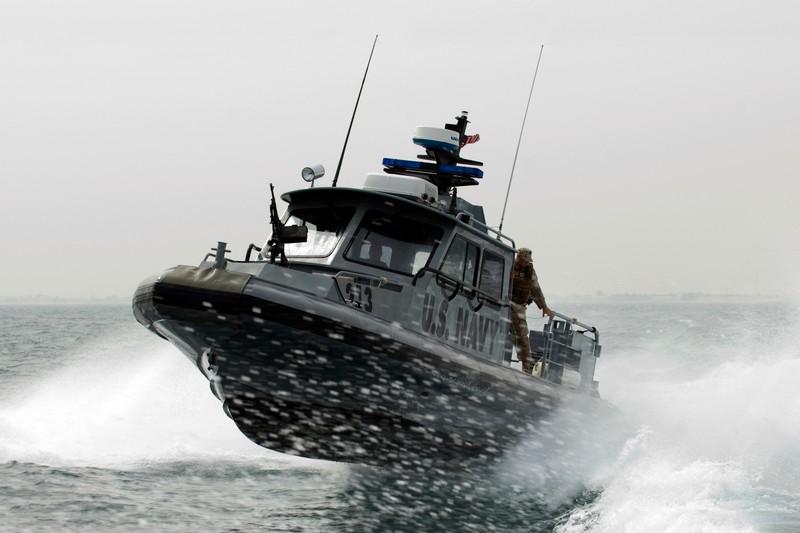
Four Iranian officers sailed toward a Kuwaiti military island on a fishing boat. The operation, according to Kuwait’s Interior Ministry, was directed by the Islamic Revolutionary Guard Corps. It failed — but not before a Kuwaiti soldier was shot and two members of the infiltration team escaped during the clash.
Kuwait disclosed the May 1 incident on Tuesday, publicly naming the four men it arrested: IRGC Colonels Amir Hussein Abd Mohammed Zara’i and Abdulsamad Yadallah Qanwati, Captain Ahmed Jamshid Gholam Reza Zulfiqari, and First Lieutenant Mohammed Hussein Sehrab Faroughi Rad. Two others — navy Captain Mansour Qambari and the boat’s captain, Abdulali Kazem Siamari — fled the confrontation on Bubiyan Island and remain at large. The eleven-day gap between the operation and its disclosure raises questions about what else may not yet be public.
According to the Kuwaiti government’s statement, the men admitted to being tasked by the IRGC with infiltrating Kuwaiti territory. They were found aboard what the Interior Ministry described as a fishing boat “specially chartered to carry out hostile actions against Kuwait.” Iran has not responded to the allegations.
Why Bubiyan Matters
Bubiyan is Kuwait’s largest island, sitting at the northern tip of the Persian Gulf near the Iraqi border. It holds strategic value because of its proximity to key shipping lanes, Kuwait’s northern oilfields, and military installations. An infiltrator who reaches Bubiyan is inside the perimeter of critical infrastructure — not on a remote outpost.
That the IRGC sent ranked officers rather than proxy fighters or deniable assets is significant. Kuwait identified colonels, a captain, and a lieutenant — a team structured like a military reconnaissance unit, not an irregular militia cell. This was not a plausible-deniability operation. The ranks are public. The names are public.
A Widening Pattern
The Bubiyan incursion did not emerge in isolation. Kuwait has been absorbing the spillover of Iran’s broader conflict for weeks.
In April, strikes hit Kuwait’s Mina al-Ahmadi oil refinery, one of the Middle East’s largest, along with a power and desalination plant. Kuwait blamed Iran. On March 30, an Indian national was killed in a separate attack on a Kuwaiti desalination facility. Kuwait again attributed the strike to Tehran. Iran denied responsibility and blamed Israel.
Earlier this week, Kuwait reported intercepting what it described only as “a number of hostile drones” in its airspace, without specifying their origin.
The trajectory runs from long-range strikes, to drones over Kuwaiti territory, to a physical infiltration by named IRGC personnel on a military island. The infiltration attempt comes amid ongoing tensions around the Strait of Hormuz, where Gulf states have pushed for international action to secure the vital shipping route. A direct ground operation on Kuwaiti soil, however, represents a different order of provocation — aimed not at commerce but at sovereignty itself.
Kuwait Draws a Line
Kuwait’s Foreign Ministry condemned the incursion as a “flagrant violation” of sovereignty and a breach of international law. The deputy foreign minister summoned Iran’s ambassador and delivered a formal protest note invoking Article 51 of the UN Charter — the provision governing the right to self-defence.
Bahrain’s foreign minister contacted his Kuwaiti counterpart to affirm what he called Kuwait’s “full right to take all necessary measures to safeguard its sovereignty and protect its people.” The response from other Gulf states has been measured so far, but the incident adds pressure on a regional coalition already stretched by the broader conflict.
Kuwait sits just 80 kilometers from Iran’s coastline and depends heavily on desalinated water. The country has spent decades maintaining a posture of careful neutrality between larger powers. That stance is becoming difficult to sustain.
The Bubiyan operation suggests the IRGC is probing more than missile ranges and drone ceilings. It is testing whether Gulf states will absorb direct provocations without expanding the coalition against Tehran — and calculating how much pressure it can apply before the response changes from diplomatic protests to something more consequential.
Discussion (11)