 lop News
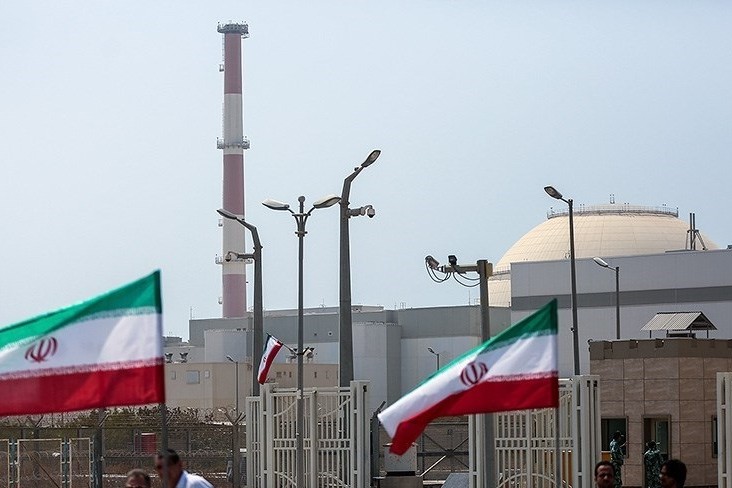
A projectile landed inside the compound of Iran’s Bushehr nuclear power plant on Tuesday night. The reactor kept running. So did the war.
That strike, confirmed by the International Atomic Energy Agency (IAEA), was the third time in ten days that ordnance has hit at or near Iran’s only operational nuclear power facility. No damage to the reactor. No radiation release. But a functioning nuclear plant in an active combat zone is running on margins that physics, not politics, defines — and those margins are shrinking.
“The situation at Iran’s Bushehr nuclear power plant continues to deteriorate,” Rosatom chief Alexei Likhachev said on Saturday. “Attacks pose a direct threat to nuclear safety.”
An Exodus of Expertise
Russia built Bushehr, connected it to Iran’s grid in 2011, and has co-operated it ever since through the state nuclear corporation Rosatom. When US and Israeli strikes on Iran began in late February, the plant had a substantial Russian workforce maintaining the reactor and constructing two additional reactor units.
They are leaving. Likhachev confirmed Saturday that 163 more staff were evacuated to the Iranian-Armenian border on Wednesday, following an earlier withdrawal of around 150 personnel on March 10 and 11. Two more groups will follow in coming days. Of the hundreds of Russians once at Bushehr, roughly 300 remained as of mid-week, according to Likhachev. He expects that number to fall to “a few dozen people who will oversee the equipment.”
Each departing specialist narrows the pool of operational knowledge keeping a nuclear reactor stable. Bushehr has been run by Rosatom engineers since it came online — the country’s only operational nuclear power facility, with no equivalent anywhere in Iran. These are the people who understand its cooling systems, its electrical loads, its emergency protocols. There is no backup roster in wartime.
Lost Contact
The problems extend beyond staffing. Likhachev told Russia’s TASS news agency that Rosatom has lost communication with the leadership of Iran’s entire nuclear industry. “They are not answering their phones or responding to emails,” he said. The Iranian officials who coordinate fuel management, grid integration, and emergency planning are unreachable.
Rosatom also has “no idea about the extent of the damage” at other Iranian nuclear sites struck during the campaign, Likhachev added. The fog of war extends across the country’s entire nuclear infrastructure.
A “Very Delicate” Situation
IAEA Director General Rafael Grossi met with Likhachev in Moscow on Friday and described the situation surrounding nuclear facilities in the region as “very delicate.” The international community, he said, will be walking “a fine line between peace and war” until a diplomatic resolution is reached.
Grossi reiterated his call for “maximum restraint to avoid nuclear safety risks” — language that, in practice, asks warring parties to voluntarily avoid a target they have already struck three times. The IAEA can verify and report. It cannot intercept a missile.
Russia’s Foreign Ministry demanded “unequivocal and firm condemnation” of the attacks near Bushehr. Spokesperson Maria Zakharova said the IAEA’s director general should tell the attackers plainly: “It is time for you to stop!” Whether Washington and Jerusalem are receptive to Moscow’s appeals is a separate question from whether Moscow has the leverage to make them listen.
What Deterioration Looks Like
Rosatom has not specified precisely what “deteriorating” means in technical terms. But the geometry of the problem is clear. A nuclear power plant requires continuous oversight: cooling systems, electrical supply, trained operators, supply chains for parts and fuel. In peacetime, these run through established protocols and staffing rotations. In wartime, each link in that chain becomes a vulnerability.
Staff evacuate. Supply routes are disrupted. Communications break down. Construction on Units 2 and 3 has been paused, but some Russian staff remain because certain maintenance tasks cannot be safely halted mid-process — one more way that nuclear operations resist the logic of an orderly withdrawal.
Likhachev said Putin is “closely involved” and has taken unspecified additional steps to protect Russian staff and evacuation convoys. The personal involvement of a head of state speaks to the gravity of the situation — and to the diplomatic liability of a nuclear incident occurring at a Russian-operated facility.
A Compressed Timeline
This is not the first operating nuclear plant caught in an active conflict. Ukraine’s Zaporizhzhia facility has been under military occupation since 2022, with periodic IAEA warnings and intermittent loss of external power. But Zaporizhzhia’s deterioration has unfolded over years. At Bushehr, three strikes in ten days and an accelerating evacuation suggest a timeline measured in weeks, not seasons.
Likhachev said Rosatom will remain “as long as we can” to keep Bushehr-1 operating normally and preserve the option of resuming construction later. How long that proves to be may determine whether the Iran war — which has killed more than 1,440 people in the country since February 28, according to Iran’s health ministry — compounds its toll with a nuclear emergency.
The reactor is still running. The operators are still leaving. The strikes continue.
Sources
- Rosatom says situation at Iran’s Bushehr nuclear power plant keeps deteriorating — Reuters
- A projectile struck the premises of the Bushehr Nuclear Power Plant — IAEA
- Putin has taken more steps to ensure Russians’ safety at Iran’s Bushehr nuclear plant, says Rosatom head — Anadolu Agency
- “We’ve Lost Contact”: Russian Workers Stuck At Iran Nuclear Plant Amid War — NDTV
- Rosatom Pulls More Staff From Iranian Nuclear Plant After Reported Strike — The Moscow Times
Discussion (10)