 lop News
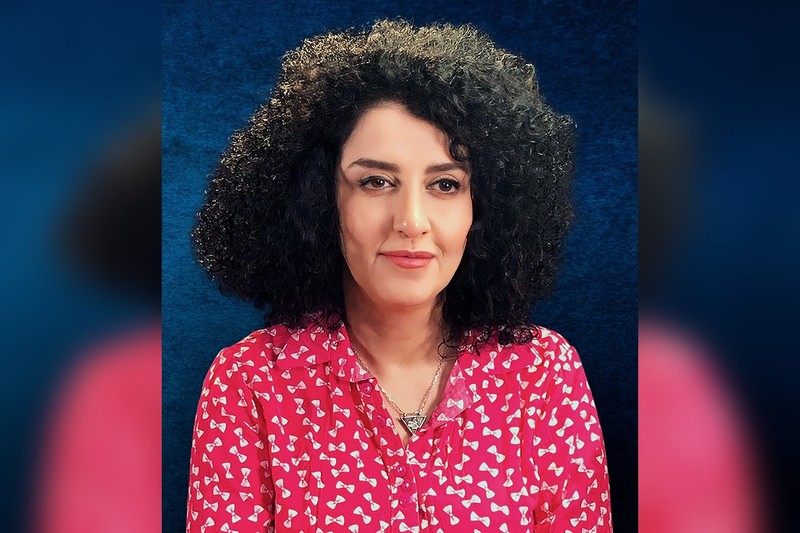
Narges Mohammadi has been arrested 13 times, sentenced to 31 years in prison, and ordered to receive 154 lashes. She has undergone three angioplasties. She won the Nobel Peace Prize. She is currently lying in a hospital bed in Zanjan, in critical condition, after her heart gave out in a prison cell — and the Iranian government will not let her doctors in Tehran treat her.
Mohammadi, 54, was transferred to intensive care at a hospital in Zanjan on Friday after what her family’s foundation described as a “catastrophic deterioration” in her health, including two episodes of complete loss of consciousness and a severe cardiac crisis. Her lawyer, Mostafa Nili, wrote on social media that she had long suffered from cardiac arrhythmia before collapsing with severe chest pain. Prison doctors concluded they could not manage her condition.
Her family and legal team have asked that she be moved to Tehran, where her own specialists — who have previously treated her pulmonary embolism and performed her heart procedures — could oversee her care. Authorities have refused, according to her foundation.
This is the same government that has spent months negotiating with the United States to halt a conflict that has drawn in Israel and reshaped the regional order. Diplomacy is not the problem. Mohammadi’s offense was campaigning against the mandatory hijab law and documenting torture and sexual violence in Iranian prisons. For that, there is no negotiated settlement.
A body breaking down
Mohammadi’s health had been failing for months. In late March, she suffered a suspected heart attack and was found unconscious by fellow inmates at Zanjan Prison, northwest of Tehran. Government authorities declined to take her to a hospital, according to her husband. On Saturday, her brother Hamidreza Mohammadi told the BBC that her blood pressure had dropped sharply and could not be stabilized. Her previous conditions — including a pulmonary embolism and multiple heart procedures — make treatment at Zanjan’s provincial hospital “effectively impossible,” he said.
The Narges Mohammadi Foundation called the hospitalization a “desperate, last-minute” measure that might come too late. Nili, her attorney, added that despite the serious heart problems, a neurological condition was now the clinical priority. The crisis had spread beyond her cardiovascular system.
This medical emergency was foreseeable. Mohammadi was granted a medical furlough from Tehran’s notorious Evin Prison in December 2024 because her health was already deteriorating. While receiving treatment, she continued campaigning — and in December 2025, she spoke at the memorial for human rights lawyer Khosrow Alikordi, who had died under circumstances his family and colleagues considered suspicious. She was arrested in the northeastern city of Mashhad that same day. Her family said she was beaten during the arrest.
A Revolutionary Court sentenced her in February to an additional seven and a half years for “gathering and collusion” and “propaganda activities.” She was then transferred without warning to Zanjan Prison — far from her family and her doctors — and has had only limited communication with relatives since.
The price of defiance
Mohammadi received the 2023 Nobel Peace Prize for her advocacy of women’s rights, her work against torture and sexual violence in detention, and her campaign to abolish the death penalty in Iran. She could not travel to Oslo to accept it. She was in Evin Prison, where she had become a leading voice in Iran’s “Woman, Life, Freedom” movement.
Even behind bars, she refused the mandatory hijab. According to a 2025 book by journalists Fatemeh Jamalpour and Nilo Tabrizy, Mohammadi and several female prisoners went on hunger strike for three days to force authorities to let her attend a hospital appointment without wearing the veil. The judiciary eventually backed down. The head of the Norwegian Nobel Committee, Jorgen Watne Frydnes, told Reuters that Mohammadi’s life remained at risk and called for adequate medical care.
The disappeared of wartime
Mohammadi’s case is not isolated. According to the Center for Human Rights in Iran, a New York-based nonprofit, Tehran has executed at least 22 political prisoners — including three minors — in the past six weeks. Most of the hangings were carried out secretly, without notice to the prisoners’ families or lawyers. According to NPR, these executions have continued throughout the ongoing conflict with the US and Israel, as the government has continued to repress dissidents.
Wars have a way of swallowing everything else. Missiles and ceasefire negotiations dominate the headlines; prisoners lying in understaffed provincial hospitals become footnotes. Mohammadi’s family has been pleading for international attention for months. The world is only now listening because her heart stopped.
Her foundation has called for all charges to be dropped and all sentences related to her peaceful human rights work to be unconditionally annulled. As of Saturday, the Iranian government had not issued a public statement on her condition.
The conflict with the US and Israel has consumed Iran’s diplomatic bandwidth. It has not consumed its capacity to imprison a woman who refused to cover her hair.
Sources
- Imprisoned Iranian Nobel Peace Prize winner in critical condition — NPR
- Concern for jailed Iranian Nobel laureate as family say health deteriorating — BBC News
- Iran: Jailed Nobel winner Narges Mohammadi hospitalized — Deutsche Welle
- Iranian Nobel laureate Narges Mohammadi hospitalised amid deteriorating health condition — Euronews
Discussion (9)