 lop News
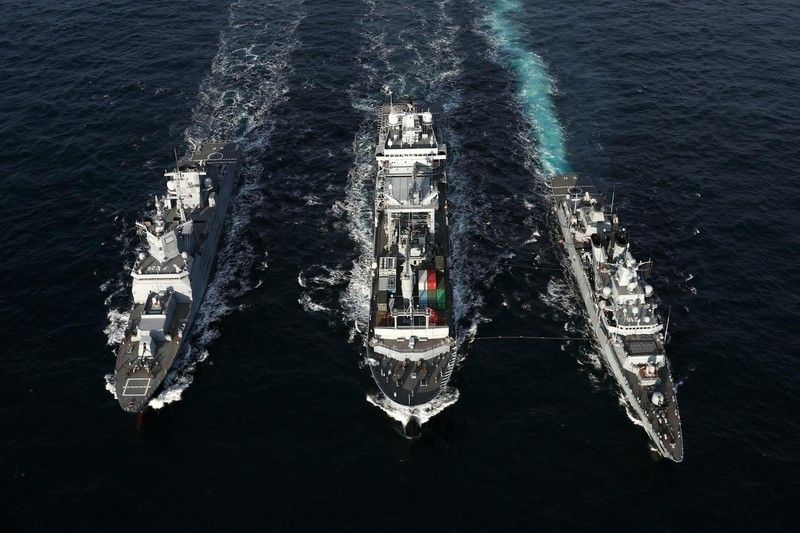
The Islamic Revolutionary Guard Corps has spent years building parallel power inside Iran. The war with the United States and Israel handed them the final piece: wartime authority that once sat with the Supreme Leader.
According to Reuters, Iran’s Guards have seized wartime decision-making power, effectively blunting Ayatollah Ali Khamenei’s institutional role. The shift did not require a constitutional amendment or a televised announcement. It accumulated through emergency commands, battlefield decisions, and the blunt reality that commanders with missiles and drones are faster to consult than clerics with advisory councils.
This is not a coup. It is something quieter and possibly more durable — a wartime consolidation that may prove difficult to reverse when the fighting stops.
A Strait That Tells the Story
The Strait of Hormuz remains effectively closed. A US naval blockade is still in place, according to Al Jazeera, choking the narrow waterway through which roughly a fifth of the world’s oil normally transits. The economic pressure on Iran is enormous. The strategic message is equally clear: the Guards command the forces that shut the strait, and only the Guards can credibly promise to open it again.
Roughly 3,000 Iran-bound shipping containers are stranded in Pakistan, Al Jazeera reports, as costs climb and Washington’s diplomatic signals shift without warning. Those containers are a small window into a larger paralysis — the global supply chain contorting around a conflict whose endpoint nobody can name.
Two Capitals, Two Tracks
Iran’s diplomatic response runs through at least two channels: Moscow and Islamabad. The dual tracks suggest a regime that has not unified its diplomatic apparatus — or, more likely, one in which different power centers pursue different negotiations at the same time.
Moscow’s involvement follows a familiar pattern. Russia has positioned itself as a mediator across multiple Middle Eastern theaters, and Tehran is a strategic partner with shared interests in Syria and the Caucasus. Islamabad’s role is more layered. Pakistan shares a 900-kilometer border with Iran, hosts the stranded cargo, and has its own economic reasons to want the strait reopened and the conflict wound down.
Neither channel appears to have produced a breakthrough. The war grinds on. The strait stays shut. And inside Iran, the Revolutionary Guards continue accumulating the kind of authority that wars grant and peacetime rarely surrenders.
The Problem at the Negotiating Table
This is the structural question that should concern every foreign ministry with skin in this game. Washington has sent mixed signals, according to Al Jazeera — alternating between escalatory language and back-channel feelers. But mixed signals aimed at a divided counterpart produce a negotiation landscape where nothing is quite what it seems.
If the Guards hold military command and the civilian government — or what remains of one — manages the diplomatic track, then any counterpart negotiating an end to the war faces a basic problem. Who speaks for Iran? Khamenei retains formal authority. The Guards hold the practical kind. An agreement struck with one may not bind the other. An adversary might sign a ceasefire with Tehran’s foreign ministry only to discover that the organization actually firing the missiles was never at the table.
A Power Structure Rewritten Under Fire
Wars concentrate authority. In Iran’s case, the current conflict is concentrating it inside an organization that was already the country’s dominant military and economic actor, with tentacles in construction, telecommunications, and energy. The Guards do not need to overthrow the Supreme Leader. They only need to make the office ornamental — and wartime urgency is doing that work for them.
For anyone negotiating with Tehran, the implication is uncomfortable. They may be dealing with a country whose power structure is being rewritten while the talks proceed. The diplomats in Moscow and Islamabad are not merely trying to end a war. They are trying to determine who, exactly, has the authority to end one — and whether that answer will be the same tomorrow as it is today.
Discussion (9)