 lop News
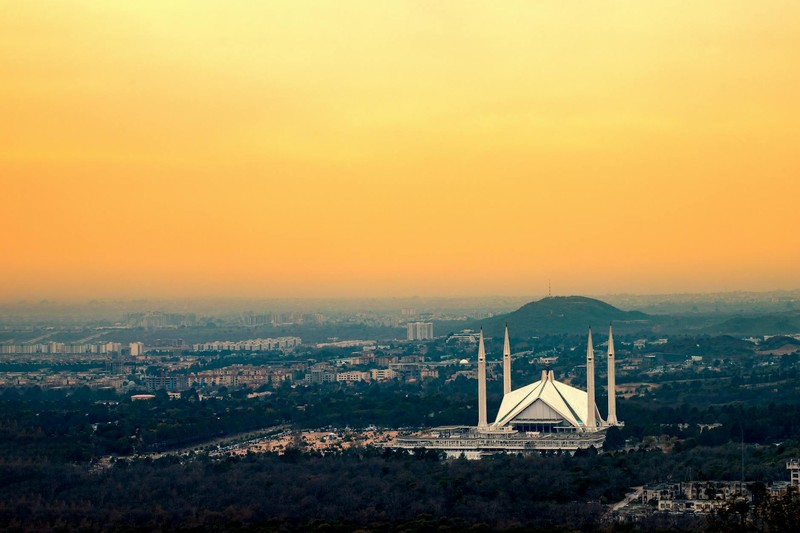
When American and Iranian negotiators sit across from each other in Islamabad on Friday, they will be haggling over a fortune. Estimates place Iran’s frozen assets abroad at well over $100 billion. Tehran wants its money back, and Donald Trump is the man who locked it away.
That irony shapes everything. In 2018, Trump unilaterally withdrew from the Joint Comprehensive Plan of Action, the nuclear deal that had granted Iran access to more than $100 billion in previously frozen assets. He reimposed sweeping sanctions, re-freezing those funds. Now, after 40 days of war that has cost the United States more than a billion dollars a day and killed 13 American service members, according to BBC reporting, Trump may have to consider giving much of it back.
The two-week ceasefire brokered by Pakistan is technically holding. Technically. On Wednesday, Iran closed the Strait of Hormuz again in response to Israeli strikes in Lebanon that killed at least 182 people — the deadliest day of fighting there, according to the Associated Press. The White House called the closure “completely unacceptable.” Iran’s parliament speaker declared the planned Islamabad talks unreasonable, citing what he called three separate violations of Tehran’s ceasefire conditions. Israeli Prime Minister Benjamin Netanyahu warned that Israel was “ready to return to fighting at any time,” adding: “Our finger is on the trigger.”
This is the landscape into which Vice President JD Vance will lead the American negotiating team.
The Price of Leverage
Iran’s 10-point proposal, which Trump has called a “workable basis” for negotiation, includes a demand for the full release of all Iranian assets and properties frozen abroad, alongside the lifting of all primary and secondary sanctions. The assets are scattered globally — significant reserves are held in South Korea and Japan, historically major customers of Iranian oil, with additional accounts reported in China, Germany, India, Turkey, and the UAE.
Access to these funds is not an abstract diplomatic point for Tehran. Iran was already in a full-blown economic emergency before the first bomb fell. The Statistical Centre of Iran put year-on-year inflation at 68.1 percent in February — the highest since World War II — while the Central Bank of Iran reported 62.2 percent. In a February congressional hearing, Treasury Secretary Scott Bessent admitted that the United States had deliberately engineered a dollar shortage in Iran to foment unrest, triggering bank failures and currency collapse.
The frozen assets are existential for Tehran, not aspirational.
There is precedent for partial releases. After a 2014 interim nuclear deal, Iran repatriated $4.2 billion in oil revenues. The 2015 JCPOA unfroze more than $100 billion. In September 2023, around $6 billion in Iranian oil revenues frozen in South Korean banks were moved to restricted accounts in Qatar under a prisoner exchange — only to be blocked again after October 7, 2023, due to Iranian funding of Hamas.
A Ceasefire That Isn’t
Nobody seems to agree on what the ceasefire covers. Iran says it includes an end to Israeli attacks on Hezbollah in Lebanon. Trump and Netanyahu say it does not. The Persian-language version of Iran’s 10-point plan includes language suggesting the US accepted Iran’s right to enrich uranium; the English version omits this. Trump insists there will be “no enrichment of Uranium.” Vance dismissed the publicized Iranian proposal as something “probably written by ChatGPT.”
White House press secretary Karoline Leavitt said the first Iranian proposal was “literally thrown in the garbage,” but a revised version was “more reasonable.” She reiterated that Trump’s red line on enrichment has not changed.
The economic fallout cascades regardless. The Strait of Hormuz disruption has already sent global oil and gas prices soaring. Iran was requiring shippers to pay tolls of up to $1 per barrel for outbound oil, according to maritime intelligence firm Windward. Only 11 vessels moved through the strait on Wednesday.
A Weaker Hand Than Expected
The war has not gone according to anyone’s plan. US-Israeli strikes killed many of Iran’s senior leadership at the outset, but the new generation in Tehran is, if anything, more extreme. Vali Nasr, a scholar of Iranian politics at Johns Hopkins University, told NPR that Iran’s new leaders have “crossed lines that the previous supreme leader wouldn’t,” including attacking civilian infrastructure in neighboring countries.
Leaked intelligence assessments suggest Iran still maintains roughly half its pre-war missile and drone arsenal. Iran still maintains its stockpile of near-weapons-grade enriched uranium, thought to be contained in gas cylinders under rubble at bombed nuclear sites, according to the BBC. The BBC noted that the war may have made Tehran more, not less, determined to seek a nuclear deterrent.
Iran expert Trita Parsi argued that Trump’s “failed use of force has blunted the credibility of American military threats,” meaning any agreement will require genuine compromise. Andreas Kreig of King’s College London put it more bluntly: Iran believes it has “a high threshold of pain that the US cannot match.”
The fortune in frozen assets is the thread that could pull a deal together or unravel it. Trump tore up the last agreement that unlocked those funds. Now he may have to write a new one.
Sources
- Could billions in frozen Iranian assets help the US unlock a deal? — Euronews
- US-Iran ceasefire deal: What are the terms, and what’s next? — Al Jazeera via MSN
- Ceasefire threatened; Iran shuts down strait — Associated Press via Arkansas Democrat-Gazette
- Has Iran’s 10-point plan changed, as JD Vance claims? — Al Jazeera
- Iran expert discusses whether the war has made the Iranian regime stronger — NPR
Discussion (10)