 lop News
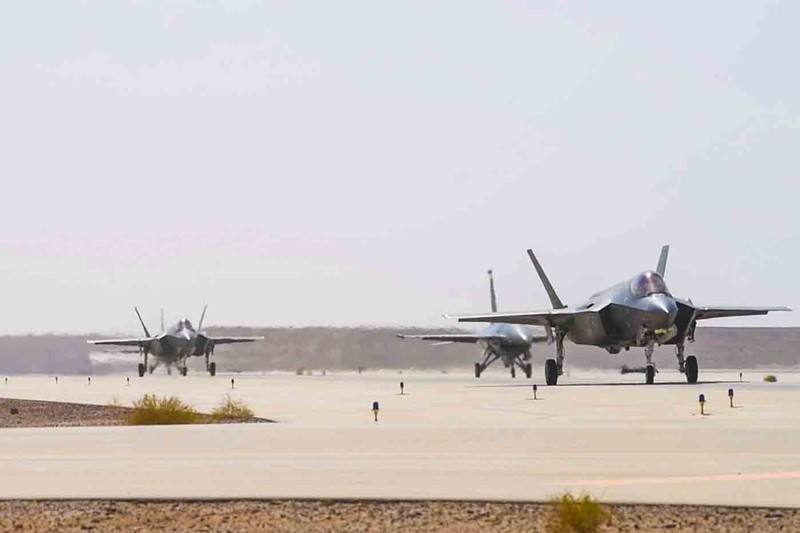
The war reached its one-month mark on Friday with a strike that laid bare the limits of American air defenses. Twelve U.S. service members were wounded — two seriously — when Iranian missiles and drones punched through the protective shield around Prince Sultan Air Base in Saudi Arabia, damaging multiple KC-135 Stratotanker refueling aircraft in one of the most consequential single attacks of the conflict.
Two U.S. officials, speaking on condition of anonymity to discuss sensitive military matters, confirmed the casualties and the damage. The Pentagon itself has declined to comment.
The damage assessment remains contested. Commercial satellite imagery circulating online appears to show three KC-135 tankers destroyed on the flight line at Al-Kharj, with several additional aircraft showing visible burn damage. Western reporting has been more cautious, describing approximately five aircraft as damaged rather than destroyed. The gap between those accounts has itself become a battleground — not over what happened, but over how badly it hurt.
What is not in dispute is that the strike represents a significant escalation in Iran’s ability to penetrate American defensive systems. The attack involved both ballistic missiles and drones in a combined package that overwhelmed interceptors at one of the most heavily defended U.S. installations in the region.
The Aircraft That Fuel the War
The KC-135 Stratotanker is not a combat aircraft. It is arguably more important than one. These aging but indispensable platforms keep fighters, bombers, and surveillance aircraft airborne across the vast distances of the Middle East. Losing even a few would degrade the entire American air campaign far more than the destruction of a comparable number of fighter jets.
Iran appears to understand this. The satellite imagery, dated March 27 and derived from Sentinel-2 commercial satellite coverage, shows damage concentrated in a tightly defined section of the flight line — the tanker parking area. According to Defence Security Asia, the precision of the damage pattern suggests the strike was programmed specifically against the refueling aircraft rather than the broader base infrastructure.
The clustering of the aircraft may have compounded the damage. Several planes were positioned close together, increasing the risk of secondary fires and fragmentation from adjacent impacts.
This is not the first time Prince Sultan has been in Iran’s crosshairs. On March 1, an Iranian attack at the base wounded Army Sergeant Benjamin N. Pennington, 26, who died of his injuries days later. An earlier Iranian strike had damaged five refueling planes on the ground; President Trump claimed at the time that four of the five had “virtually no” damage and were already back in service.
Friday’s strike appears to have been far more effective.
A War of Attrition by Numbers
The broader toll is mounting. According to U.S. Central Command, more than 300 American service members have been wounded since hostilities began on February 28. Of those, approximately 225 suffered traumatic brain injuries from missile blasts. All but about 35 have returned to duty. Thirteen Americans have been killed.
Iran has absorbed far worse. The Human Rights Activists News Agency reports more than 1,492 civilians killed in Iran out of over 3,300 total deaths. In Lebanon, where Israel is conducting parallel strikes against Hezbollah, the health ministry says more than 1,110 people have been killed. At least 50 people have been killed in Gulf countries and 16 in Iranian attacks on Israel.
Those numbers cast a long shadow over the diplomatic front. Secretary of State Marco Rubio told reporters this week that American military objectives in Iran would be completed “in the next couple weeks.” Trump’s special envoy Steve Witkoff said he believed Iran would hold talks with Washington “this week” to end the war.
President Trump has vacillated between promising peace and threatening escalation, most recently vowing to bomb Iranian power plants if Tehran does not capitulate. He has extended that deadline twice and now gives Iran until the evening of April 6 to seal a deal. Iranian officials have publicly disputed that any productive talks are underway.
The Gulf States’ Calculation
The strike on Prince Sultan sharpens a dilemma for the Gulf states that host American forces. Saudi Arabia, the United Arab Emirates, Bahrain, and Qatar have provided bases for U.S. military operations — and in doing so, have placed themselves directly in Iran’s firing line.
On Saturday, the UAE’s Ministry of Defense said its forces were intercepting cruise missiles and drones fired from Iran. Bahrain reported a fire at a facility targeted by Iran. These are not peripheral attacks; they are the price of alignment with Washington.
That price is reflected in the oil markets. Crude has climbed back above $100 a barrel despite Trump’s decision to pause strikes on Iran’s energy sector. The economic pressure is global, and it is not lost on governments that have been asked to support the American campaign.
Germany’s defense minister, Boris Pistorius, stated plainly that “this is not our war” — a remark Trump attributed to Chancellor Friedrich Merz at a conference in Miami on Saturday, threatening that Washington might not come to NATO allies’ aid if called upon.
The Pentagon is reportedly considering sending up to 10,000 additional ground troops to the region — a signal that the war’s end, whenever it comes, may not be as close as Rubio’s timeline suggests.
The Silence and the Signal
The most telling detail may be institutional. U.S. Central Command declined to comment on the strike. The Pentagon has released no official damage assessment. Everything known about Friday’s attack comes from officials who spoke without authorization and from commercial satellite photographs that Iran’s supporters were eager to circulate.
That silence is itself a form of communication. In previous strikes, American officials have been quick to downplay damage and emphasize the effectiveness of air defenses. The absence of such reassurances this time suggests the picture is not one the Pentagon is eager to discuss.
Iran’s strategy appears to be shifting from symbolic retaliation toward attacks on the logistical infrastructure that sustains American air operations. Targeting refueling aircraft rather than runway surfaces or administrative buildings is a choice with operational logic: degrade the enemy’s ability to project power, and do it in a way that is difficult to conceal.
Four weeks into this war, the central question is no longer whether Iran can reach American bases. It has demonstrated that repeatedly, forcing U.S. Central Command to disperse thousands of troops — some as far away as Europe. The question is whether the cumulative damage — to aircraft, to bases, to alliances, and to public patience — will change the political calculus in Washington before the military one does.
Sources
- Strike on U.S. Base in Saudi Arabia Injures 12 American Troops, 2 Seriously, Officials Say — New York Times
- 12 U.S. Troops Injured in Saudi Air Base Strike — Wall Street Journal
- Satellite Images Appear to Show Three US KC-135 Tankers Destroyed at Saudi Base — Defence Security Asia
- Five Air Force Refueling Planes Hit in Iranian Strike on Saudi Arabia — Wall Street Journal
Discussion (13)