 lop News
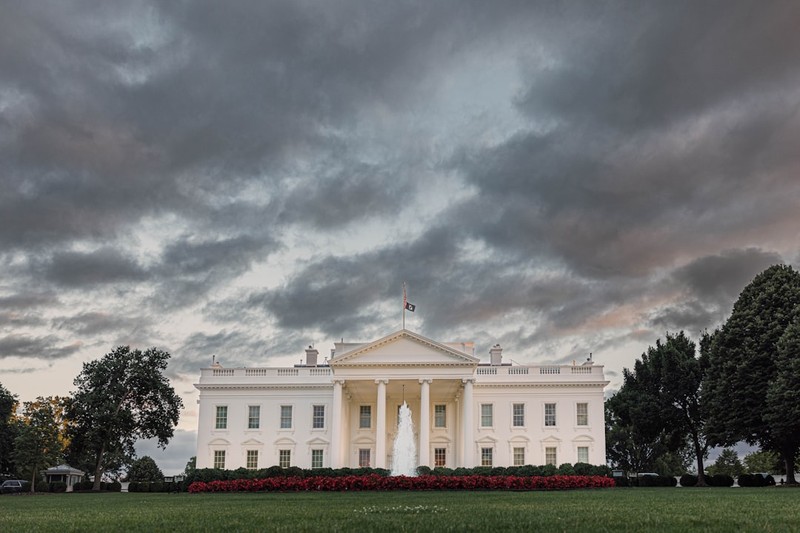
A war fought thousands of miles from American shores may have helped drive a 31-year-old Californian to try to kill his president.
A preliminary intelligence assessment from the US Department of Homeland Security, dated April 27 and distributed to law enforcement agencies nationwide, found that the US-Iran conflict “may have contributed to his decision to conduct the attack.” The suspect, Cole Tomas Allen, is accused of running through a security checkpoint at the Washington Hilton on April 25 armed with a shotgun and handgun during the White House Correspondents’ Dinner. President Donald Trump, the first lady, and cabinet members were evacuated by the Secret Service. One officer was shot in the chest but survived, protected by his ballistic vest.
The assessment — marked as a “Critical Incident Note” and obtained by the transparency nonprofit Property of the People through open records requests before being shared with Reuters — represents the most definitive link yet between the Iran conflict and a domestic assassination attempt.
Allen’s social media activity was central to the finding. The FBI has been reviewing a Bluesky account linked to him that posted criticism of US military actions in Iran alongside broader anti-Trump messages, according to a senior law enforcement official who spoke to Reuters on condition of anonymity. One shared post called for Trump’s impeachment over his April 7 threat to destroy Iranian civilization — issued hours before the president agreed to a ceasefire. Other posts targeted the administration’s immigration enforcement, Elon Musk, and Russia’s war in Ukraine.
The report concluded Allen had “multiple social and political grievances,” placing the Iran conflict as one contributing factor rather than the sole cause.
That distinction matters. Allen’s own manifesto — an email titled “Apology and Explanation” sent to family members and a former employer minutes before the attack — listed a range of grievances, including what it described as federal government strikes on drug boats in the Pacific. It called Trump “a pedophile, rapist, and traitor” without naming him directly. Allen signed the message “Cole ‘coldForce’ ‘Friendly Federal Assassin’ Allen.”
When Wars Don’t Stay Abroad
If the assessment holds, it marks a troubling convergence. The Iran war, which has killed thousands across the Middle East and roiled global energy markets since American involvement escalated, would no longer be solely a foreign policy story. It would also be a domestic radicalization vector.
Governments that wage distant wars have always courted the risk of blowback. What has changed is the mechanism. In an environment of algorithmic feeds and constant connectivity, a conflict’s psychological reach extends far beyond its physical boundaries. A Caltech-educated tutor sitting in Torrance, California, can be immersed in the rhetoric of a distant war zone in real time — and act on it with a shotgun purchased from a local dealer.
Allen’s path followed a trajectory familiar to investigators of homegrown radicalization. Family members told investigators he made “radical statements” and regularly referenced a plan to do “something” to fix the world’s problems, according to court documents cited by CBS News. He attended “No Kings” protests in California, joined a Connecticut-based group called “The Wide Awakes,” and trained frequently at a shooting range. A professor at California State University, Dominguez Hills, described him as “soft spoken, very polite, a good fellow.” His employer, tutoring firm C2 Education, gave him a “Teacher of the Month” award in December 2024.
He was, by every outward measure, unremarkable — until he wasn’t. On April 24, Allen traveled by train from Los Angeles to Washington, checked into the Hilton — the same hotel where John Hinckley Jr. shot Ronald Reagan in 1981 — and waited. Around 8:00 p.m. the following evening, he descended a back stairwell dressed in black, carrying a 12-gauge pump-action shotgun, a .38 caliber pistol, a sheathed knife, and wire cutters. At 8:30 p.m., he sent his manifesto. Shortly before 8:40 p.m., he sprinted through the security checkpoint and fired at least one shot before tripping over a magnetometer box. Five Secret Service rounds were discharged in return. Allen suffered only a knee injury.
What the Report Doesn’t Say
The assessment is preliminary. Spokespeople for DHS and the Justice Department did not immediately respond to requests for comment, and the FBI declined to comment. The law enforcement official told Reuters that the FBI’s detailed examination of Allen’s digital footprint was partly intended to counter conspiracy theories about the shooter’s motive, citing the widespread speculation that followed the 2024 assassination attempt in Butler, Pennsylvania as an example of what can happen when official information is lacking.
Allen now faces four federal charges, including attempted assassination of the president and assault on a federal officer, according to the Justice Department. He has not entered a plea.
The report’s significance may lie less in what it reveals about one man than in what it signals about the post-Iran security landscape. Foreign conflicts no longer need to be imported through ideology, training camps, or diaspora networks. They arrive through screens, in fragments, and reassemble as grievance in the minds of people who have never set foot in a war zone. Whether the Iran connection was primary or incidental, the warning is clear: the distance between a battlefield and a hotel ballroom is shorter than it looks.
Sources
- Iran war may have motivated Donald Trump dinner shooting suspect — The Jerusalem Post (Reuters)
- Suspect in White House Correspondents’ Dinner Shooting Charged with Attempt to Assassinate the President — US Department of Justice
- 2026 White House Correspondents’ Dinner shooting — Wikipedia
- What we know about the suspect in shooting at White House Correspondents’ Dinner — CBS News
Discussion (10)