 lop News
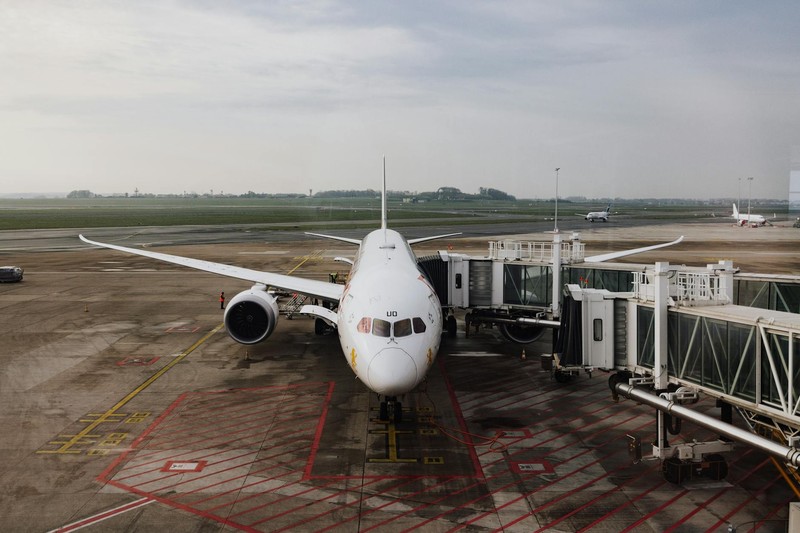
$800 just to fly Sydney to London — before buying a ticket. Cathay Pacific’s new fuel surcharge, imposed twice in a single month, is the most visible symptom of an aviation crisis that began with missiles over the Strait of Hormuz and is now landing on boarding passes worldwide.
Jet fuel prices have more than doubled since the US-Israeli war with Iran began on February 28, surging from roughly $85 per barrel to global benchmarks around $195. In the US, the Argus jet fuel index hit a record $4.62 a gallon on Monday, up 85 percent from pre-war levels, according to data published by industry group Airlines for America. Airlines that were forecasting a record $41 billion in combined profits for 2026 are now slashing routes, hiking fares, and warning that some carriers may not survive.
Asia Hit First and Hardest
Asia’s dependence on Middle Eastern energy means carriers there have less insulation than US or European rivals with domestic refining capacity or fuel hedges in place.
Korean Air has shifted to what it calls “emergency management mode,” with surcharges on international routes rising by over 200 percent. Fellow South Korean carriers Asiana Airlines and T’way Air have taken similar steps, pointing to system-wide strain rather than a single carrier’s trouble. The government in Seoul has been asked to redirect fuel stocks bound for export back into the domestic market.
Nepal has raised aviation fuel prices for international flights by up to 117 percent. India, facing record jet fuel prices, has capped increases at 25 percent — protecting consumers but squeezing airline margins further. Rating agency ICRA has revised its outlook on India’s aviation sector from stable to negative.
The Strait and the Squeeze
The Strait of Hormuz, through which roughly 20 million barrels of oil passed daily before the conflict, has been reduced to what the International Energy Agency called “a trickle” — the largest disruption to crude supplies in the history of the global oil market.
The impact extends beyond fuel prices. Airspace closures have forced airlines to reroute flights between Asia, Europe, and North America — longer journeys that burn more fuel on top of already higher per-gallon costs. The World Travel & Tourism Council estimates the Middle East accounts for 14 percent of global international transit traffic, with Dubai, Abu Dhabi, Doha, and Bahrain normally processing 526,000 passengers per day. Most of those hubs are now disrupted or shuttered.
Fares, Fees, and Flight Cuts
United Airlines CEO Scott Kirby told ABC News that fares would need to rise 20 percent to cover higher fuel costs. United is dropping about 5 percent of planned flights in the second and third quarters, targeting red-eye and midweek routes. Average US airfares have already reached $465, the highest for this period since at least 2019, according to flight data group OAG.
JetBlue this week raised baggage fees, citing “rising operating costs.” Analysts expect other carriers to follow with ancillary fee increases — charges that, unlike base fares, are not subject to federal excise taxes and are unlikely to come back down.
Thai Airways has raised fares by up to 15 percent. Air New Zealand and Qantas have signaled further increases if fuel costs remain elevated.
Who Survives
The crisis will widen the gap between financially strong carriers and weaker ones. Dan Taylor, head of consulting at aviation advisory firm IBA, said carriers with robust balance sheets and pricing power are better positioned, while airlines with low profitability and limited access to capital “may face increasing financial stress.”
Low-cost carriers are particularly exposed. Their passengers are more price-sensitive, and alternatives like rail and bus become more attractive as fares climb. Nathan Gee, Bank of America’s head of Asia-Pacific transport research, said for price-sensitive travelers, “even the short-haul flying trip gets downgraded, potentially to rail or to bus or other alternatives.”
Airlines with fuel hedges have a temporary buffer. Ryanair has locked in 80 percent of its 2027 fuel at $67 per barrel, and IAG, parent of British Airways, is 62 percent hedged for 2026. Most US carriers no longer hedge, relying instead on America’s position as the world’s largest oil producer.
Andrea Caulfield Smith, managing director of Advantage Travel Partnership, warned the strain could push some airlines under. “Airlines work on thin margins, the increased cost of fuel will have a massive impact because it dictates airline profitability. Prices are likely to go up – this could be too much for some to ride through.”
What Comes Next
The EU is bracing for tightened supply. The last kerosene shipments that passed through Hormuz before its closure are due to arrive in Europe around April 10, according to Benedict George, head of European products at Argus Media. EU Energy Commissioner Dan Jorgensen said the bloc is preparing measures similar to those used during the 2022 energy crisis, including asking governments to delay non-essential refinery maintenance to keep supplies flowing.
George said there is no realistic risk of Europe running out of jet fuel — stockpiles cover up to three months of demand — but warned that stocks could fall to levels causing “localised shortages” alongside high and volatile prices.
The war has already reached the departure gate. The question is how many airlines will still be operating when it ends.
Sources
- Airlines face fare dilemma as fuel spike threatens travel demand — Reuters
- A global jet fuel shortage is raising the cost of air travel — NBC News
- EU may revive 2022 energy crisis measures in response to Iran war — Reuters
- How Iran war is fuelling a global aviation crisis as jet fuel prices spike — Business Standard
- Middle East Crisis Sends Airfares Soaring as Oil Prices Spike — Business Traveller
Discussion (9)