 lop News
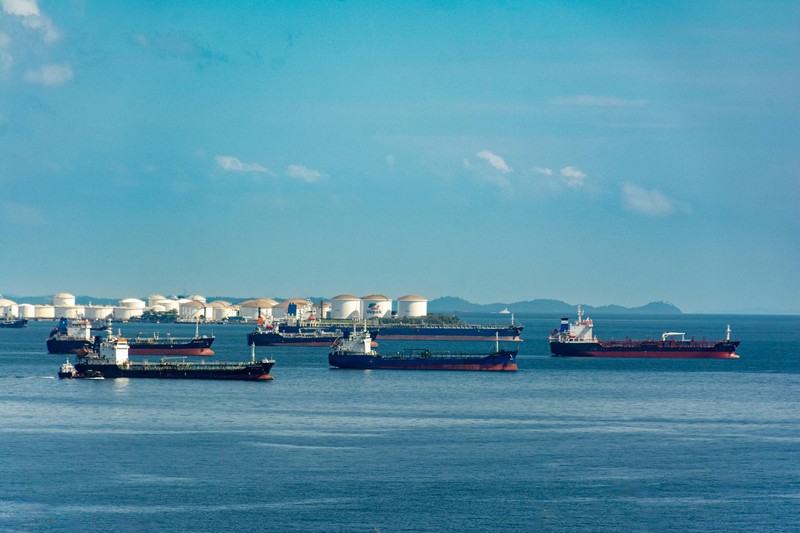
Twenty million barrels of oil a day used to flow through the Strait of Hormuz — roughly one-fifth of global supply. That was before February. Now Iran is preparing to formalize what it has practiced for months: a tollbooth on one of the world’s most critical waterways, with fees of up to $2 million per tanker and a Revolutionary Guard escort as the price of passage.
Ebrahim Azizi, head of the Iranian parliament’s national security committee, said Saturday that Tehran had “prepared a professional mechanism to manage traffic in the Strait of Hormuz along a designated route” and that the plan would be “unveiled soon.” The mechanism, he said, would collect “necessary fees” and remain closed to operators of what he called the “so-called ‘freedom project’” — a reference to President Donald Trump’s paused operation to restore commercial shipping through the strait.
The announcement came on a day when Israeli strikes hit Lebanon and Gaza, killing and wounding dozens, and when Trump warned Iran it would have a “very bad time” if a peace deal was not reached soon. Iranian Parliament Speaker Mohammed Bagher Ghalibaf, meanwhile, declared that the world “stands at the cusp of a new order.”
The Bureaucracy of a Blockade
Iran has been running a prototype of this system for weeks. According to Lloyd’s List, Tehran established the Persian Gulf Strait Authority, which emails a 40-question form to vessels seeking transit. Ships must disclose ownership, insurance, crew nationalities, cargo details, and destinations before paying. The authority has warned that incomplete information will be “the sole responsibility of the applicant.”
Ships from Malaysia, China, Egypt, South Korea, and India have been among those allowed through. At least two reportedly paid roughly $2 million each in Chinese yuan. Official tariffs have not been published.
Iran’s 10-point peace plan includes a provision allowing it and Oman to charge up to $2 million per vessel, with revenue earmarked for reconstruction. For a tanker carrying 2 million barrels of crude, that works out to roughly $1 per barrel.
A Principle at Stake
Whatever the price, the principle has governments alarmed. Freedom of navigation through international straits is one of the oldest doctrines in maritime law, codified in the United Nations Convention on the Law of the Sea, which guarantees vessels unimpeded transit through more than 100 straits worldwide.
About 170 countries have ratified the convention. Iran and the United States have not. But legal scholars say the principle is considered customary international law regardless. “Not having ratified the convention doesn’t give (Iran) total freedom of action,” Julien Raynaut, who heads the French Association of Maritime Law, told the Associated Press. Philippe Delebecque, a maritime law expert at the Sorbonne, warned that if Hormuz can be tolled, so can the Strait of Gibraltar or the Strait of Malacca — a scenario he called “the end of an international society.”
Iranian officials are undeterred. “We have established a new legal and security system in the Strait of Hormuz,” army official Mohammad Akraminia told IRNA. “From now on, any vessel wishing to pass through it must coordinate with us.”
What It Costs the World
Economists at the Brussels-based thinktank Bruegel estimate the world economy would “barely notice” the direct toll cost. The additional $1 per barrel would be absorbed overwhelmingly by Gulf producers — between 80 and 95 percent of the total. World oil prices might rise by only $0.05 to $0.40 per barrel above pre-war levels from the toll alone.
But arithmetic understates the damage. International Energy Agency chief Fatih Birol has called the strait’s closure the worst energy supply crisis in history. Brent crude surged from roughly $70 a barrel before the war to $119 on futures markets and nearly $150 for physical cargoes. Prices have since fallen to around $95, but analysts suggest $100 per barrel could persist through this year and into 2027.
The reason is the risk premium. Shipping companies charge more for waters where missiles have flown. Insurers raise premiums. Seafarers are entitled to double pay in designated hazardous zones. And oil traders may avoid Gulf crude altogether rather than navigate a sanctions-compliance regime run by the IRGC — designated a terrorist organization by both the US and the EU.
Multiple Fronts, One Escalation
Iran’s strait maneuver is unfolding against escalating regional violence. Israel is striking Lebanon and Gaza. The Israel-Hezbollah conflict reignited after the February 28 US-Israeli attacks on Iran and has displaced more than 1.1 million people in southern Lebanon, according to Encyclopaedia Britannica. Israeli forces have conducted a limited invasion and announced plans to occupy territory up to the Litani River.
The US-Iran ceasefire, brokered by Pakistan in early April, holds in name only. Direct talks between Vice President JD Vance and Iranian parliament speaker Ghalibaf in Islamabad on April 11–12 produced no agreement. Trump then ordered a naval blockade of Iranian-linked shipping and briefly launched “Project Freedom” to escort stranded vessels before pausing the operation on May 5.
Saudi Arabia has welcomed the ceasefire but called for keeping Hormuz open “without any restrictions.” Gulf states have been forced to shut down roughly 12 million barrels per day in production because the region’s two bypass pipelines cannot compensate for the strait’s closure.
The Chokepoint Precedent
If Tehran succeeds in institutionalizing control over Hormuz, the consequences extend well beyond oil. China could conclude it has similar rights over the Taiwan Strait, as Raynaut warned. Every nation bordering a strategic waterway has an incentive to watch what Iran is allowed to get away with.
Iran’s calculation is straightforward. Control of the strait provides leverage at the negotiating table, revenue for a devastated economy — at least 2 million Iranians have lost their jobs since the war began, according to deputy labor minister Gholamhossein Mohammadi — and a means to resume oil exports currently blocked by the US Navy.
For Washington, the choice is between accepting a new status quo that rewards the seizure of an international waterway and continuing a military standoff that keeps energy markets on edge. Trump has warned of further measures. Iran has shown no sign of backing down.
The form from [email protected] is still arriving in shipping companies’ inboxes. The questions are detailed. The fees are real. The principle — who controls the sea lanes connecting the world — is what this war is now about.
Sources
- Iran to unveil Strait of Hormuz traffic plans, will collect tolls — Investing.com
- What would a permanent ‘Tehran’s tollbooth’ on oil mean for the world? — The Guardian
- Iran’s proposal to collect tolls in the Strait of Hormuz violates trade norms — Associated Press (via WTOP)
- 2026 Iran war — Encyclopaedia Britannica
- EXPLAINED: How Iran’s new ‘Persian Gulf Strait Authority’ runs the Hormuz toll transit process for vessels — The Week
Discussion (13)