 lop News
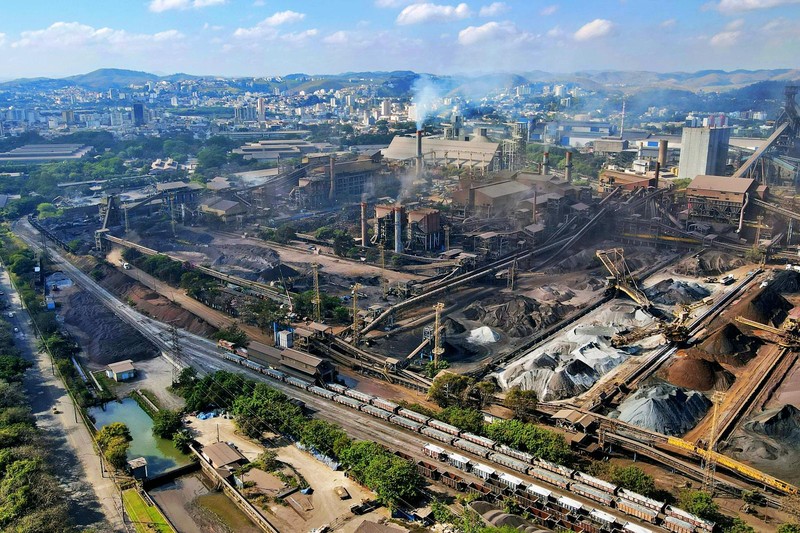
Smoke and flames rose from the direction of Jubail on Tuesday after Iran’s Revolutionary Guards fired medium-range missiles and suicide drones at the sprawling Saudi petrochemical hub — the first direct Iranian strike on Saudi infrastructure since the war began five weeks ago.
The attack marks a qualitative escalation in a conflict that has largely played out between Iran, Israel, and the United States. By reaching across the Gulf to hit the kingdom’s economic backbone, Tehran has answered a question the world was not yet asking: not whether it can fight Washington and Jerusalem, but whether any American-aligned state in range is safe.
What Was Hit
The IRGC claimed responsibility publicly and in specific detail. In a statement, the Guards said they had “effectively targeted” the Sadara chemical complex — a $20 billion joint venture between Saudi Aramco and Dow that was already shut down last week — along with other Jubail facilities including one belonging to ExxonMobil. The Guards also said they struck a petrochemical facility in nearby Juaymah, which they attributed to Chevron Phillips, though that company does not appear to have operations in Juaymah proper but rather in Jubail itself.
The specificity was the message. Tehran named individual Western energy majors — an unmistakable signal that this was a deliberate, calibrated act, not a deniable proxy operation. The IRGC wanted the world to know exactly what it had done and why.
Saudi Arabia’s defence ministry said air defences intercepted and destroyed seven ballistic missiles launched towards the kingdom’s eastern region. Debris from the intercepted missiles fell near energy facilities. Video footage verified by Reuters showed smoke and flames rising from the direction of Jubail. Aramco declined to comment on the reported attacks, and the Saudi government communications office did not immediately respond to requests for comment.
The IRGC described the strike as retaliation for attacks on Iran’s own Asaluyeh petrochemical plants, connected to the massive South Pars gas field, which were hit by multiple explosions overnight. Israeli defence minister Israel Katz confirmed on April 6 that Israeli forces had struck the South Pars complex. The IDF said the two largest Iranian petrochemical facilities it had hit in the past week accounted for 85 percent of Iran’s petrochemical exports.
The Stakes at Jubail
Jubail is not just another industrial site on the Gulf coast. The sprawling complex is one of the world’s largest petrochemical hubs, housing multi-billion-dollar joint ventures between state-backed Saudi Aramco, its subsidiary SABIC, and an array of Western energy majors. Damage to Jubail would compound an energy crisis already convulsing global markets.
The Strait of Hormuz — through which roughly one-fifth of the world’s oil normally flows — has been effectively obstructed since the war began on February 28. US crude oil prices surged to nearly $116 per barrel after American strikes on military targets on Iran’s Kharg Island, the country’s key oil export hub. Brent crude climbed above $110. In France, nearly one in five service stations has run dry of at least one fuel type, according to government figures.
Jubail represents a different order of vulnerability. The strait controls the transit of energy; Jubail is where it gets processed. The plants targeted Tuesday transform raw hydrocarbons into the chemical building blocks of modern manufacturing — plastics, fertilizers, industrial solvents. Disabling them strikes at the supply chain itself.
Saudi Arabia’s Impossible Position
For weeks, Saudi Arabia has worked to stay on the sidelines of a war that has engulfed its neighbors. The kingdom restored diplomatic relations with Iran through Chinese mediation in 2023 and has little appetite for a conflict that threatens both its infrastructure and its role as the world’s reliable energy supplier.
The Jubail strike demolishes that careful neutrality. The question now facing Riyadh is whether to absorb the blow and continue calling for de-escalation, or to respond militarily and become a belligerent in a war it has spent five weeks trying to avoid.
Neither option is attractive. Retaliation invites further strikes on Saudi infrastructure. Restraint risks appearing weak before a domestic audience and signals to Tehran that Gulf states can be hit without consequence. The calculation that this was principally an American-Israeli-Iranian affair — that Saudi Arabia could sit it out — is over.
The IRGC statement carried a warning aimed precisely at this dilemma. “Regional American partners should know that, until now we have exercised significant restraint for the sake of good neighborliness and have taken precautions in selecting retaliatory targets, but from now on, all such precautions have been removed,” the Guards said.
A War Without Ceilings
The strike on Jubail arrived on the day of President Donald Trump’s ultimatum to Iran to reopen the Strait of Hormuz or face what he called the “complete demolition” of Iranian civilian infrastructure. “A whole civilization will die tonight, never to be brought back again,” Trump wrote on Truth Social. Kenneth Roth, the former executive director of Human Rights Watch, said Trump was “openly threatening” collective punishment — a war crime under international law.
Iran has shown no sign of yielding. President Masoud Pezeshkian declared he was ready to die for his country. President Masoud Pezeshkian said 14 million Iranians had registered to sacrifice their lives for the country’s defence, and state media called on citizens to form human chains around power plants. Tehran publicly rejected a Pakistani-brokered 45-day ceasefire proposal, demanding instead a permanent end to the conflict, guarantees against future attacks, and an end to Israeli strikes on Hezbollah in Lebanon.
The death toll continues to climb. Nearly 3,400 people have been killed across the Middle East since February 28, according to the US-based rights group HRANA, including more than 1,600 civilians. At least 1,400 have been killed in Lebanon, and 23 in Israel. Thirteen American service members have died in combat, with two more from non-combat causes.
The war that began with Israeli and American strikes on Iranian military and nuclear facilities has become something larger and harder to contain. Iran has shown it can reach Israel with ballistic missiles, shut the Strait of Hormuz to commercial traffic, and now strike the infrastructure of the world’s largest oil exporter directly. Each escalation narrows the room for diplomacy and widens the circle of states drawn into the fighting.
The line crossed at Jubail may prove the hardest to uncross.
Sources
- Iran has attacked Saudi Arabia’s Jubail petrochemical complex, IRGC says — Reuters
- Israel strikes Iran’s petrochemical complex at Asaluyeh, defence minister says — Reuters
- Live updates: U.S. strikes Kharg Island, official says; Trump warns Iran ‘a whole civilization will die tonight’ if a deal isn’t agreed — NBC News
- Iran still refuses to reopen Strait of Hormuz as Trump threatens ‘complete demolition’ — Euronews
- Iran Update Special Report, April 6, 2026 — Institute for the Study of War
Discussion (13)