 lop News
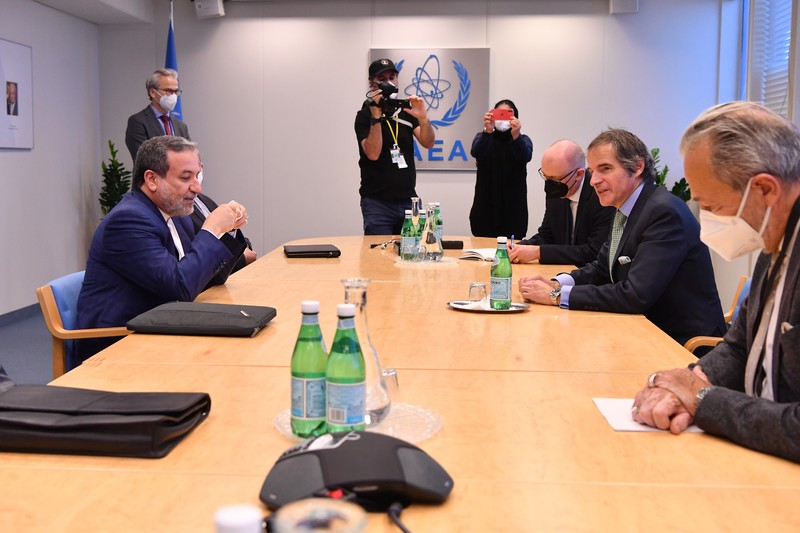
Abbas Araghchi has criss-crossed three countries since Friday, shuttling between mediators in a frantic bid to keep diplomacy alive. Donald Trump, asked whether he might reconsider sending his own negotiators, pointed to the telephone.
“You know, there is a telephone. We have nice, secure lines,” the president told Fox News on Sunday. “We’re not sending people to travel 18 hours to meet.”
The contrast captures the central tension of a conflict now entering its third month. On one side, Iran’s chief diplomat is treating the crisis as an existential emergency — racing between Islamabad, Muscat, Moscow, and back again, pressing every intermediary he can reach. On the other, the US president has scrapped his envoys’ trip to Pakistan, dismissed Tehran’s offer as insufficient, and made clear he sees no urgency in face-to-face talks.
The war, which began with US and Israeli strikes on Iran on February 28, has killed thousands, driven oil prices up nearly 50 per cent, and closed the Strait of Hormuz — the waterway that normally carries roughly a fifth of global oil shipments.
A Weekend of Shuttles
Araghchi’s itinerary reads like a diplomat in full crisis mode. He held talks in Pakistan, then flew to Oman on Sunday to meet Sultan Haitham bin Tariq al-Said, discussing security in the strait and calling for a regional framework “free of outside interference,” according to Iran’s foreign ministry. He stopped again in Islamabad — meeting Pakistan’s army chief, General Asim Munir — before departing for Moscow, where Iran’s ambassador confirmed he would meet President Vladimir Putin in St Petersburg.
The Moscow stop is the most diplomatically consequential. Russia is a close Iranian ally, with both governments labouring under severe Western sanctions. Iranian state media said the talks would cover “the latest status of the negotiations, ceasefire, and surrounding developments” — phrasing that obscures the real question: whether Putin can offer Tehran anything beyond solidarity, and whether Washington sees Moscow as a potential intermediary or a complication.
For Putin, the crisis cuts both ways. Positioning himself between Washington and Tehran allows Moscow to reassert its role as a global power broker — something it has cultivated through its intervention in Syria and its deepening partnership with Iran. But the calculation is delicate. If Putin appears to be shielding Iran from American pressure, he risks further strain with Washington at a moment when Russia is already consumed by the war in Ukraine.
The Blockade Standoff
At the heart of the stalemate lies the Strait of Hormuz. Iran’s Revolutionary Guards declared on their official Telegram channel that maintaining control of the waterway is “the definitive strategy of Islamic Iran” and that they have no intention of lifting the blockade.
The US has responded with its own blockade of Iranian ports. Trump described the American cordon as “unbelievably effective,” telling Fox News that Iran’s oil infrastructure was effectively bursting from the inability to ship. Satellite analysis by marine intelligence firm TankerTrackers.com suggests roughly one in four Iranian oil shipments has managed to break through — enough to keep some revenue flowing, but far below pre-war levels.
The economic consequences are escalating. West Texas Intermediate crude was trading at $96.50 a barrel on Sunday — 44 per cent above its pre-war level of roughly $67. Brent crude hit $107.75, up 48 per cent since the conflict began, according to CBS News. Chevron CEO Mike Wirth said the global energy system had “lost an incredible amount of flexibility,” with strategic reserves and other buffers that normally absorb supply shocks now much less effective. CBS reported that the head of the International Energy Agency has described the current crisis as exceeding the combined scope of the 1973 Arab oil embargo, the 1979 Iranian oil crisis, and the 2022 Russian invasion of Ukraine.
The US Navy is clearing Iranian mines from the Strait of Hormuz — a process experts say could take months, even under a ceasefire.
Two Definitions of Diplomacy
Iran insists it wants to negotiate, but on its own terms. President Masoud Pezeshkian told Pakistan’s prime minister by phone that Tehran would not enter “imposed negotiations” under threats or blockade, and that Washington should first remove maritime restrictions. Araghchi, after his talks in Islamabad, said he had shared Iran’s position on “a workable framework to permanently end the war” but had “yet to see if US is truly serious about diplomacy.”
Trump countered on Truth Social that there was “tremendous infighting and confusion” within Iran’s leadership and that “nobody knows who is in charge, including them.” Pezeshkian said last week there were “no hardliners or moderates” in Tehran and that the country stood united behind its supreme leader.
The substantive gap is narrow but unbridgeable for now. Iran has long demanded Washington acknowledge its right to enrich uranium — which Tehran says is for peaceful purposes but which Western powers and Israel say is aimed at building a nuclear weapon. Trump has reduced the American position to a single condition: “They cannot have a nuclear weapon. Otherwise there’s no reason to meet.”
An earlier round of talks in Islamabad, led by Vice President JD Vance and Iranian parliamentary speaker Mohammad Baqer Qalibaf, ended without agreement. When Trump cancelled the follow-up visit by envoys Steve Witkoff and Jared Kushner, two US Air Force C-17s carrying security staff and equipment flew out of Pakistan, according to Pakistani government sources who spoke to Reuters.
Senator Lindsey Graham, one of Trump’s closest allies in Congress, called the cancellation “very wise,” praising the blockade as “brilliant in concept and execution.”
The Fire Spreads
The conflict continues to radiate outward. Israel issued new evacuation orders for southern Lebanon on Sunday, targeting seven villages north of the “buffer zone” it has established in Lebanese territory. Israeli strikes overnight killed at least 14 people, according to Lebanon’s health ministry, despite a ceasefire with Hezbollah that has failed to halt hostilities. A 19-year-old Israeli soldier was killed when an explosives-laden drone struck his battalion in the village of Taybeh — the third IDF death in Lebanon since the conflict began.
Israel says it reserves the right to respond to “planned, imminent or ongoing attacks” regardless of the ceasefire, with Prime Minister Benjamin Netanyahu ordering troops to “vigorously attack Hezbollah targets in Lebanon.”
The message from Araghchi’s marathon weekend is clear enough: Tehran believes diplomacy is still worth the scramble. Whether Washington shares that belief — or is content to let the blockade do its work — is the question that will shape what comes next.
Sources
- Trump says Iran can call if it wants to talk, as Iranian foreign minister heads to Russia — Channel News Asia
- Trump cancels US envoys’ trip to Pakistan for talks on Iran war — BBC News
- Live Updates: Iran’s foreign minister travels to Pakistan and Moscow after U.S. envoys’ trip canceled — CBS News
- Iran war updates live: Iranian foreign minister heads to Russia for meeting with Vladimir Putin — ABC News Australia
Discussion (14)