 lop News
Eighty-three days in, the US-Iran war has produced something that looked unlikely a week ago: a piece of paper both sides are willing to read.
Iran’s Foreign Ministry confirmed on Thursday that it has received and is reviewing Washington’s latest written response to Tehran’s proposed ceasefire framework, delivered through Pakistani mediators. The response addresses Iran’s original 14-point proposal — a document that includes demands for Iranian control of the Strait of Hormuz, war reparations, lifting of sanctions, release of frozen assets, and withdrawal of US troops from the region.
Foreign Ministry spokesperson Esmaeil Baghaei said late Wednesday that Iranians had “received US views and are reviewing them,” according to Iran’s Nour News Agency.
This is not a done deal. But it is a material shift from the posture of even a week ago, when public messaging from both capitals amounted to little more than ultimatums.
Pakistan’s Bet Pays Off
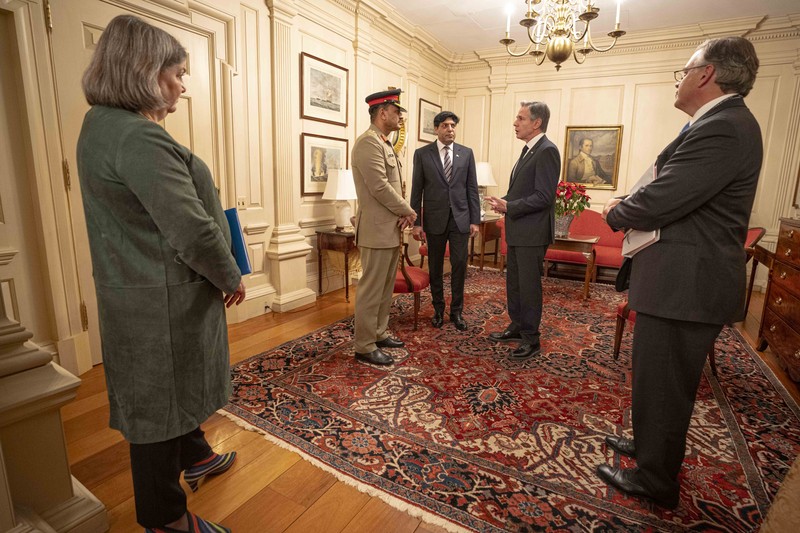
The delivery mechanism itself is significant. Pakistan’s Interior Minister Mohsin Naqvi arrived in Iran on Wednesday for his second visit in less than a week. More consequentially, Pakistan’s Army Chief Field Marshal Asim Munir — the figure who personally hosted the only direct US-Iran negotiations since the war began on February 28 — is scheduled to travel to Tehran on Thursday for what ISNA described as “talks and consultations.”
Pakistan’s role has moved well beyond symbolic shuttle diplomacy. Islamabad hosted the April face-to-face talks between US and Iranian officials, and Munir was at the centre of those discussions, which ultimately collapsed when Iran accused Washington of making “excessive demands.” The current round suggests either those demands have softened or Tehran’s leverage has hardened.
The probable answer is both. Pakistan has powerful incentives to close this deal. With more than 85 percent of its oil needs supplied by Gulf states, the war-driven energy shock forced Islamabad to impose a four-day working week for public employees and close schools to conserve fuel. Saudi Arabia stepped in with $3 billion in emergency support in April, but a near-bankrupt economy facing prolonged disruption is not a sustainable position.
The Hormuz Factor
What changed between “Tehran will not surrender” and this moment is largely a story of leverage — specifically, the Strait of Hormuz.
Iran didn’t just threaten to close the strait. It built institutions to control it. The newly established Persian Gulf Strait Authority has formalized a vessel declaration system requiring ships to submit more than 40 data points before transit. The IRGC Navy announced this week that 26 vessels transited Hormuz in a single 24-hour period — under its coordination and supervision. Pre-war traffic averaged 120 crossings per day.
Scott Lucas, professor of US and international politics at University College Dublin’s Clinton Institute, assessed the dynamic bluntly: “Iran has the initiative because it formulated a 14-point proposal and, in doing so, shifted the focus to the Strait of Hormuz rather than the nuclear programme.”
The consequences on the ground are stark. US gas prices rose above $4.50 per gallon for the first time in four years. Nearly 1,000 vessels remain trapped in the Persian Gulf, with an estimated 20,000 civilian seafarers caught between rival naval blockades.
Notably, Lucas added that curbs on Iran’s ballistic missile programme and Tehran’s ties to groups such as Hezbollah are “no longer being discussed.” If accurate, the terms of negotiation have narrowed sharply in Iran’s favour.
The Clock and the Threat
The diplomacy exists alongside explicit threats of its destruction. White House Deputy Chief of Staff Stephen Miller warned Tehran it faced military consequences “the likes of which has not been seen in modern history” if it rejects the agreement. Trump himself told reporters at Joint Base Andrews that talks were “right on the borderline” between a deal and renewed strikes, adding he would give diplomacy “a few days” more.
Iranian officials matched the tone. Foreign Minister Abbas Araghchi said Wednesday his ministry was prepared for either outcome: “Wherever it is necessary to fight, we will fight, and wherever it is necessary to negotiate, we will negotiate.” The IRGC issued its own warning that renewed aggression would trigger a regional war extending “beyond the region.”
For all the bellicose rhetoric, the mechanics tell a different story. Written proposals are being exchanged. A mediator with credibility on both sides is deepening his involvement. And the conversation is now about terms — not whether terms exist at all.
Sources
- Iran war day 83: Tehran ‘reviewing’ latest US response to end conflict — Al Jazeera
- Iran reviews US proposal to end war as Pakistan steps up mediation efforts — Al Jazeera
- What does Pakistan gain from its Iran–US diplomacy? — Chatham House
- Iran imposes new rules for Hormuz in effort to cement control of key strait — CNN
Discussion (10)