 lop News
The gap between what Washington demanded and what Tehran could accept was never going to be small. The 15-point ceasefire proposal delivered to Iran this week proved just how wide it has become.
A senior Iranian official told Reuters on Wednesday that Tehran’s initial response to the U.S. plan has not been “positive.” Another diplomatic source was blunter, describing the American proposal to Al Jazeera as “extremely maximalist and unreasonable” and adding: “It is not beautiful even on paper.”
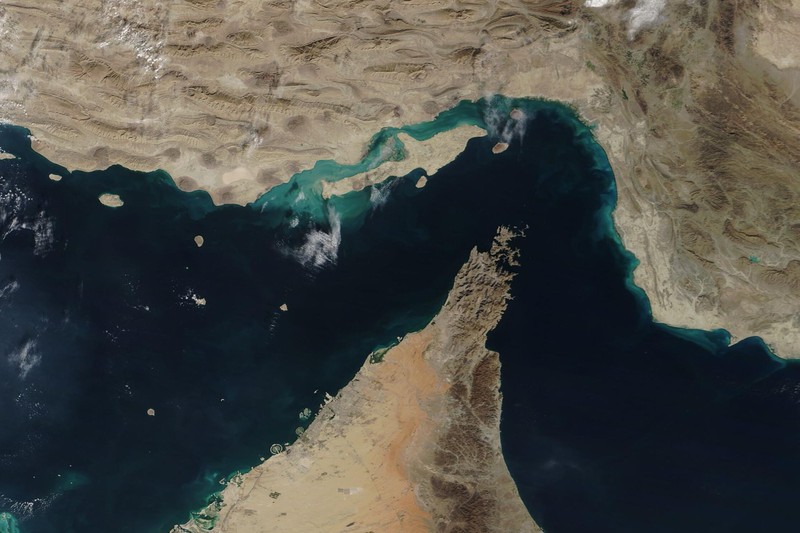
The rejection signals that Iran’s leadership — wounded, fragmented, but still fighting — believes it retains enough leverage to demand terms rather than accept them. That calculation rests on one asset above all: the Strait of Hormuz, through which roughly one-fifth of the world’s oil and gas supplies travel, and which Iran has effectively closed to American and allied shipping since the war began.
What Washington Demanded
The U.S. proposal, transmitted via Pakistan, required Iran to make concessions across nearly every strategic domain that defines its regional power.
According to reports from Israel’s Channel 12 and confirmed by officials to multiple outlets, the plan demanded that Iran commit never to pursue nuclear weapons, dismantle its three main nuclear facilities at Natanz, Isfahan and Fordow, and transfer its stockpile of enriched uranium to International Atomic Energy Agency custody. Iran reportedly still holds an estimated 440 kilograms of highly enriched uranium.
The proposal also sought limits on Iran’s ballistic missile program — restricting both range and quantity — and an end to funding and arming regional proxies including Hezbollah in Lebanon, Hamas in Gaza, and the Houthi movement in Yemen.
Perhaps most critically for global markets, the plan required Iran to reopen the Strait of Hormuz as a “free maritime corridor.” In exchange, international sanctions would be lifted and the U.S. would assist Iran in developing its civilian nuclear program.
Why Tehran Said No
For Iran, several of these demands touched what the regime considers non-negotiable.
Tehran has long insisted it will not discuss its ballistic missile program or its support for regional militias, viewing both as essential to its security architecture. The ability to threaten shipping through the Strait of Hormuz represents perhaps Iran’s single greatest piece of leverage against more powerful adversaries — surrendering it without guarantees would amount to unilateral disarmament.
There is also the matter of trust. Iran remains deeply suspicious of U.S. intentions after American forces launched strikes on February 28 while diplomatic talks were underway — the second time under the Trump administration that military action coincided with negotiations.
Press TV, Iran’s state-run English-language broadcaster, quoted an anonymous official outlining Tehran’s own five-point counter-proposal: a halt to what it calls aggression and assassinations, mechanisms to ensure the war is not resumed, payment of war damages and reparations, an end to attacks on Iranian allies in Lebanon and Iraq, and international recognition of Iran’s authority over the Strait of Hormuz.
These terms are, from Washington’s perspective, likely nonstarters.
A War With Global Stakes
The fighting shows no sign of slowing. Iran launched new attacks on Israel and Gulf Arab states on Wednesday, including an assault that sparked a major fire at Kuwait International Airport. Israel continued its airstrikes on Tehran. The U.S. announced deployments of 1,000 paratroopers from the 82nd Airborne Division and roughly 5,000 Marines to the region.
The economic fallout has been immediate. Brent crude oil approached $120 per barrel during the conflict before settling around $100 on Wednesday — still roughly 35 percent above pre-war levels. Economists have warned of cascading effects on food prices, mortgage rates and consumer costs if energy prices remain elevated.
The human cost continues to mount. Iran’s Health Ministry reports more than 1,500 deaths. Israel says 20 people have been killed. At least 13 U.S. military personnel have died, along with nearly 1,100 people in Lebanon and 80 Iraqi security forces.
What Comes Next
Mediators from Pakistan, Egypt and Turkey are pushing for possible in-person talks between American and Iranian officials as early as Friday. Pakistan’s army chief, Field Marshal Syed Asim Munir, has emerged as the key interlocutor, maintaining channels to both Washington and Iran’s Revolutionary Guard Corps.
But the fundamental mismatch between what each side demands suggests any diplomatic breakthrough will be hard-won. Iran believes time and disruption are on its side. Washington is betting that military pressure and economic isolation will force a different calculation.
For now, both are preparing for the war to continue.
Sources
- Iran rejects US ceasefire plan, issues its own demands as strikes land across the Mideast — AP News
- Iran calls US proposal to end war ‘maximalist, unreasonable’ — Al Jazeera
- Iran’s initial response to US proposal ‘not positive’, senior Iranian official tells Reuters — Reuters
- Iran rejects US 15-point peace plan, state media reports — BBC
- What to Know About Trump’s 15-Point Peace Plan After Iran’s Rejection — Time Magazine
Discussion (9)