 lop News
Maj. Gen. Majid Khademi, head of Iran’s Revolutionary Guard intelligence, was killed in an Israeli airstrike on Tehran early Monday — the same morning Iranian drones struck American forces on Kuwait’s Bubiyan island and a Pakistani-brokered ceasefire proposal reached both governments. Three events in a single morning, and no sign that either combatant is ready to stop the war that began five weeks ago.
Khademi’s death was confirmed by Iranian state media and claimed by Israeli Defense Minister Israel Katz, who vowed the assassination campaign would continue. “We will continue to hunt them down one by one,” he said in a statement Monday. Khademi is the latest senior Iranian figure killed since the US and Israel launched their military campaign on February 28 — a list that includes Supreme Leader Ayatollah Ali Khamenei, who was replaced by his son Mojtaba.
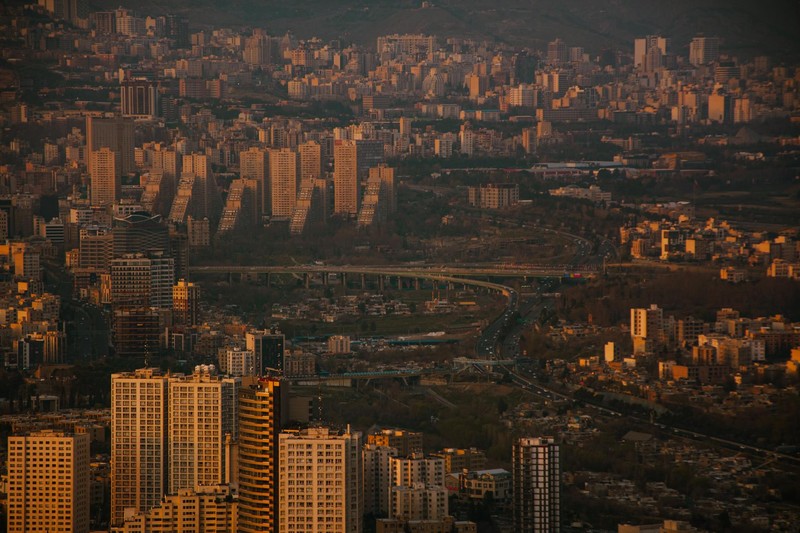
Monday’s strikes hit sites across Iran, killing at least 25 people, according to the state-run IRAN daily. A strike near Eslamshahr, southwest of Tehran, killed at least 15. Five died in Qom. Three were killed when a bomb hit a home in Tehran. Explosions shook the capital for hours and thick black smoke rose near Azadi Square after a strike hit the grounds of Sharif University of Technology, damaging a data centre that Fars News Agency said underpinned the country’s national AI platform.
Iranian missiles struck the northern Israeli city of Haifa, where four people were found dead in the rubble of a residential building, according to Israeli media.
American forces under fire on Kuwaiti soil
Iran’s targeting of US forces on Bubiyan island opens a dangerous new chapter. Ebrahim Zolfaqari, spokesperson for Iran’s Khatam al-Anbiya Central Headquarters, said in a video statement that Iran struck satellite equipment and munitions on the island using drones. American forces had relocated to Bubiyan from Camp Arifjan after that base was repeatedly hit, he added.
Kuwait’s health ministry reported six people injured from debris in a residential area in northern Kuwait.
The strike is a direct Iranian attack on US military personnel in a GCC state — territory Washington has long treated as a secure rear area. Iran’s weekend strikes on petrochemical facilities and an Israeli-linked vessel in Kuwait, Bahrain, and the UAE underscored Tehran’s ability to fight back despite Trump’s repeated claims to have knocked out its missile and drone capabilities.
The Gulf states find themselves squeezed between two pressures. Openly confronting Washington during wartime carries unpredictable costs. But being seen by Tehran as complicit in the aggression makes them legitimate targets under Iran’s military doctrine — a bind that has already pushed several GCC capitals to expel Iranian diplomats.
A ceasefire nobody has embraced
Against this military escalation, a diplomatic track has materialized. Pakistani army chief Field Marshal Asim Munir brokered a two-phase framework proposing an immediate ceasefire and the reopening of the Strait of Hormuz, with 15 to 20 days to negotiate a comprehensive settlement, according to a source aware of the proposals who spoke to Reuters.
The proposal, tentatively dubbed the “Islamabad Accord,” was shared overnight with Iranian Foreign Minister Abbas Araqchi and US Middle East envoy Steve Witkoff. Egypt and Turkey have also been involved in mediation. Pakistan is serving as the sole communication channel, with the initial understanding structured as a memorandum of understanding finalised electronically.
Neither government has formally responded. Iran has rejected any immediate reopening of the strait as part of a temporary ceasefire and refuses to accept deadlines, a senior Iranian official told Reuters. Two Pakistani sources said Tehran has yet to commit despite intensified outreach. Iranian officials have previously said they are seeking a permanent ceasefire with guarantees against future attacks, and that any final agreement would need to include sanctions relief and the release of frozen assets in exchange for commitments not to pursue nuclear weapons.
Trump’s own posture has been contradictory. He has alternately demanded Iran reopen Hormuz and suggested the war could end without it, while issuing multiple shifting deadlines. On Sunday, he posted an expletive-laden ultimatum threatening to attack Iranian power plants and bridges. “Tuesday will be Power Plant Day, and Bridge Day, all wrapped up in one, in Iran,” he wrote, later specifying: “Tuesday, 8:00 PM Eastern Time!”
European Council President António Costa called for diplomacy, writing that “any targeting of civilian infrastructure, namely energy facilities, is illegal and unacceptable.” Experts have noted such attacks could constitute war crimes, though the International Criminal Court lacks jurisdiction as the parties involved are not members.
The Hormuz question
The fighting and the diplomacy converge on a single chokepoint. The Strait of Hormuz, through which roughly a fifth of the world’s oil transits in peacetime, has been effectively closed since the war began. Traffic is down more than 90 percent. Iran has let some vessels through — none belonging to the US or Israel — and some have paid for passage, according to AP. Brent crude hit $109 in early Monday spot trading, roughly 50 percent above pre-war levels.
The strait suffers from what an Al Jazeera analysis published Monday called a “legal anomaly”: it is one of the few critical maritime arteries of its kind without a dedicated regulatory treaty. Turkey’s Bosporus is governed by the Montreux Convention. Hormuz has no equivalent, leaving it uniquely vulnerable to superpower competition.
The analysis proposed a “Congress for Hormuz” — a multilateral platform to codify a treaty formalizing the strait’s status and keeping its management in local hands. The argument is straightforward enough: the war has demonstrated that a security framework built at the expense of any neighbour is no longer viable. Iran’s ability to disrupt shipping with inexpensive drones has given it leverage that no amount of air superiority can eliminate.
But the trust deficit is enormous. The UAE’s Anwar Gargash, an adviser to the Emirati president, warned that any settlement failing to rein in Iran’s nuclear programme and its missile capabilities would produce “a more dangerous, more volatile Middle East.” Iran, for its part, has made clear the status quo ante is finished — and that it will impose a new order unilaterally if the GCC states choose Western alliance over regional accommodation.
Leverage or contradiction
The simultaneous arrival of military escalation and a ceasefire plan raises the question at the heart of this conflict’s current phase. Israel’s vow to destroy Iran’s infrastructure and hunt its leaders appears designed to make diplomacy irrelevant — or to ensure that whatever deal emerges does so on Israeli terms. Iran’s strikes on GCC states serve a parallel purpose, reminding Gulf capitals that hosting American forces carries a price and that any postwar settlement must answer Tehran’s security concerns.
The ceasefire proposal gives Trump a potential off-ramp, one he can frame as a deal brokered by regional partners. The Kuwait strike may force the choice — toward the exit, or toward the broader escalation he has spent days threatening.
The deadline expires Tuesday evening Washington time. The figures keep climbing: approximately 3,540 killed in Iran, including at least 244 children, according to the US-based rights group HRANA. More than 1,400 killed in Lebanon, where Israel has invaded by ground to fight Hezbollah. Twenty-three dead in Israel. Thirteen American service members killed since the war began.
Sources
- Airstrikes on Iran kill more than 25 as new ceasefire proposal is shared — AP News
- US, Iran weigh peace plan as Trump’s ‘hell’ warning nears deadline — Reuters
- Iran, US receive plan to end hostilities, immediate ceasefire, source says — Reuters
- Iran struck US forces relocated on Kuwait’s Bubiyan island, military spokesperson says — Reuters
Discussion (14)