 lop News
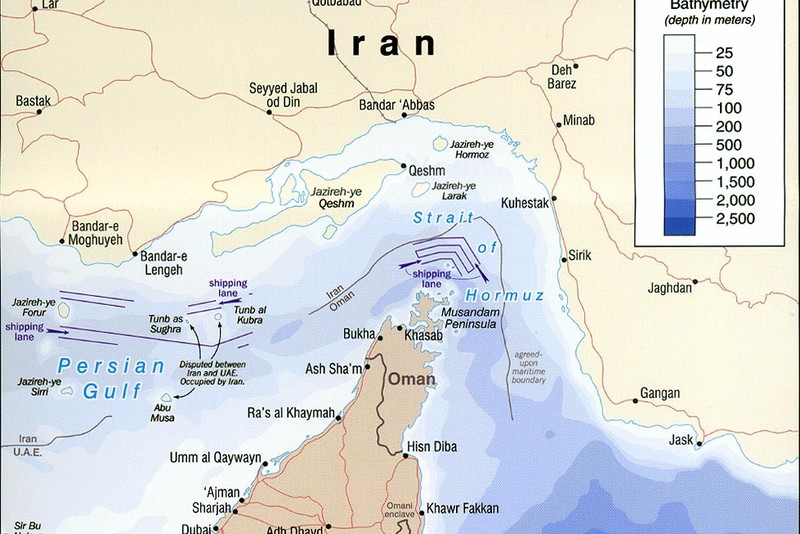
The Strait of Hormuz handles roughly a fifth of the world’s oil. Today, almost nothing moves through it. Iran has handed the United States a proposal to change that — but the terms reveal just how far apart the two sides remain.
The plan, conveyed through Pakistani mediators and first reported by Axios on April 27, calls for extending the current ceasefire and working toward a permanent end to hostilities. The catch: nuclear negotiations would be postponed until after the US lifts its blockade of Iranian ports. Tehran is, in effect, asking Washington to surrender its primary leverage before discussing the issue the White House says matters most.
President Donald Trump will review the proposal in a White House Situation Room meeting on April 27 with his national security team. He has already signaled skepticism. “Interestingly, immediately, when I cancelled it, within 10 minutes, we got a new paper that was much better,” Trump told reporters on April 25, referring to his decision to scrap a planned diplomatic trip to Islamabad. But Iran “offered a lot but not enough,” he added.
White House spokeswoman Olivia Wales said in a statement: “These are sensitive diplomatic discussions and the US will not negotiate through the press.”
What Iran Wants
IRGC-affiliated media, cited by the Institute for the Study of War, reported that Iranian Foreign Minister Abbas Araghchi discussed implementing “a new legal regime over the Strait of Hormuz,” war compensation, and guarantees against future US attacks. There was no reported discussion of Iran’s nuclear program — the central American demand.
The proposal’s sequencing is its most consequential feature. By insisting the US lift its blockade before nuclear talks begin, Tehran is asking Washington to give up the economic pressure that brought Iran to the table. Trump appears aware of the dynamic. In remarks to Fox News on April 27, he warned that Iran’s oil infrastructure was under severe strain. “They say they only have about three days before that happens… and when it explodes, you can never rebuild it the way it was,” he said. He has indicated the blockade stays until a complete deal is struck — the opposite of what Iran is requesting.
The Diplomatic Circuit
Araghchi has moved rapidly across the region. He met Pakistani mediators in Islamabad on April 25, held talks with Oman’s Sultan Haitham al Tariq in Muscat on April 26, and arrived in Russia on April 27 for discussions with President Vladimir Putin, according to Iran’s state-run IRNA.
After his Oman visit, Araghchi said the two countries discussed “ways to ensure safe transit that is to the benefit of all dear neighbors and the world.” He has publicly questioned whether the US is “truly serious about diplomacy.” Iran’s ambassador to China has suggested that international guarantees against future conflict could involve China, Pakistan, Turkey, and Russia — a framework that would give Tehran’s allies a formal seat at any security arrangement.
A Chokepoint Under Siege
The strait saw roughly 135 vessel transits daily before the conflict began on February 28. That number is now close to zero. US Central Command reports that American forces have redirected at least 37 Iranian or Iranian-linked vessels. Iran has imposed its own blockade, deploying gunboats to shut the waterway.
The International Energy Agency has called the disruption the biggest oil supply shock in history. Vitol Group CEO Russell Hardy estimated a guaranteed supply loss of around one billion barrels, partly because reviving flows would take considerable time even after the strait reopens. Markets reacted immediately to the diplomatic news: crude oil pared gains, Asian stocks extended advances, and US equity-index futures rose 0.1 percent.
The Long Odds
The Institute for the Study of War assesses that prospects for meaningful negotiation remain low, citing the Islamic Revolutionary Guards Corps’ domination of Iranian decision-making and opposition to compromise. The five core issues in any deal — nuclear enrichment, ballistic missiles, proxy groups, the Strait of Hormuz, and sanctions — remain largely unaddressed.
Iran insists its nuclear and missile programs are not negotiable. The United States demands zero enrichment. Israel’s Prime Minister Benjamin Netanyahu has said Israel still has “goals to complete,” including “changing the face of the Middle East in Israel’s favour.”
The proposal now sitting in the White House is the first concrete diplomatic document from Iran since the crisis escalated. It may be an off-ramp. It may be a calculated stall. The answer depends on what Washington does next — and whether Tehran’s next move is another round of shuttle diplomacy or something harder to walk back.
Sources
- Iran offers deal to US to reopen Strait of Hormuz, delay nuclear talks: Report — The Straits Times (via Bloomberg)
- Iran gives US proposal for reopening Strait of Hormuz, ending war - Axios — The Jerusalem Post
- Iran Update Special Report, April 26, 2026 — Institute for the Study of War
- US-Iran ceasefire and nuclear talks in 2026 — UK House of Commons Library
Discussion (9)