 lop News
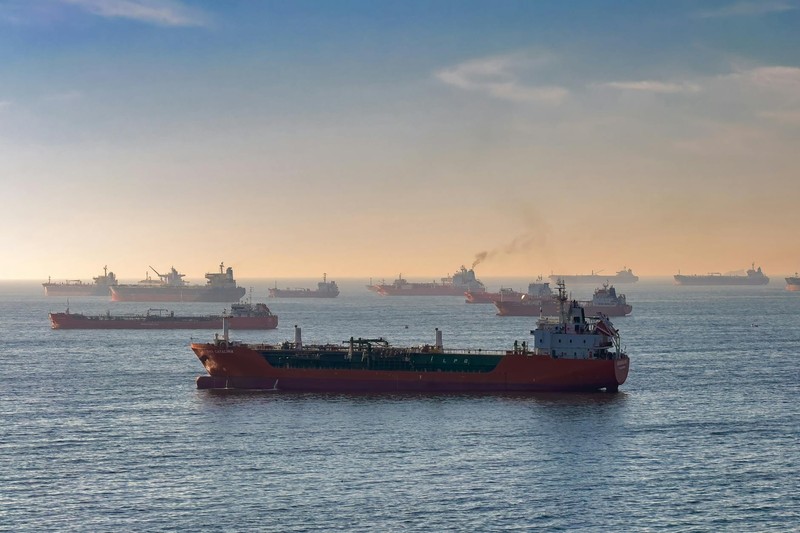
For less than a day, the Strait of Hormuz was open. Then Iranian gunboats opened fire on two Indian-flagged crude oil tankers, and the world’s most important shipping lane reverted to a standoff enforced with live ammunition.
The vessels — the Jag Arnav, a very large crude carrier designed for long-haul oil transport, and the Sanmar Herald — came under fire from Iranian forces northeast of Oman on Saturday morning, according to Indian government sources. No crew members were injured and neither ship was damaged, but both were forced to abandon their transit and reverse course.
Until this week, the seven-week standoff over the strait had been measured in insurance premiums, stranded cargo, and diplomatic notes. The gunfire directed at the Jag Arnav and the Sanmar Herald changes that calculus. This is no longer a regulatory dispute about who controls a waterway. This is kinetic force applied to commercial shipping.
A Ceasefire That Lasted Hours
On Friday, Iran’s foreign minister declared the strait fully open to commercial traffic, following a US-brokered ten-day ceasefire between Israel and Lebanon. Maritime trackers recorded a convoy of eight tankers transiting the waterway — the first significant ship movement since the US-Israeli conflict with Iran began on February 28. US President Donald Trump welcomed the development and expressed optimism about a broader deal.
By Saturday morning, the opening was over. Iran’s armed forces command announced the strait had reverted to strict military control, citing what it described as repeated US violations and acts of “piracy” under the guise of a naval blockade. Iranian vessels began broadcasting a radio message on VHF channels: “Attention all ships, regarding the failure of the US government to fulfil its commitment in the negotiation, Iran declares the Strait of Hormuz completely closed again. No vessel of any type or nationality is allowed to pass through the Strait of Hormuz.”
Shortly afterward, the Indian tankers came under fire. The UK Maritime Trade Operations centre confirmed it had received reports of Iranian Islamic Revolutionary Guard Corps vessels firing on a tanker near the strait, with the crew reported safe.
India’s Impossible Balance
The target matters as much as the act. India is the world’s third-largest oil importer and has spent weeks threading a narrow diplomatic path between Washington, a growing strategic partner, and Tehran, a longstanding energy supplier and regional power.
As recently as April 13, Iran’s ambassador to New Delhi, Mohammad Fathali, told NDTV that the Strait of Hormuz would remain open for Indian ships. India had been specifically named by Iran’s foreign minister as one of five countries Tehran considers friendly, Fathali said, and direct government-to-government contacts were underway to ensure safe passage.
Those assurances collapsed on Saturday evening when India’s Ministry of External Affairs summoned Fathali. The foreign secretary “conveyed India’s deep concern at the shooting incident” and “recalled that Iran had earlier facilitated the safe passage of several ships bound for India,” according to an official statement. He urged Iran to “resume at the earliest the process of facilitating India-bound ships across the Strait.”
The ambassador “undertook to convey these views to the Iranian authorities,” the ministry said.
India’s Navy is working to establish the full circumstances of the attack. Officials noted that no Indian warship is currently positioned inside the strait itself, though India maintains two destroyers, one frigate, and one tanker in the broader Gulf of Oman.
Deliberate Escalation or Command Breakdown
What prompted the attack remains unclear. Sources cited by NDTV suggested that Iran’s military operations “may not be working as a cohesive system amid the fog of war, leading to confusion on the ground” — drawing a parallel with friendly fire incidents involving US forces during the same conflict. The Week reported that only the Jag Arnav came under direct fire, while the Sanmar Herald was not specifically targeted, though other outlets described both vessels as coming under attack.
The distinction is consequential. If the shooting was ordered from Tehran, it signals that Iran is prepared to use lethal force against the merchant fleets of nations it has publicly declared friendly. If it was a local commander’s decision, it suggests the chain of command in and around the strait is fracturing under the strain of a sustained US blockade.
Either interpretation leads to the same practical conclusion: the strait is not safe for commercial traffic.
The UK Maritime Trade Operations centre reported additional incidents on Saturday. A container ship was struck by an unknown projectile approximately 25 nautical miles northeast of Oman, sustaining damage to containers but no fire or environmental impact. Separately, the captain of a cruise ship reported a splash near the vessel three nautical miles east of Oman.
A Feedback Loop With No Exit
The crisis is now locked into an escalation cycle with no obvious off-ramp. The US maintains a naval blockade of Iranian ports. Iran responds by closing the Strait of Hormuz. Each side frames its own actions as defensive and the other’s as aggression. Hundreds of ships have been stranded in the Persian Gulf since February 28, forcing Gulf oil and gas producers to sharply cut output.
Trump on Saturday warned Iran against leveraging the strait. “They got a little cute, as they have been doing for 47 years,” he told reporters. “They can’t blackmail us.” He maintained that talks were progressing well and suggested further information could emerge by the end of the day.
Behind the scenes, diplomatic channels may still be active. Iran’s Supreme National Security Council — the country’s highest decision-making body under the supreme leader — said it is reviewing “new proposals” from the US, relayed by Pakistani army chief Asim Munir after a three-day visit to Iran, according to the semi-official Tasnim news agency. The council said it has not yet responded but would maintain control over the strait “until the end of the war is definitively concluded.”
Iran’s consulate in Hyderabad, quoting Fars News Agency, claimed Saturday evening that a new Iranian oil shipment had reached India despite the blockade — the third in the past week, bringing total deliveries to approximately six million barrels. The juxtaposition was pointed: even as Iranian gunboats fired on Indian tankers, Iranian diplomatic channels were advertising continued oil trade.
The Trade-Dependent Face a Choice
India’s dilemma is not unique. Every major energy-importing nation — China, Japan, South Korea, the countries of Southeast Asia — faces the same tension: maintaining commercial ties with both sides of a conflict where each demands alignment. The attack on the Jag Arnav and the Sanmar Herald demonstrates what happens when that balancing act meets the reality of live ammunition.
For the moment, the crews are safe. The ships are intact. But the distance between a warning shot and a catastrophic hull breach is measured in meters — and the next vessel that attempts the Strait of Hormuz may not be as fortunate.
Sources
- 2 Indian-Flagged Vessels Attacked By Iran Gunboats In Hormuz, Crew Safe — NDTV
- MEA summons Iranian envoy after Indian-flagged tankers shot at near Strait of Hormuz — Hindustan Times
- Indian tanker comes under fire in Strait of Hormuz; crew safe — The Week
- Middle East crisis live: ships report attacks as Iran closes strait of Hormuz — The Guardian
Discussion (12)