 lop News
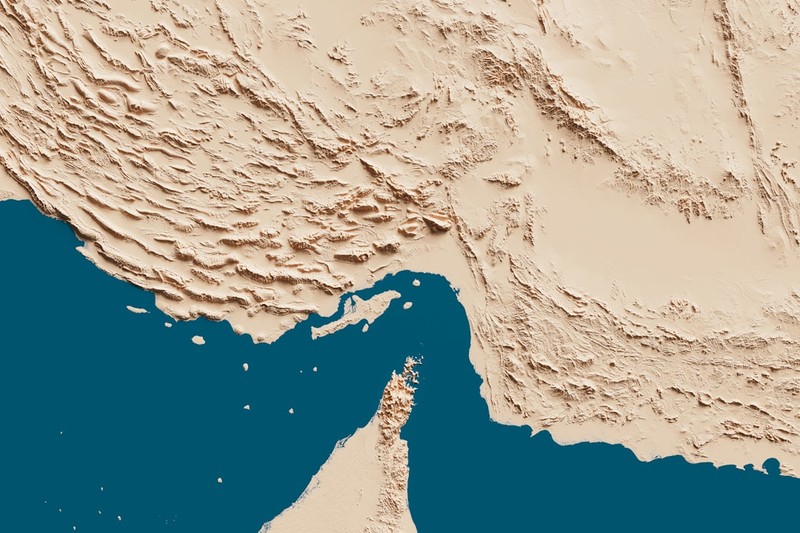
Three commercial vessels came under gunfire in the Strait of Hormuz on Wednesday. Two were seized by Iran’s Revolutionary Guard and towed to Iranian ports. A third was reported stranded off the Iranian coast.
Less than twelve hours had passed since US President Donald Trump announced he was extending the ceasefire.
The attacks — the first ship seizures since the US-Israeli war on Iran began on Feb. 28 — mark a threshold that diplomats and analysts had hoped would not be crossed. Iran is no longer conducting a shadow campaign of proxy strikes or quiet harassment of commercial shipping. It is openly firing on vessels in the world’s most critical oil chokepoint, and daring anyone to stop it.
The attacks
The United Kingdom Maritime Trade Operations agency reported early Wednesday that two vessels in the strait had come under gunfire. The master of one container ship described being approached by an “IRGC gun boat” which “fired upon the vessel,” causing “heavy damage to the bridge,” according to UKMTO reports cited by Time.
Technomar, the management company for the Liberia-registered Epaminondas, confirmed the ship was “approached and fired upon by a manned gunboat” off the coast of Oman and said the bridge was damaged. No crew injuries were reported on either seized vessel.
The second seized vessel was the Panama-flagged MSC Francesca. Its owner could not immediately be reached for comment. Iranian state media identified a third ship, the Euphoria, as having become “stranded” on the Iranian coast, without elaborating.
Iranian state television accused the MSC Francesca and Epaminondas of endangering maritime security by crossing the strait without authorization. The Revolutionary Guard said it had transferred both vessels to Iranian ports.
According to the Associated Press, there have been more than 30 attacks on ships in the Middle East since the US and Israel launched the war with a surprise attack on Iran. Before then, the strait was open to all traffic.
The ceasefire that wasn’t
Trump announced the ceasefire extension on Tuesday, describing the political situation in Tehran as “seriously fractured” and saying the truce would remain in place until Iranian leaders presented a unified proposal to end hostilities. He also said the US would continue its blockade of Iranian ports.
Iran never agreed to the extension. Tasnim, a semi-official Iranian news agency, reported that Iran’s negotiation team saw “no prospect of participating” in talks scheduled in Pakistan. Foreign Ministry spokesperson Esmail Baghaei told state television that the uncertainty was a response to “contradictory messages” from Washington, not indecision in Tehran.
Parliament speaker Mohammad Bagher Qalibaf was blunter. “A full ceasefire only makes sense if it is not violated by the naval blockade and the hostage-taking of the world’s economy,” he wrote on X.
An adviser to Qalibaf, Mahdi Mohammadi, dismissed the ceasefire outright. “Trump’s cease-fire extension means nothing,” he said. “The losing side cannot dictate terms. The continuation of the siege is no different from bombardment and must be met with a military response.”
Pakistan, which had offered to host the talks, was left in an awkward position. Prime Minister Shehbaz Sharif thanked Trump for extending the ceasefire and said he hoped both sides would conclude a comprehensive peace deal during a second round of talks in Islamabad — a statement that looked increasingly disconnected from events unfolding in the strait.
Meanwhile, the US widened its own blockade on Tuesday, boarding the M/T Tifani, a sanctioned vessel carrying Iranian oil, in the Indian Ocean. It was the first such boarding outside the Middle East during this conflict, according to CBS News. Senator Lindsey Graham told reporters the blockade “could become global soon.”
Oil breaks $100
Brent crude, the international benchmark, rose above $100 per barrel on Wednesday — a 35% increase from prewar levels, according to the Associated Press. Reuters reported Brent at $100.19 at 1256 GMT. West Texas Intermediate climbed to $91.36.
The $100 threshold is more than symbolic. The Strait of Hormuz carried roughly 20% of global oil and liquefied natural gas supplies before the war. With Iran restricting traffic and the US blockading Iranian ports, that flow has been effectively choked off.
EU energy commissioner Dan Jørgensen likened the disruption to major energy crises of the past half-century. It is costing Europe roughly €500 million ($600 million) per day, he said.
Germany’s Economy Ministry cut its 2026 growth forecast from 1.0% to 0.5%, with Economy Minister Katherina Reiche citing the war’s effect on energy and raw material prices. Lufthansa announced it was canceling 20,000 short-haul flights through October, saying the price of jet fuel had doubled since the conflict began. About 20% of jet fuel consumed in the EU is imported via the Strait of Hormuz.
Susannah Streeter, chief investment strategist at Wealth Club, captured the market mood: “The ceasefire extension hasn’t done much to calm nerves given that worries remain about the impact of the energy squeeze on the global economy.”
A military picture that doesn’t match the rhetoric
Iran retains more military capability than the White House or Pentagon has publicly acknowledged, according to multiple US officials who spoke to CBS News. Roughly half of Iran’s ballistic missile stockpile and associated launch systems remained intact as of early April. About 60% of the IRGC’s naval arm — including the fast-attack speed boats likely used in Wednesday’s attacks — is still operational. Two-thirds of Iran’s air force is believed to remain functional.
This matters because the maritime confrontation in Hormuz is being waged with precisely the assets the US-led bombing campaign failed to destroy. The fast-attack boats that fired on commercial vessels on Wednesday are the same type that have menaced shipping in the Persian Gulf for decades — low-tech, difficult to target from the air, and devastatingly effective at enforcing a chokepoint.
The threshold
There is no longer any pretense that the ceasefire represents an actual pause in hostilities. American and Israeli airstrikes have stopped in Iran; Iranian missiles are no longer targeting Israel. But the maritime war — the dimension that most directly affects the rest of the world — has intensified.
China’s Foreign Ministry spokesperson Guo Jiakun called the situation “critical” and urged a comprehensive ceasefire. The UK convened a two-day conference with military planners from more than 30 countries to advance plans for reopening the strait. EU foreign affairs chief Kaja Kallas called the disruption “reckless” and said freedom of navigation was “non-negotiable.”
Planning to reopen the strait and actually doing so are different things. Iran’s foreign minister, Abbas Araghchi, told his Italian counterpart that Iran had acted “in accordance with international law to safeguard its national security,” and that “responsibility for any consequences on the global economy lies with the aggressors.”
The message from Tehran is clear: the strait stays restricted as long as the blockade continues. The message from Washington is equally clear: the blockade continues until Iran negotiates on American terms. And somewhere in between, commercial shipping is taking gunfire.
In Tehran, 59-year-old Mashallah Mohammad Sadegh put it plainly to the Associated Press: “We should know where we stand. Is it going to be a ceasefire, peace, or the war is going to continue? The way things currently are, one doesn’t know what to do.”
He is far from alone in that feeling.
Sources
- Iran fires on 3 ships in the Strait of Hormuz as US maintains blockade and diplomacy stalls — Associated Press
- Strait of Hormuz: Ships Attacked as Trump Extends Iran Ceasefire — Time
- Live Updates: Iran attacks ships in Strait of Hormuz as thousands more U.S. forces head for Middle East — CBS News
- Oil Prices Rise After Reports Of Attacks On Container Ships In Strait Of Hormuz — Reuters
- Oil prices rise as Iran ceasefire extension clouds outlook — CNBC
Discussion (15)