 lop News
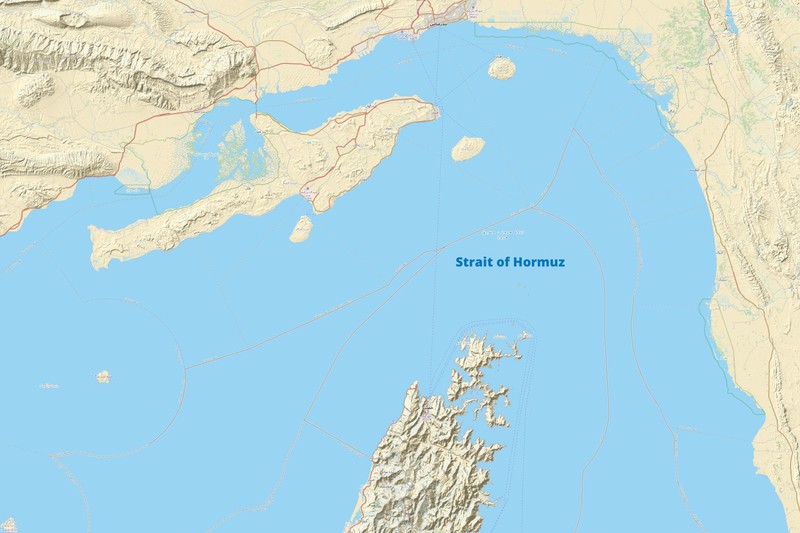
The Strait of Hormuz is 21 nautical miles wide at its narrowest point. Roughly a fifth of the world’s oil passes through it. As of Saturday, every commercial vessel making that transit must seek permission from Iran’s Islamic Revolutionary Guard Corps.
Iran’s Khatam al-Anbiya Central Headquarters — the operational command of its armed forces — declared that “the management of the Strait of Hormuz is exercised with full authority by the Armed Forces of the Islamic Republic of Iran.” The statement, reported by Iranian media on Saturday, instructed that “all ships, commercial vessels, and tankers are only required to travel through the designated routes and obtain permission from the Islamic Revolutionary Guard Corps Navy.” Any violation, it warned, “will seriously jeopardise the security of their traffic.”
What Control Looks Like on the Water
The declaration formalises what has been de facto practice since early March, when Iran first restricted shipping through the strait after the US and Israel launched joint strikes on February 28. Since then, commercial vessels from select countries have been permitted passage only after negotiating transit with the IRGC — with some paying tolls reported as high as $2 million per ship at various points during the conflict, according to Al Jazeera.
Saturday’s statement went further than past pronouncements, explicitly warning foreign military forces that any attempt to interfere with maritime management or shipping movements would trigger a response. The same day, Iran’s state news agency IRNA reported that air defences shot down a drone “belonging to the US-Zionist aggressor enemy,” citing a military statement.
A corresponding US naval blockade on Iranian ports has been in place since April, when talks in Islamabad between US and Iranian officials collapsed. Iran’s Tasnim news agency reported that commercial ships “are receiving warnings from CENTCOM to stop and not cross the blockade line.” The result is a waterway squeezed from both sides: Iran controlling entry, the US blocking the ports.
The global stakes are difficult to overstate. Roughly 20 percent of the world’s oil and liquefied natural gas transits Hormuz during peacetime. The disruption since March has jolted energy markets worldwide. Data on insurance cost increases for tanker operators was not available in the sources reviewed, but the combination of Iranian transit controls, mines laid in the shipping channels — which under the proposed deal Iran would have 30 days to remove — and the US naval blockade has kept commercial traffic well below normal levels.
A Deal Rewritten at the Last Minute
Iran’s move at Hormuz coincides with a critical juncture in negotiations. A preliminary memorandum of understanding — reportedly extending the ceasefire by 60 days and setting terms for permanent peace talks, mediated by Pakistan — had been awaiting Trump’s approval, according to US sources who spoke to AFP.
Trump spent more than two hours with senior advisers in the White House Situation Room on Friday but emerged without a decision. The New York Times reported that the president sent the framework back with tougher terms. Axios reported the changes involved reinforcing multiple points Trump personally considered important, particularly the handling of Iran’s nuclear material.
According to Channel News Asia, the new language could prolong negotiations for days before a decision is reached on whether the deal would end the war, which began when the US and Israel launched joint strikes on Iran on February 28.
Iran’s Foreign Ministry spokesperson, Esmaeil Baghaei, confirmed on Friday that while messages continue to be exchanged, “no final agreement has been reached.”
The Unresolved Disputes
Several core disagreements separate the two sides.
Nuclear material. Trump has said his priorities include Iran agreeing to never develop nuclear weapons, and proposed that both countries coordinate on removing and destroying Iran’s enriched uranium. Iran’s Fars news agency called that claim “fundamentally baseless,” reporting that Iran has made “no commitment in this agreement to hand over nuclear stockpiles, remove equipment, shut down facilities or even commit not to build a nuclear bomb.” Iran is believed to hold an estimated 440kg of uranium enriched to 60 percent — below the 90 percent required for weapons grade, but at a level from which reaching 90 percent becomes significantly faster. Nuclear-related issues would be negotiated within 60 days of any agreement being signed, according to both Fars and Tasnim.
Frozen assets. Fars reported that Tehran is demanding “the immediate release of $12bn” in frozen assets before moving to the next phase of negotiations. A source cited by Tasnim warned that disagreements over this are “among the reasons why no final understanding has yet been reached.” Iran is one of the most heavily sanctioned countries in the world, with billions in assets frozen in foreign banks.
Tolls and sovereignty. Trump said Iran would reopen the strait with “no tolls,” while the US would lift its blockade. Fars countered that “no such clause appears in the text of the agreement.” Iran’s ISNA cited legislator Alireza Salimi saying a plan “to implement Iran’s management and sovereignty over the Strait of Hormuz will soon be approved by parliament.” Tasnim reported that “the status of the Strait of Hormuz would not revert to its pre-war situation.” Under international maritime law, countries whose territorial waters cover natural straits may not charge tolls for passage, though they may charge fees for services.
Lebanon. Iran has insisted that any ceasefire apply to all fronts, including Lebanon, where Israel has continued military operations despite a US-brokered ceasefire. Israel and the US have rejected this. Baqaei said Tehran had decided to “prioritise an urgent issue for all of us: ending the war on all fronts including Lebanon.” Israeli Prime Minister Benjamin Netanyahu said he and Trump had agreed that any final agreement must “eliminate the nuclear threat entirely” — meaning, in his words, “dismantling Iran’s uranium enrichment facilities and removing enriched nuclear material from its territory.”
The Leverage Game
Iran’s formal declaration of authority over Hormuz while negotiations remain unresolved is a calculated move. It codifies the central bargaining chip Tehran has held since the war’s first days: control over the conduit through which global energy supplies flow.
The Pentagon delivered its counterweight the same day. Defence Secretary Pete Hegseth, speaking at the Shangri-La Dialogue defence summit in Singapore, said Washington was “more than capable” of restarting the war if a satisfactory deal is not reached. “Our ability to recommence if necessary is [that] we are more than capable, our stockpiles are more than suited for that, both there and around the globe because of how we balance exquisite and more plentiful munitions,” he said. US Central Command posted that American forces “remain present and vigilant across the region.”
Iranian Supreme Leader adviser Mohsen Rezaei accused Trump of “betraying diplomacy for the third time” by maintaining the US naval blockade and making what he called “excessive demands in negotiations.”
The efforts to reach a deal were thrown into further question this week by US strikes on the Iranian port of Bandar Abbas — home to key naval forces — countered by retaliatory Iranian fire, according to The Guardian. Pakistan’s deputy prime minister and foreign minister, Ishaq Dar, was scheduled to meet US Secretary of State Marco Rubio in Washington on Friday to continue mediation efforts.
Both sides are holding their lines — literally and figuratively. Iran is codifying its grip on the strait. The US is reminding Tehran that military operations can resume. And through the 21 nautical miles of water connecting the Persian Gulf to the open ocean, roughly a fifth of the world’s oil keeps waiting for a deal that never quite arrives.
Sources
- Trump asked for tougher terms in proposed Iran war deal: US media — Channel News Asia
- US ‘more than capable’ of resuming war against Iran, Pete Hegseth says — The Guardian
- Possible Iran-US deal: What we know about the key issues on both sides — France24
- US-Iran 60-day proposal: What we know — Al Jazeera
- 2026 Iran war ceasefire — Wikipedia
Discussion (12)