 lop News
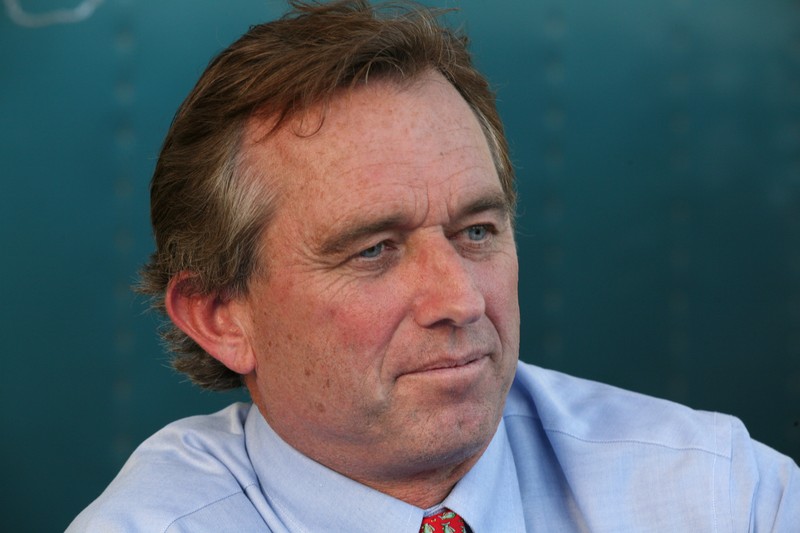
One in six American adults takes them. The FDA approved them decades ago. And last week, officials inside the Department of Health and Human Services quietly explored whether they could ban some of them.
The medications are selective serotonin reuptake inhibitors — SSRIs — a class that includes Zoloft, Prozac, and Lexapro. According to Reuters, which broke the story Thursday, two people familiar with the discussions said the inquiry came as Health Secretary Robert F. Kennedy Jr. prepared to announce a plan to reduce SSRI use nationwide. The sources did not identify which drugs were targeted or how far the discussions had advanced.
HHS spokesman Andrew Nixon denied the report outright. The department “has not had any discussions about banning SSRIs, and any claims suggesting otherwise are false,” Nixon said in a statement.
The denial sits uneasily alongside Kennedy’s public record. At a Mental Health and Overmedicalization Summit on Monday, Kennedy announced new initiatives to curb SSRI prescriptions — reimbursement guidelines for doctors helping patients taper off the medications, plans to publish prescribing trend data, and expanded provider training.
“Psychiatric medications have a role in care, but we will no longer treat them as the default,” Kennedy said. He added: “Let me be clear: If you are taking psychiatric medication, we are not telling you to stop.”
Claims That Outpace the Evidence
Kennedy’s rhetoric on SSRIs has long exceeded what the science supports. He has claimed, without evidence, that the medications cause mass shootings and pose serious risks to fetuses. He has compared SSRI withdrawal to heroin — a claim Stanford addiction researcher Keith Humphreys debunked during Kennedy’s January 2025 confirmation hearing, telling NPR that antidepressants and heroin “are in different universes when it comes to addiction risk.”
Last November, Kennedy said the Centers for Disease Control and Prevention was studying whether SSRIs contribute to mass violence. No details on that study have been released.
The pattern is familiar. Since taking office, Kennedy has used his position to challenge established medical consensus on vaccines, fluoride, and now psychiatric medication — advancing claims that mainstream scientific bodies largely reject.
What the Law Actually Allows
Drug approval experts told Reuters that the FDA cannot unilaterally ban medications that have been approved and on the market for years. Any new restrictions would require strong scientific evidence that risks outweigh benefits — a process that could take months or even years. The FDA can ask a drugmaker to withdraw a medicine, but the company can refuse.
Just last month, the FDA proposed withdrawing approval of Tavneos, an Amgen drug for rare autoimmune diseases, citing lack of proven effectiveness and alleged false statements in its application. Amgen refused.
Doctors Push Back — Carefully
The American Psychiatric Association, which considers SSRIs a first-line, evidence-based treatment for depression, welcomed some of Kennedy’s proposals — particularly investments in research and provider training. But it forcefully rejected the overarching narrative, objecting to “framing the nation’s mental health crisis as primarily a problem of ‘overmedicalization’ or ‘overprescribing.’”
APA president Dr. Theresa Miskimen Rivera called it “an oversimplification” that ignores how many Americans still cannot access adequate mental health care. Persistent workforce shortages, limited psychiatric beds, and barriers to psychotherapy all go unaddressed when the conversation is reduced to overprescribing, she told CNN.
Dr. Vera Feuer, a child and adolescent psychiatrist at the Child Mind Institute, agreed that careful assessment and medically supervised tapering are important. Her organization has long published guidelines on safely discontinuing SSRIs. But she cautioned against reducing the conversation to side effects alone. Some children genuinely benefit.
“I’ve had parents hug me on the street,” Feuer told NPR. “‘Thank you for convincing me, for putting my child [on the medication]. I feel like I have my child back. They’re thriving.’”
The American Foundation for Suicide Prevention was more direct. “A robust body of scientific evidence demonstrates that antidepressants are effective in treating acute depressive episodes, preventing future episodes, and reducing suicidal thoughts and behaviors,” the organization said in a statement.
What This Means for Patients
According to data cited by CNN, roughly 40 percent of adults and adolescents with depression in the US receive counseling or therapy, and about 11.4 percent of adults take prescription medication for depression. Suicide rates in the US rose 35 percent between 2000 and 2018, according to data cited by Dr. Joseph Goldberg of the Icahn School of Medicine at Mount Sinai.
Rivera’s message to patients was unambiguous: “Don’t do it without physicians being involved.” Quitting SSRIs without medical supervision, she warned, can cause serious side effects or relapse.
For the millions of American adults who take these medications daily, the gap between what officials privately explored and what Kennedy publicly promised may be the most consequential detail of all.
Sources
- Exclusive: Kennedy’s Health Officials Explored US Ban of Some Widely Used Antidepressants, Sources Say — Reuters
- RFK Jr. launches plan to address ‘overuse’ of psychiatric medications — CNN
- RFK Jr.’s plan for antidepressants gets mixed reaction from psychiatrists — NPR
- RFK Jr. plans to curb antidepressants, which he falsely compares to heroin — Ars Technica
Discussion (8)