 lop News
3.8 percent. The highest inflation reading in three years. And the stock market barely blinked.
The personal consumption expenditures index — the Federal Reserve’s preferred inflation gauge — climbed to 3.8% in April from a year earlier, the Commerce Department reported Thursday, up from 3.5% in March and the sharpest annual increase since May 2023. Core inflation, which strips out volatile food and energy prices, rose to 3.3%.
The S&P 500 opened essentially flat. The Nasdaq ticked up 0.5%, according to Fox Business.
That disconnect — prices surging at the grocery store and the gas pump while asset prices float serenely upward — is the economic story of the moment. Two forces are colliding, and American households are caught underneath.
Two Shocks, One Direction
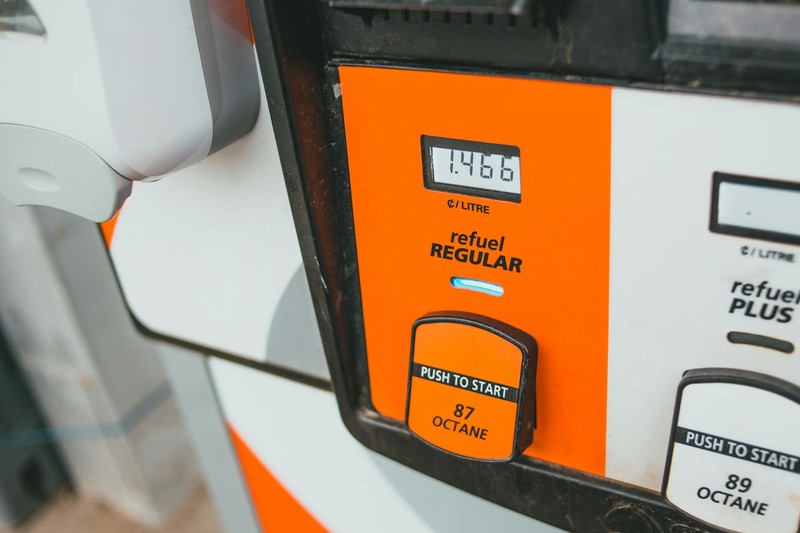
The Iran war, which began in late February when the US and Israel launched strikes, has supercharged energy prices. A barrel of oil now trades at roughly $107, up from $72 the day before the bombing campaign began, according to US News & World Report. Gasoline has followed: the AAA motor club reports the national average at about $4.50 a gallon, compared with $2.98 the day before the war.
Energy costs accounted for more than 40% of April’s monthly consumer price index increase, according to the Bureau of Labor Statistics. Airfares jumped 2.8% in April alone and are more than 20% higher than a year ago as airlines absorb surging jet fuel costs, NPR reported. Diesel has risen $1.88 a gallon since the conflict began — a figure that puts upward pressure on virtually everything delivered by truck or train.
But energy is only half the story. The tariff regime imposed throughout 2025 has been working its way through the supply chain with a long delay, and the bill is coming due now.
Research from the Federal Reserve Bank of Dallas estimates that tariff collections added roughly 0.8 percentage points to 12-month core PCE inflation as of early 2026. Without the tariff effect, core inflation would sit at 2.3% — just above the Fed’s 2% target. The Dallas Fed found that the realized tariff rate climbed from 2.3% in 2024 to 10.9% by October 2025 before settling at 9.4% by year-end. Collections lagged behind the headline policy announcements, meaning the consumer-facing price impact peaked in the first quarter rather than when the tariffs first made news.
Both shocks are pushing the same way, and neither shows immediate signs of reversing.
Households Running Out of Room
Americans’ after-tax income, adjusted for inflation, fell for the third consecutive month in April. Incomes were flat nominally, partly because a large government farm aid package expired. Real spending rose just 0.1%, down from 0.3% the previous month.
The personal savings rate tells the starker story. It has collapsed from 5.5% a year ago to 2.6% in April — meaning consumers are burning through savings to maintain spending levels that barely kept pace with price increases, according to Fox Business.
“Signs of stress are building inside the American household across the economy,” Joe Brusuelas, chief economist at RSM, told the Associated Press. “Inflation-adjusted spending, disposable income… point to a slowing in May spending as inflation approaches a peak on the back of a historic supply shock.”
Heather Long, chief economist at Navy Federal Credit Union, was more direct: “The pain is real for many Americans right now… The larger tax refunds are helping keep people afloat, but those will be exhausted by July. Belt-tightening is inevitable later this year.”
Lower-income households are bearing the brunt. A Federal Reserve Bank of New York analysis found that lower-income families have already cut real gas consumption significantly — carpooling, switching to transit where available — while higher-income households have barely modified their driving habits and simply absorb the cost.
A New Fed Chair, an Old Problem
This is the first inflation report under Fed Chair Kevin Warsh, who succeeded Jerome Powell and was expected to restore the central bank’s inflation-fighting credibility. Instead, Warsh inherits an inflation rate nearly double the Fed’s 2% target — and a policy box with no good options.
CME FedWatch data shows a 98.8% probability that the Fed holds rates steady at its June meeting, the first under Warsh. More telling: traders price a 39.2% chance of a rate hike by year-end against just a 0.6% chance of a cut. Some Fed officials have already signaled that Warsh’s first substantial move could be tightening, not easing.
Treasury Secretary Scott Bessent dismissed the price pressures as “transitory” on Wednesday — a word with a notorious pedigree. Former Fed Chair Jerome Powell used the same term to describe the 2021-22 inflation spike that consumed the Biden economy and helped propel Trump back to the White House. That particular adjective did not age well.
Meanwhile, GDP growth for the first quarter was revised down to a 1.6% annual pace from an initial 2% estimate, according to the Commerce Department. Business investment, largely driven by artificial intelligence infrastructure spending, rose at a 7% rate. Consumer spending growth slowed to 1.4% from 1.9% in the prior quarter.
The economy is growing, modestly, powered by corporate capital expenditure and upper-income consumption. The AI buildout continues apace. Markets reflect that confidence. But the household ledger tells a different story — one of shrinking purchasing power, depleted savings, and the compounding cost of two simultaneous price shocks that Washington shows limited interest in solving.
Sources
- Key inflation gauge worsens as Americans’ income and spending power erodes — Associated Press
- Effects of realized tariff changes on PCE prices peaked in first quarter 2026 — Federal Reserve Bank of Dallas
- Fed’s favored inflation gauge remained elevated in April — Fox Business
- Inflation Hits 3.8%, Highest Level Since 2023, as Energy Costs Surge — U.S. News & World Report
- US inflation accelerated more than expected in April, hitting the highest level since 2023 — Business Insider
- Inflation jumps to its highest level since 2023. Here are 3 things costing a lot more — NPR
Discussion (8)